
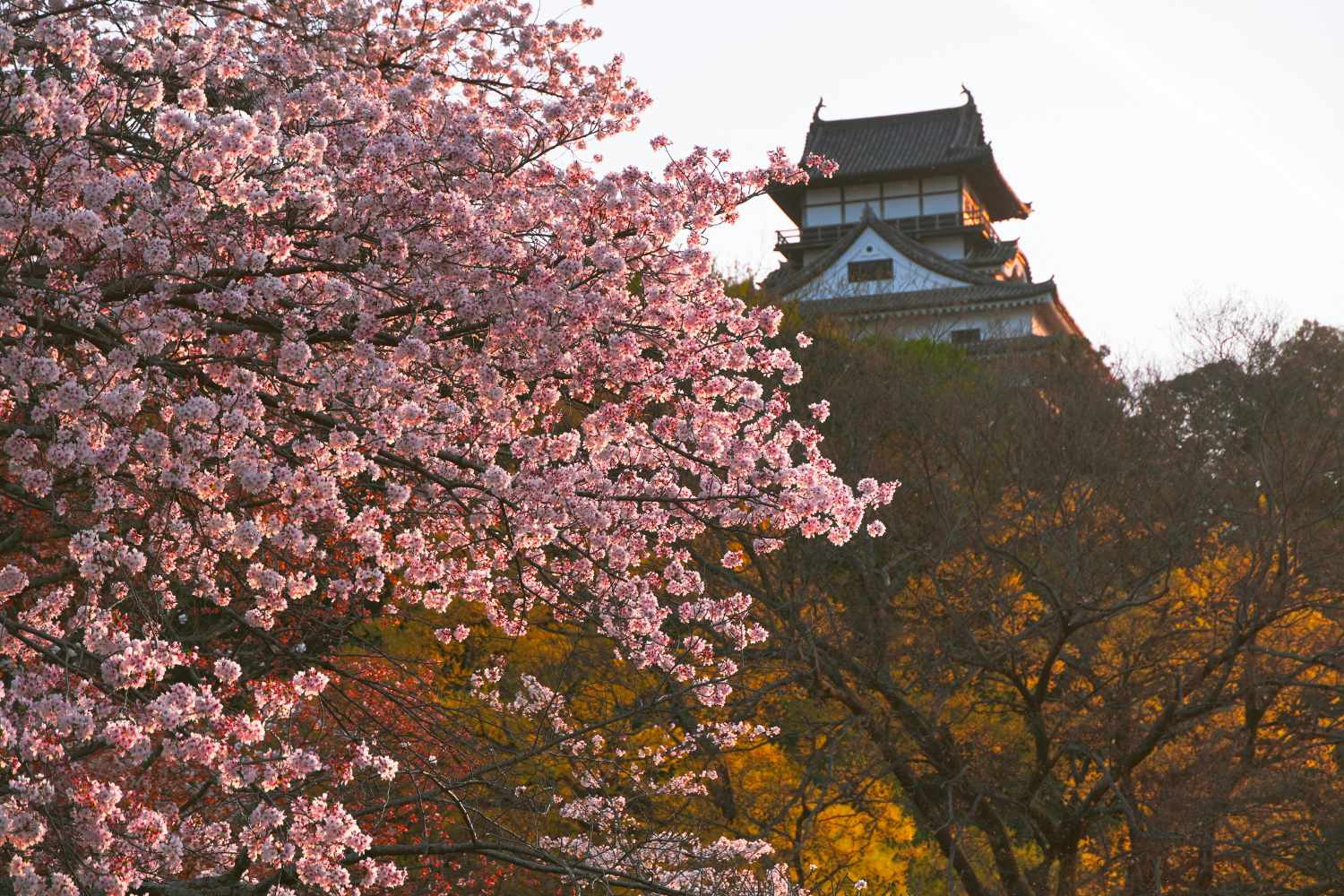
Hanami is a thousand-year-old celebration which, as we know, consists of spending days immersed in nature to witness the enchanting cherry blossoms. In Japanese, ‘hana’ means flowers and ‘mi’ stands for watching, observing. For the occasion, people eat on the lawns and drink sake in the company of relatives and friends.
Sakura, the most beautiful varieties
Flowering begins in Okinawa and ends in Kyoto and Tokyo between March and April. The sakura is not only pink, but takes on truly suggestive shades: in a few weeks it is a riot of colors ranging from pale pink to fuchsia to white. Clearly everything depends on the variety of flowers, the most common are the Somei Yoshino.
The Somei are so called because they were planted for the first time in the village of the same name; there are still Prunus subhirtella autumnalis which, as the word itself suggests, bloom mainly in autumn and are also called winter sakura. But there is still a very long list, over a hundred, among the most beautiful are the yaezakura and shidarezakura which, to be clear, are those that bloom in cascades.
View this post on Instagram
View this post on Instagram
Sakura, the largest tree
Being a thousand-year-old tradition, there could not fail to be one sakura in particular, much loved by the Japanese. It is the Jindai Zakura found in Jissou Temple, it is about two thousand years old and has a trunk of almost 14 meters.
View this post on Instagram
Sakura, the symbolic and spiritual meaning
It is undeniable that sakura is a wonderful flower, but hanami also contains a symbolism that goes beyond beauty. The sakura blooms and fades in a few days so it represents the transience of life, fragility, but also the desire to savor every moment.
We look at sakura with sadness, but also with emotion because by celebrating hanami in spring we talk about rebirth. It is no coincidence that cherry blossoms have always been seen as a harbinger of the richness of the rice harvest, as a harbinger of prosperity. Sakura is also a symbol of the qualities of the Samurai, namely honesty, courage, loyalty and purity. In Japan sakura is also a female name.
Sakura, the legend
A beautiful Japanese legend is linked to Sakura which dates back hundreds of years ago when peace was rare due to battles between fiefdoms. However, it is said that there was a forest where the war had not affected anything, there were trees, perfumes and animals. No warrior dared enter it to ruin nature. Right here was a tree that never bloomed and looked dead. In reality he wasn’t but he was very sad and lonely because he could never enjoy the beauty of the colors of the flowers. The animals didn’t come closer out of fear, the grass didn’t grow around it.
But one day, the fairy of the woods, seeing so much loneliness, was moved, approached him and said that she would cast a spell that would last 20 years. During this time, the tree would have felt what the human heart feels. Maybe that way he would get excited and find flowering.
The fairy told him again that he could transform into a human being and then back into a plant, but if at the end of 20 years he was unable to become viable, he would die forever. The tree transformed into a human, but at first found only hatred and war. For this reason he often returned to being a plant, until as a man, while walking, he saw a beautiful girl. It was Sakura who was kind: they talked for a long time sharing dreams and hopes.
When Sakura asked him what his name was, the tree came up with only one word: “Yohiro,” which means hope. A deep friendship was born between the two and in a short time love blossomed. One day Yohiro confessed to Sakura all his love and his true nature. Sakura was impressed and remained silent. Time had passed and the 20 year deadline was approaching. Yohiro, who returned to the form of a tree, felt very sad.
She thought of hatred and war and decided to merge with Yohiro. And behold, the two merged and became one, and as if by a miracle, the tree flourished. The word Sakura means “cherry blossom”. Today their love flourishes in Japan.
Sakura, haiku
Poets and painters celebrated the cherry blossoms. We leave you with one haiku in particular written by Yosa Buson
The cherry blossoms fall
on the water mirrors of the rice field:
stars, in the light of a moonless night
