
The race towards electric continues, and with it the demand for lithium batteries is also growing. But behind every “green” vehicle, there is a paradox that we cannot ignore: rare materials, cells that degrade quickly, batteries that become waste too soon. Yet, a possible solution exists, it comes from Africa and has already been patented in the United States.
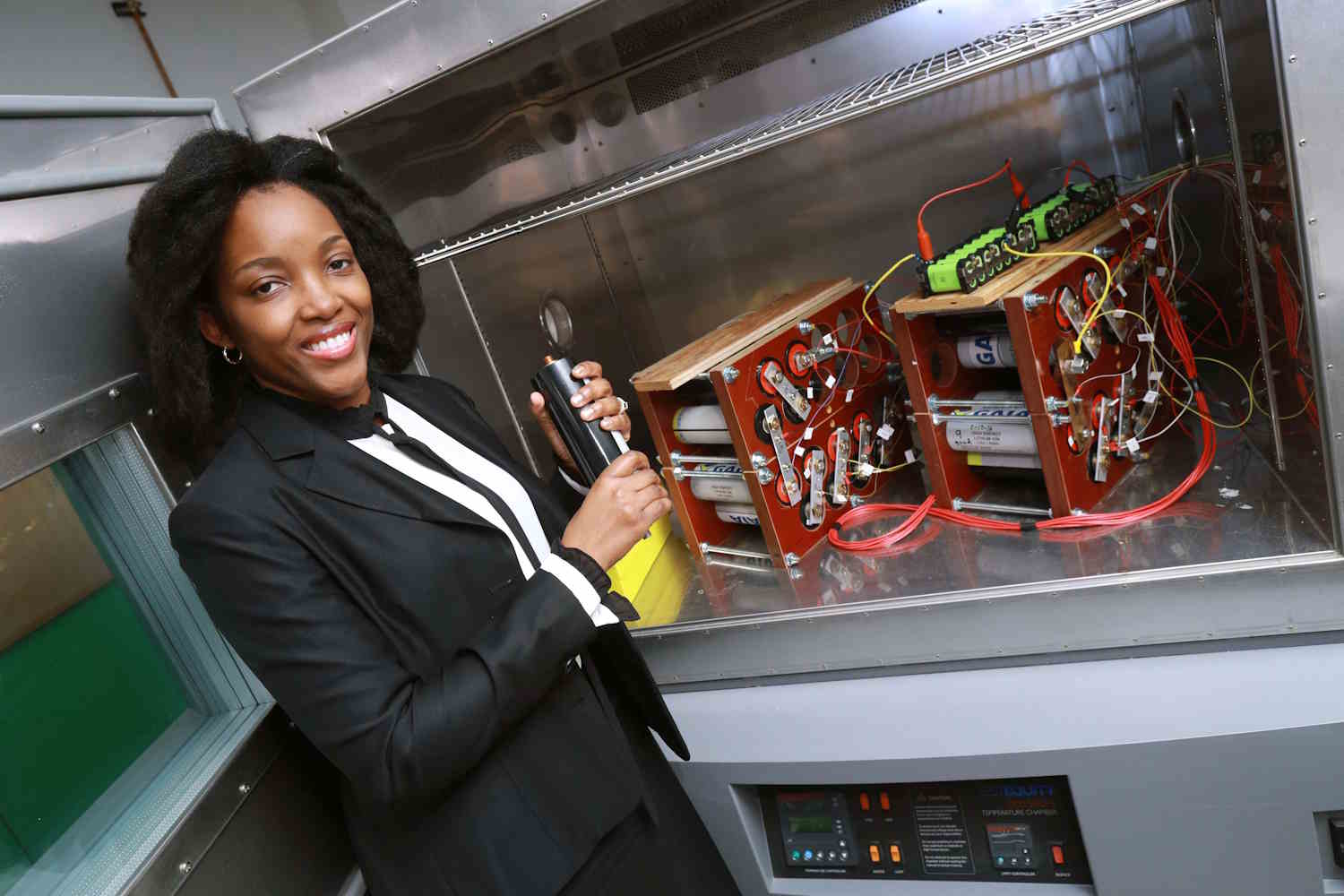
It’s called Bi-Level Equalizer and it’s a small device that promises to give lithium batteries a second life. It was created by Sandrine Mubenga, a Congolese engineer and professor of electrical engineering at the University of Toledo in Ohio. Its goal is clear: to make batteries longer lasting, safer and less expensive. But also more circular, that is, capable of being reused rather than thrown away.
Lithium batteries are efficient, but they degrade quickly
Lithium ion batteries, currently used in electric cars, smartphones and home storage systems, have several advantages: they discharge slowly, are light and guarantee good autonomy. However, they also have an important technical limitation: over time, the internal cells (which are like small energy tanks) begin to charge unevenly. This imbalance leads to overheating, wasted energy and shorter overall battery life.
This is where Mubenga’s invention comes into play: the Bi-Level Equalizer is an intelligent system that rebalances the charge between the cells, thus preventing some from working more than others or from being damaged prematurely. It’s not a completely new idea, but its strength lies in its low cost and efficiency.
A hybrid solution, economical and suitable for recycling used batteries
There are already devices called charge equalizers, but the most effective ones – called “active” – cost up to 10 dollars per cell. The Bi-Level Equalizer, on the other hand, has an estimated cost of 1.30 dollars per cell, little more than a “passive” system (the less expensive and less performing ones, which simply dissipate energy).
The real breakthrough, however, is that the device can recover and reuse the still functioning cells in already used batteries. It means less waste, less extraction of rare metals such as cobalt and nickel, and the concrete possibility of recycling batteries that would otherwise end up disposed of. All this, without having to completely rethink production: the Bi-Level Equalizer can be integrated into existing systems.
According to Mubenga, this technology could increase the capacity of batteries by almost 30%, while also extending their lifespan and reducing production costs. The device, developed in collaboration with Thomas Stuart, a researcher at the University of Toledo, received US patent no. US12355278B2.
A technology designed to last, born to change the rules of the game
The Bi-Level Equalizer is hybrid: it combines the simplicity and low cost of passive equalizers with the efficiency of active ones. It can work while charging and discharging the battery, improving its performance without adding too much cost.
A simple but revolutionary approach, which points straight to one of the central issues of the ecological transition: the management of exhausted batteries. If we can reuse them several times, we will not only be able to reduce waste, but also reduce our dependence on complex and polluting supply chains.
An idea, that of Mubenga, which comes from engineering, but looks far ahead: to a future where technology and sustainability are not exclusive, but reinforce each other.
You might also be interested in:
