
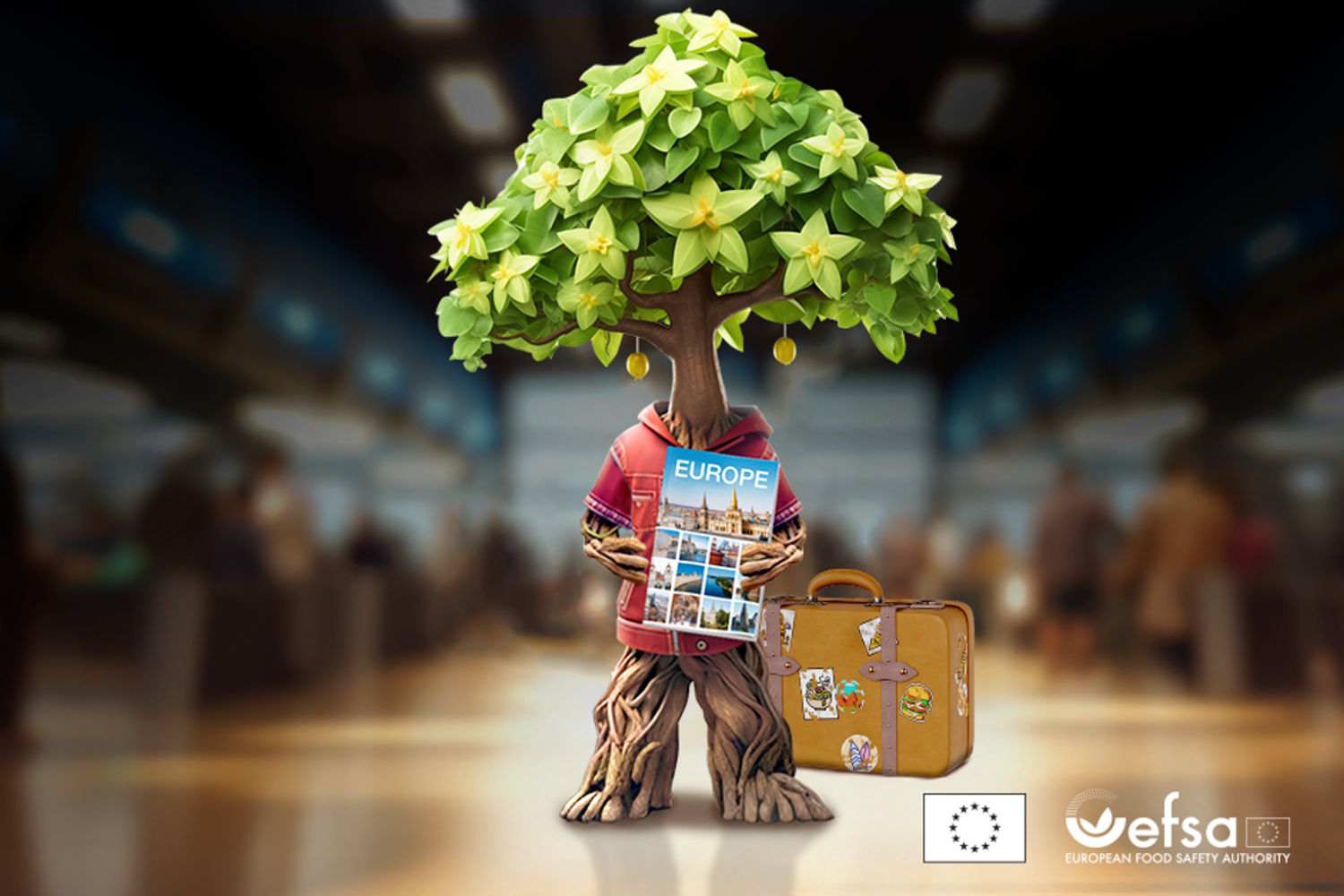
A cutting wrapped in a damp napkin, a few seeds stuck in a sachet, or an olive branch torn along a Turkish path. Anyone who travels has done it at least once, bringing home a piece of nature has become an almost automatic action, like you would do with a refrigerator magnet. An apparently irrelevant, almost affectionate gesture, which in reality is not, because a clandestine passenger could travel together with that leaf: a fungus, an insect, a nematode, invisible to the naked eye, capable of finding in a new territory the ideal conditions to proliferate without the predators and natural limits that kept them at bay in their original environment.
This is precisely one of the behaviors that #PlantHealth4Life, the campaign promoted by the European Food Safety Authority (EFSA) and the European Commission together with the national partners of the Member States, wants to draw attention to.
What is #PlantHealth4Life
In 2026 the #PlantHealth4Life campaign reaches its fourth and final edition and involves 33 countries: all 27 EU member states, five countries in the pre-accession phase and Switzerland. Promoted by EFSA, the European Commission and national partners, the campaign was created to make the link between plant health and daily gestures such as travelling, shopping or taking care of our greenery more evident.
There is a precise idea behind the initiative, summarized by Sylvain Giraud of the European Commission:
Plant Health 4 Life is based on a key principle: awareness drives action.
An idea that Tobin Robinson of EFSA translates into practical terms, recalling that science helps to understand risks, but the decisive step is to translate this knowledge into daily gestures, from the way of traveling to the way of shopping.
Because plant health also affects what we eat
The starting point of the campaign is a fact that, especially during the holidays, takes a back seat: plants make up 80% of the food that ends up on our tables, they nourish the animals we raise and help keep the air breathable, absorbing carbon dioxide.
When their health is compromised, the consequences are reflected in the availability and prices of food, local biodiversity and the balance of entire forest ecosystems.
Yet, according to what was found by EFSA itself, European citizens’ awareness of phytosanitary risks remains decidedly low, despite the potential impact on the economy, food safety and the environment. Bridging this gap between the relevance of the problem and perception is, in fact, the declared objective of the campaign, which certainly does not aim to alarm, but to make visible a link, that between our habits as travellers, gardeners and consumers and the health of Europe’s plant heritage, which usually remains in the background.
In a world where people and goods are constantly moving, even individual behavior can unintentionally contribute to the movement of harmful organisms. It is a risk which, as confirmed by Federico Sorgoni of the Ministry of Agriculture, Food Sovereignty and Forestry, concerns our suitcases: the transport of plants, seeds or plant products during travel can facilitate, often unconsciously, the introduction of harmful organisms, with impacts on ecosystems, agriculture and the economy: the same thread that links the souvenir collected on holiday to the cases of Xylella and pine nematode which we will talk about shortly.
The case of the pine nematode and Xylella
Two emblematic cases make clear how rapid and costly the arrival of a harmful organism in a new territory can be: the pine nematode and Xylella fastidiosa.
The first is a microscopic worm capable of rapidly causing the death of pine trees. Until 1999 it had never been detected in the European Union: it appeared for the first time in Portugal and today it is also present in some areas of Spain, as well as having recently been reported in France. To limit its spread, European regulations provide for the felling and destruction of trees at risk, mainly pine trees, within a radius of 500 meters from the outbreak, with particularly serious environmental and economic consequences in regions rich in pine forests.
Even closer to us is the case of Xylella fastidiosa, the plant pathogenic bacterium identified for the first time in Italy, in Puglia, in October 2013 and probably arrived in the European Union from the American continent. The consequences have been enormous: in Puglia the disease has contributed to the loss of millions of olive trees and an unprecedented environmental, landscape and economic crisis for the territory. The bacterium has since also been detected in France, Spain and Portugal.
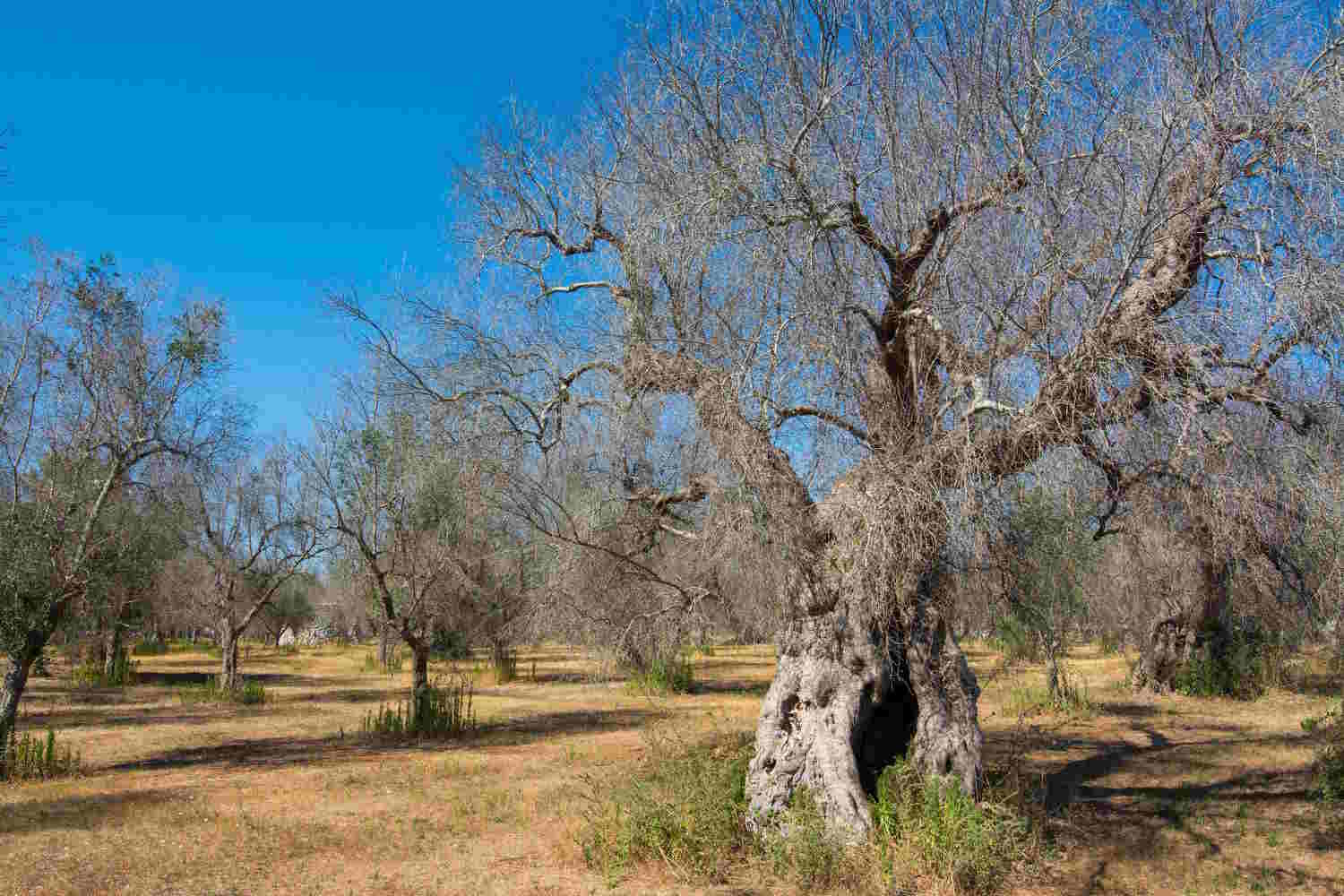
Two different cases, but which should have taught us the same lesson: when a harmful organism reaches an area where it was not present before, the consequences can go far beyond the single plant, involving entire landscapes, agricultural production and local economies.
Plants in your suitcase? What can we really bring to the EU
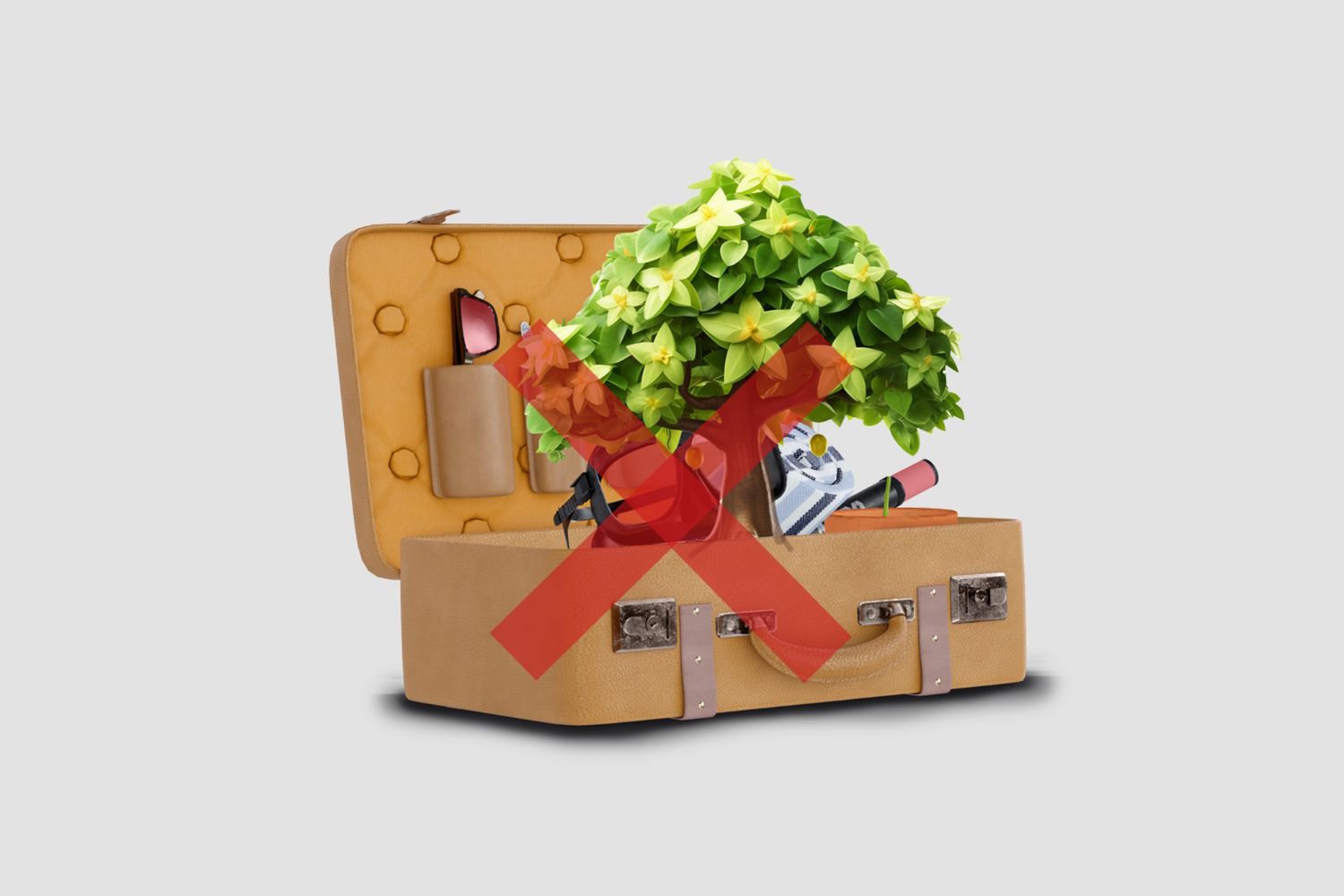
When returning to the European Union from a third country, it is not enough to ask yourself whether a plant, a twig or a cut flower “seems harmless”.
Plants and plant products intended to legally enter the EU must be accompanied by a phytosanitary certificate issued by the competent authorities of the country of origin, which certifies compliance with phytosanitary requirements. The rule does not only concern commercial exchanges, but also those who travel for personal reasons and bring with them plant material for ornamental or hobby purposes.
EFSA cites very common examples: a plant collected after a trek, a twig taken during an excursion, a garland purchased at a local market, but also cuttings, roots, cut flowers, seeds and fresh fruit. However, there are some exceptions: the European Commission indicates pineapple, coconut, durian, bananas and dates among the fruits that do not require a phytosanitary certificate. A banana purchased outside the EU is therefore not treated in the same way as many other plant products. Once they arrive at the borders of the Union, travelers carrying plants or plant products subject to these rules must declare their possession to the competent authorities, who can carry out the required checks.
The message of #PlantHealth4Life is therefore simple: before putting a “green souvenir” in your suitcase, it is better to find out about the applicable rules and, in the absence of the necessary authorizations, leave plants and plant products where they are to prevent even a single sprig from ending up leaving a much longer lasting impression on the holiday.
