
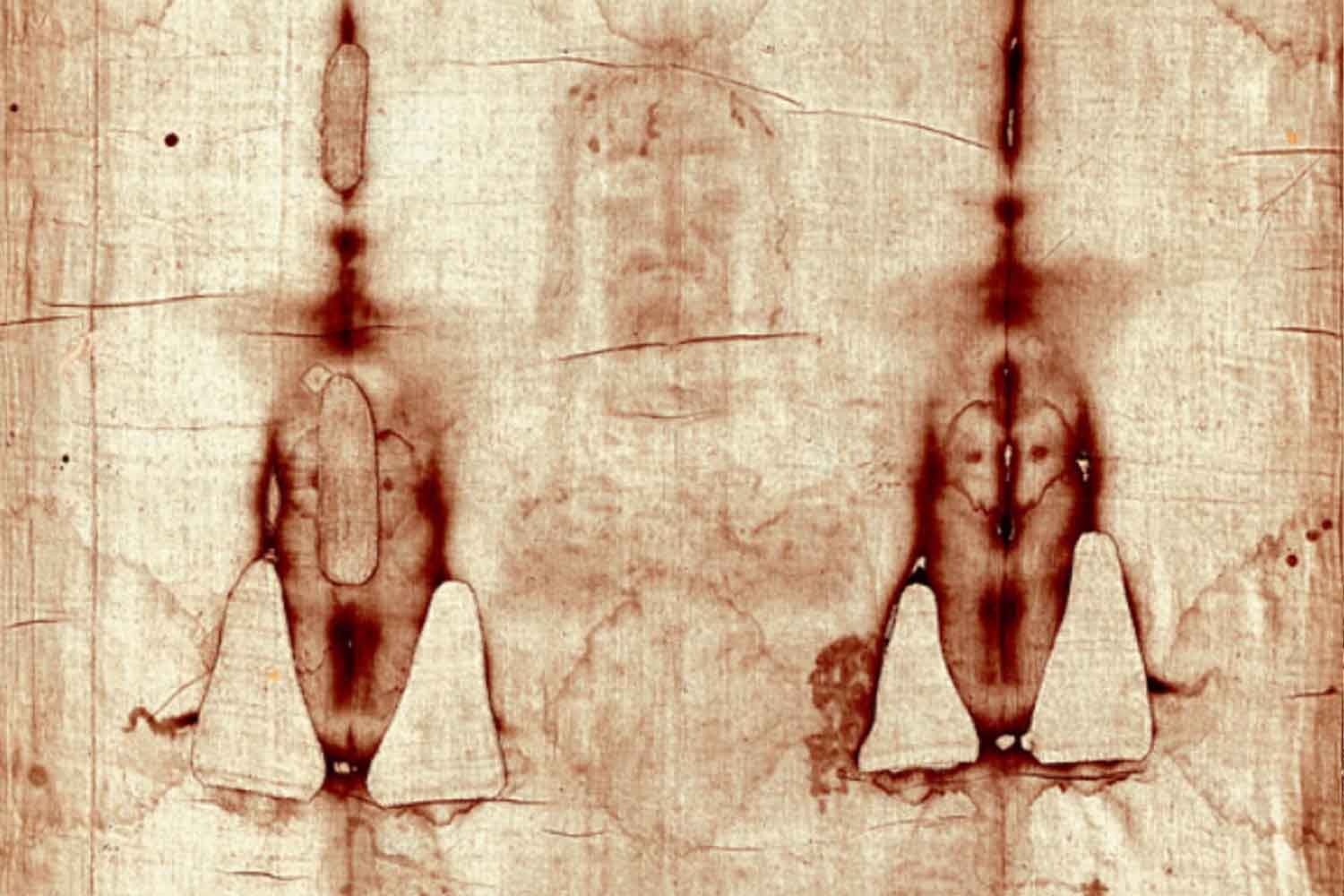
Linen, when it passes through the centuries, ceases to be just linen. It retains dust, skin, spores, tiny fragments of human and environmental passages. There Shroud of Turin today it returns to the center of the discussion for this very concrete reason: a new metagenomic study coordinated by Gianni Barcaccia and disseminated in preprint on bioRxiv analyzed the biological traces collected in the official samples of 1978, finding a vast, stratified, almost chaotic genetic deposit on the cloth.
The strongest fact lies precisely in the quantity of material that emerged. Researchers talk about Human DNAof an extensive presence of microorganisms, of plant and animal traces which make the find a sort of overloaded biological archive. It also appears among mitochondrial lineages haplogroup H33listed as rare and prevalent today in the Near East, with significant frequency in Druze communities. Studies published in 2015 by the same group had already detected genetic profiles attributable to Western Europe, the Near East, the Arabian Peninsula and the Indian subcontinent, with a mixture compatible both with long historical movements and with repeated contacts that occurred over the centuries.
Also the microbiome adds an interesting piece. In the new work, microorganisms typical of the human epidermis appear, archaea adapted to high salinity environments and fungi, including molds. In parallel, very concrete elements emerge: Mediterranean red coralcultivated plants such as carrot, wheat, corn, bananas and peanuts, as well as DNA from domestic and farm animals such as cattle, pigs, chickens, dogs and cats. Put like this, the Shroud looks less like a stationary object and much more like a surface passed from hand to hand, exposed, transported, kept in different conditions and touched by environments very distant from each other.
The Middle East surfaces in the samples
The reference to the Levant is significant, because the researchers read these results as compatible with a long exposure of the object in the Mediterranean and with a passage through Middle Eastern areas. At the same time, the authors link an important share of Indian lineages to the possibility that the yarn or fabric had an origin linked to India and ancient trade with the Mediterranean. It is a fascinating trail, which broadens the gaze on the material history of the cloth much more than the usual dispute between believers and skeptics.
The delicate point remains another. All this biological richness makes the picture thicker, not simpler. The same works on DNA insist on the problem of contamination: the traces accumulated by skin, pollen, fibres, restorations, manipulations and subsequent environments make it extremely difficult to isolate a hypothetical “original DNA” of the cloth or to trace the find to a single initial owner. For this reason the new study does not close the question of authenticity and does not even erase the weight of the radiocarbon dating published on Nature in 1989, which placed linen between the 1260 and 1390.
What this study really delivers is a dirtier, more concrete, more historical image of the Shroud. Less of an immobile relic, more of an object crossed by time. Men, animals, crops, salt, travel, hands remain on the fabric. The mystery is still there. Only now it has a lot more dust on it.
