
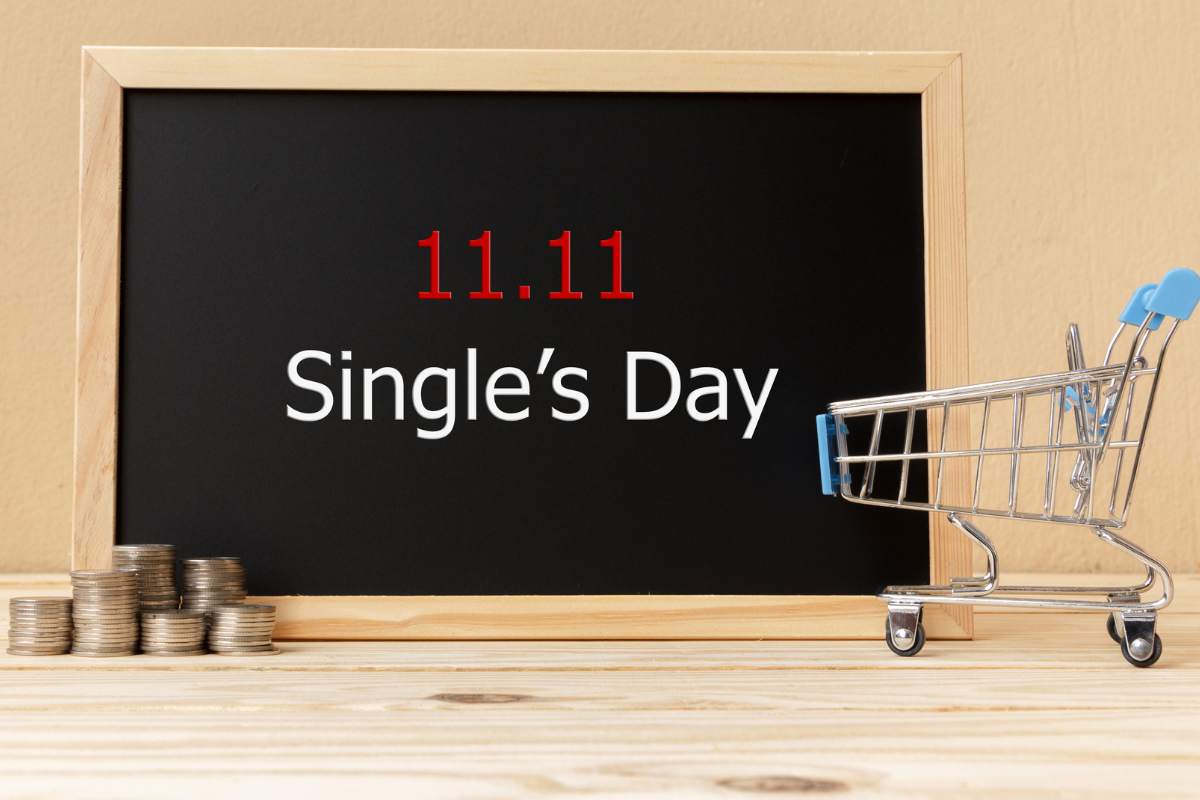
THE’November 11, written 11/11 is the most symbolic date there is for those who are “one” and proud of it. The Single’s Day was born in the 90s in Chinese universities as an ironic way to celebrate the condition of those who are not in a couple. A light day, designed to be self-deprecating and, why not, treat yourself to something as a sign of affection towards yourself.
Over time, however, what was once a fun occasion has become a global economic machine. It was transformed by Alibaba, the Asian e-commerce giant, which in 2009 understood the commercial potential of the idea. Since then, November 11th has become synonymous with unbridled shopping, with billions of euros spent in just a few hours and flash offers multiplying on every platform.
From singles’ party to the triumph of e-commerce
Today Singles’ Day has almost nothing to do with singles anymore. It’s an event that surpasses even Black Friday and Cyber Monday in terms of sales. Digital platforms prepare weeks of promotions, direct livestreams, influencers and discount codes that transform the day into a truly interactive show.
In China, and increasingly also in Europe, millions of people await 11/11 as a fixed event, ready to “click” to feel part of something bigger. But what remains of the original message? Almost nothing. The pride of being single has become the pride of spending, and personal celebration has transformed into a collective ritual of consumption.
A reflection on the meaning of consuming
Single’s Day tells better than any other phenomenon how thin the boundary between identity and market has become. The idea of ”loving yourself” translates into the purchase of an object, and personal gratification comes through the delivery of a package. It is the triumph of consumerism disguised as individual freedom.
Maybe we should rediscover the initial spirit: that of laughing at our loneliness, not filling it with a 70% discount. Because if every emotion finds an online promotion, the risk is that it is no longer the cart that remains worthless, but ourselves.
You might also be interested in:
