
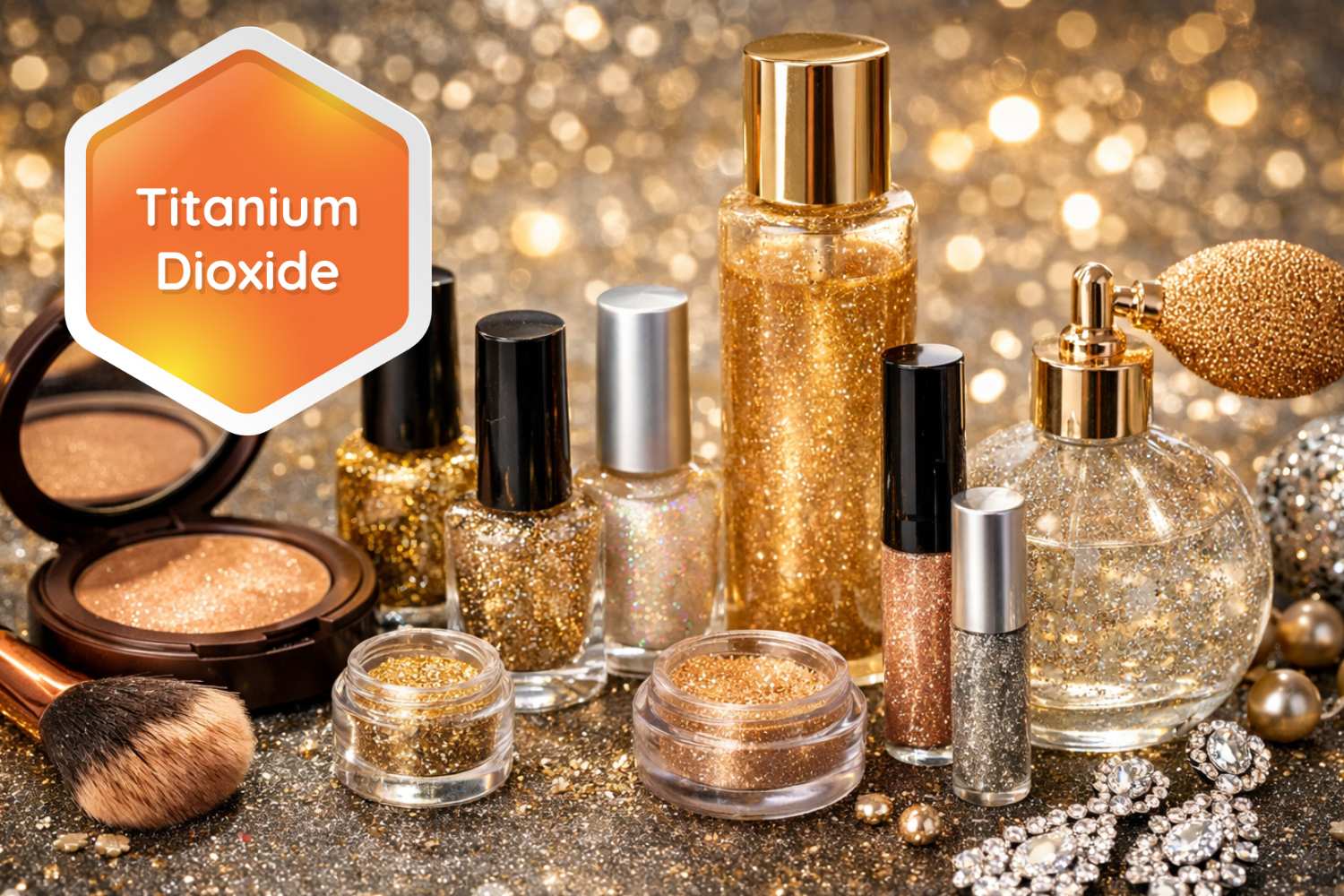
They are very fashionable and among the best-selling products during the Christmas and New Year holidays: those who participate in parties and balls choose them to illuminate the face and body with that “effect”shimmer“that makes every look more glamorous. We’re talking about sparkling cosmetics, from iridescent bronzers to illuminating sprays, from perfumes to pearly powders. Products that promise to make us shine, but which according to a recent French survey could hide a dark side.
All the sparkling products analyzed by the investigation conducted by Avicenn, the French association for monitoring the developments of nanosciences and nanotechnologies, were found to contain unauthorized titanium dioxide (TiO2) nanoparticles, potentially harmful to health.
After the 2022 tests that had already raised doubts, Avicenn had 10 more cosmetics analyzed in the laboratory, this time focusing exclusively on shimmering and pearlescent products. And the verdict was unequivocal: 100% of the samples contained a very high quantity of TiO2 nanoparticles, also used to obtain that iridescent effect much appreciated in cosmetics.
These are the products analyzed:
Microscopic particles, macroscopic risks
The analyzes conducted by the LNE laboratory revealed worrying dimensions: these nanoparticles measure between 25 and 50 nanometres, making them even smaller than those present in matte make-up or sunscreens. 100% of them are smaller than 100 nanometers, the threshold beyond which a substance is considered “nano”.
It is precisely this very small size that makes them dangerous. As Avicenn explains, these particles are much more likely to penetrate deep into the lungs, where they can cause inflammation. A risk amplified by the fact that 9 out of 10 products tested are in spray or powder form, therefore easily inhaled.
The industry considers them safe (but the evidence says otherwise)
Suppliers, federations and cosmetic companies have always maintained that these particles are firmly attached to larger mica sheets, compliant with regulations and safe for consumers. Avicenn wanted to verify these claims with in-depth analyses.
The results categorically refute this thesis: thanks to images of unprecedented precision, the tests clearly show TiO2 nanoparticles detached from the mica plates, which appear visibly cracked, crumbled or even broken, releasing free nanoparticles.
Another alarming finding is that these nanoparticles do not appear to be coated, unlike those used in sunscreens. This means that they could emit free radicals, substances that are harmful to the DNA of cells.
Who is at risk? Exposure affects a worrying number of people: consumers who apply these products every day, cosmetics industry workers in manufacturing laboratories, staff in cosmetics stores, including sales assistants who spray the products during demonstrations, and security guards who breathe the same air. Finally artists, such as dancers and actors who use these products regularly.
The French Ministry of Health intervenes
Avicenn sent the results of its analyzes to the French Ministry of Health, which deemed them sufficiently worrying to refer the matter to ANSES (National Agency for Food, Environmental and Work Safety).
The association also turned to the European Commission and the European Scientific Committee for Consumer Safety (SCCS), since cosmetic authorizations are managed at community level.
Without waiting for the results of the official procedures, Avicenn urgently calls on all players in the cosmetics industry to:
A public health problem that requires immediate responses, considering that millions of people use these products every day, unaware of the risks they could run every time they apply a shimmery eyeshadow or spray a highlighter.
