
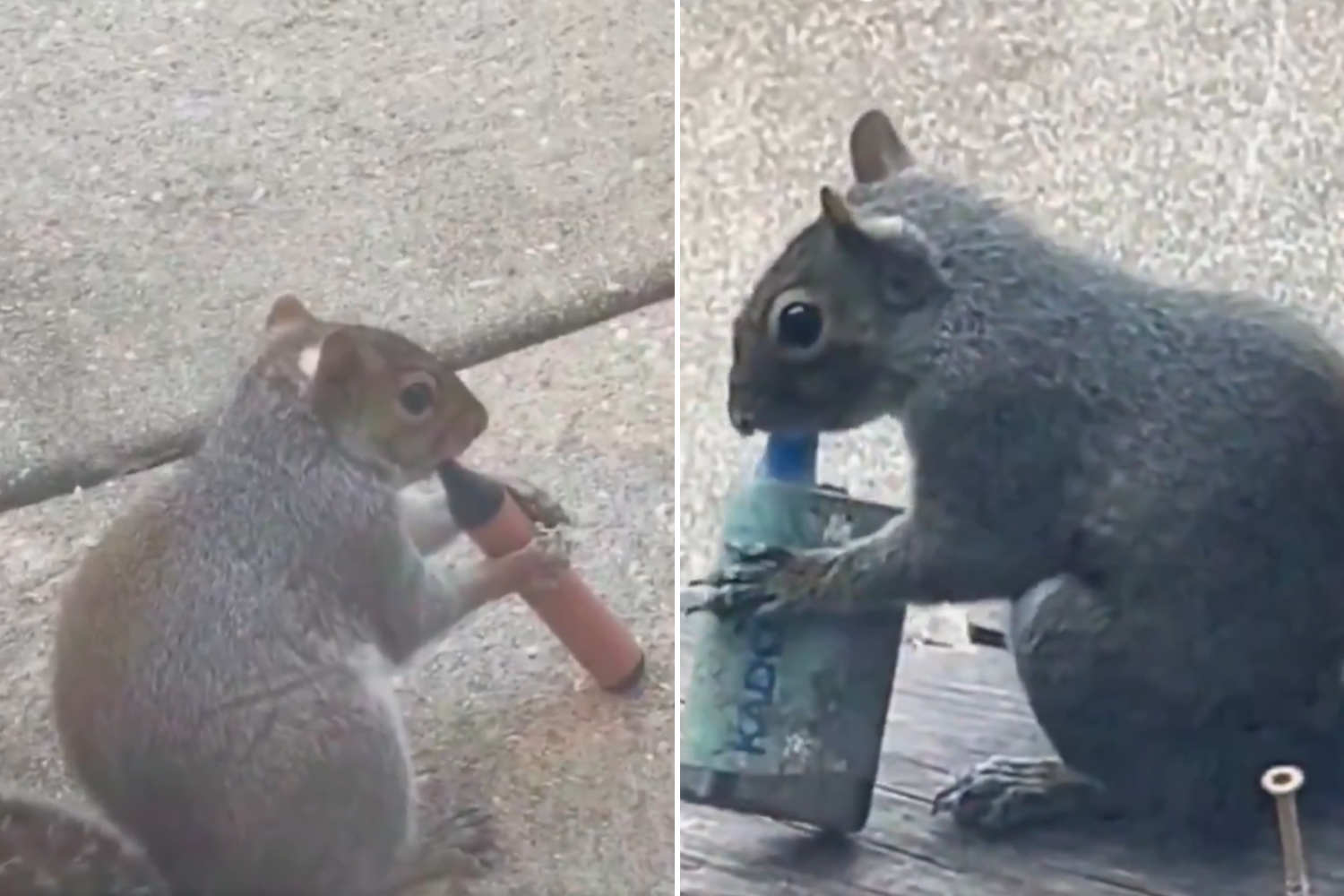
Curious but at the same time terrifying images are circulating on social media: squirrels holding disposable electronic cigarettes in their paws, as if they were “vaping”. One of the most shared videos comes from Brixton, south London, where a specimen was filmed gnawing on a device sitting on a fence. Similar scenes have also been observed in US urban contexts, helping to transform the phenomenon into a small viral case.
View this post on Instagram
Behind these images, however, there is no imitative behavior. Experts speak rather of accidental interaction with human waste, which is increasingly present in spaces frequented by urban fauna. The squirrels are not seeking nicotine or vapor, but are reacting to artificial olfactory stimuli that mimic those of natural food.
The attraction for sweet and fruity aromas
Disposable e-cigarettes contain liquids flavored with strawberry, mango, watermelon or cotton candy. For animals that heavily use their sense of smell to locate seeds and fruits, these odors are extremely deceptive. The device then becomes an object to be explored, bitten or gnawed.
According to specialists, this explains why in the past squirrels ignored traditional butts, while today they interact with e-cigs. The change is not about animals, but about the nature of modern waste, designed to be aromatic and attractive. In an urban environment, this creates new dynamics between wildlife and man-made objects.
The risks hidden in abandoned devices
What seems like a curious episode can have concrete consequences. Squirrels that gnaw on these devices can ingest microplastics, come into contact with toxic nicotine, or damage the lithium batteries inside. All elements that do not exist in their natural environment and which can cause damage.
Animal protection organizations report that e-cigarettes contain potentially hazardous materials, including plastics, chemicals and electronic components. Exposure does not imply dependence, but represents a direct toxicological risk linked to food curiosity.
A problem that goes beyond squirrels
The phenomenon does not only concern one species. Cases have also been reported in other parts of the world, including a bird in New Zealand that died after ingesting an e-cigarette. Pets are also exposed: the Veterinary Poisons Information Service has recorded hundreds of reports linked to these devices, most involving dogs.
The problem is amplified by the massive diffusion of disposable e-cigs. Millions of devices are abandoned every week and end up in parks, gardens and natural spaces. For wildlife, these objects represent false food signals that increase the likelihood of contact.
A sign of human impact on the urban environment
Squirrels that “vape” are not developing abnormal behavior. They are simply reacting to an environment increasingly filled with technological and flavored waste. Objects designed to attract humans end up confusing animals too, making it more difficult to distinguish between food and danger.
These viral images thus become an indicator of a broader change: the urban environment is evolving rapidly and fauna is finding itself interacting with new, often potentially harmful, materials. It is not nature that changes, but the context created by man that modifies the rules of interaction.
#BREAKING: Watch as viral video captured in South London show squirrels vaping with discarded e-cigarettes, seemingly drawn in by the fruity scent after mistaking it for food. pic.twitter.com/a3N4rZ9aHg
— RAWSALERTS (@rawsalerts) March 24, 2026
You might also be interested in:
