
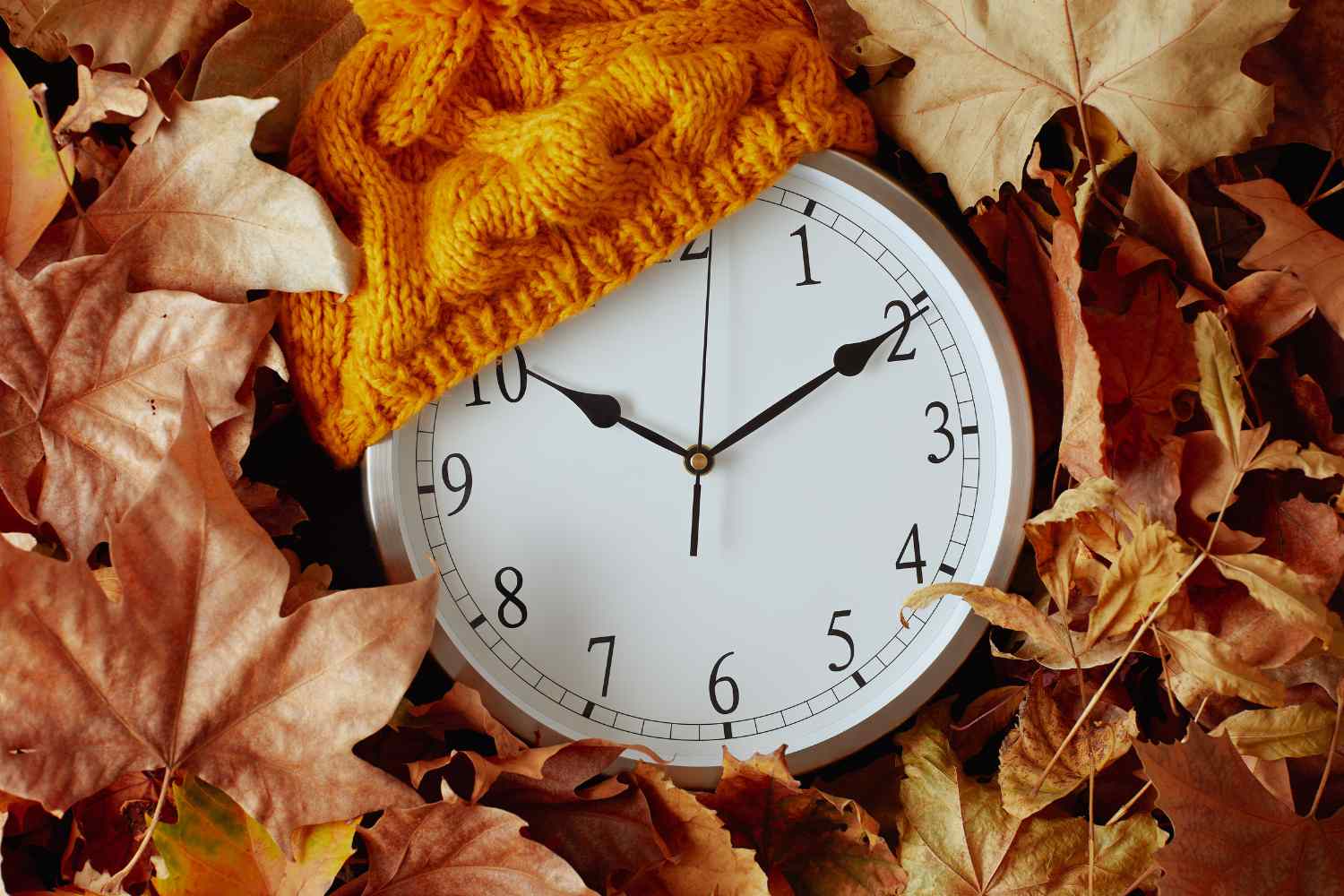
Standard time is about to return. On the night between Saturday 25 and Sunday 26 October 2025, at 3:00 sharp, we will have to move the hands back one hour, thus returning to 2:00. A small gesture that officially marks the arrival of winter, with shorter days and earlier sunsets. And yes, at least for once, we will be able to give ourselves an extra hour of sleep.
The return to “natural” time
Solar time, as the name suggests, is the one that comes closest to the natural rhythm of the sun. In other words, noon coincides (almost) with the moment when the sun reaches its highest point in the sky. Summer time, introduced to make better use of light in the summer months, artificially shifts this balance forward by sixty minutes. With the return to solar time, standard time is restored, the one on which sundials are also based.
What really changes
From Sunday 26 October, the days will suddenly seem shorter: darkness will already arrive in the late afternoon and many people will feel that drop in energy typical of the change of season, but sleeping an extra hour is not always synonymous with better rest. Several studies have shown that even a simple shift of an hour can disturb our circadian rhythm, affecting sleep, mood and even cognitive performance.
An analysis published in Journal of Biological Rhythms highlighted that in the days immediately following the time change, levels of tiredness and irritability increase. Other studies, conducted in Europe and the United States, have noted a slight increase in road accidents and emergency room visits in the days following the transition between summer and standard time. Nothing catastrophic, but enough to demonstrate that our body doesn’t like forced changes.
A difficult habit to break
The European Union had promised to abolish double time changes by 2021, after more than 80% of citizens involved in a public consultation spoke out against this practice. But the reform ended up in political limbo: no agreement between the member states, and everything remained as it was. In Italy, the government has chosen to maintain alternation, arguing that summer time helps reduce energy consumption and contain household expenses, especially in spring and summer.
Between nostalgia and habit
Every year the debate reignites: there are those who can’t wait to sleep a little more and those who instead curse the afternoons that end too early. The truth is that the time change has become a collective ritual, a small sign of the passing time and which prepares us for the cold season.
And while many will still be confused by asking “do we sleep more or less?”, on Sunday morning there will be only one answer: yes, we sleep an hour more. But the sun will greet us first.
