
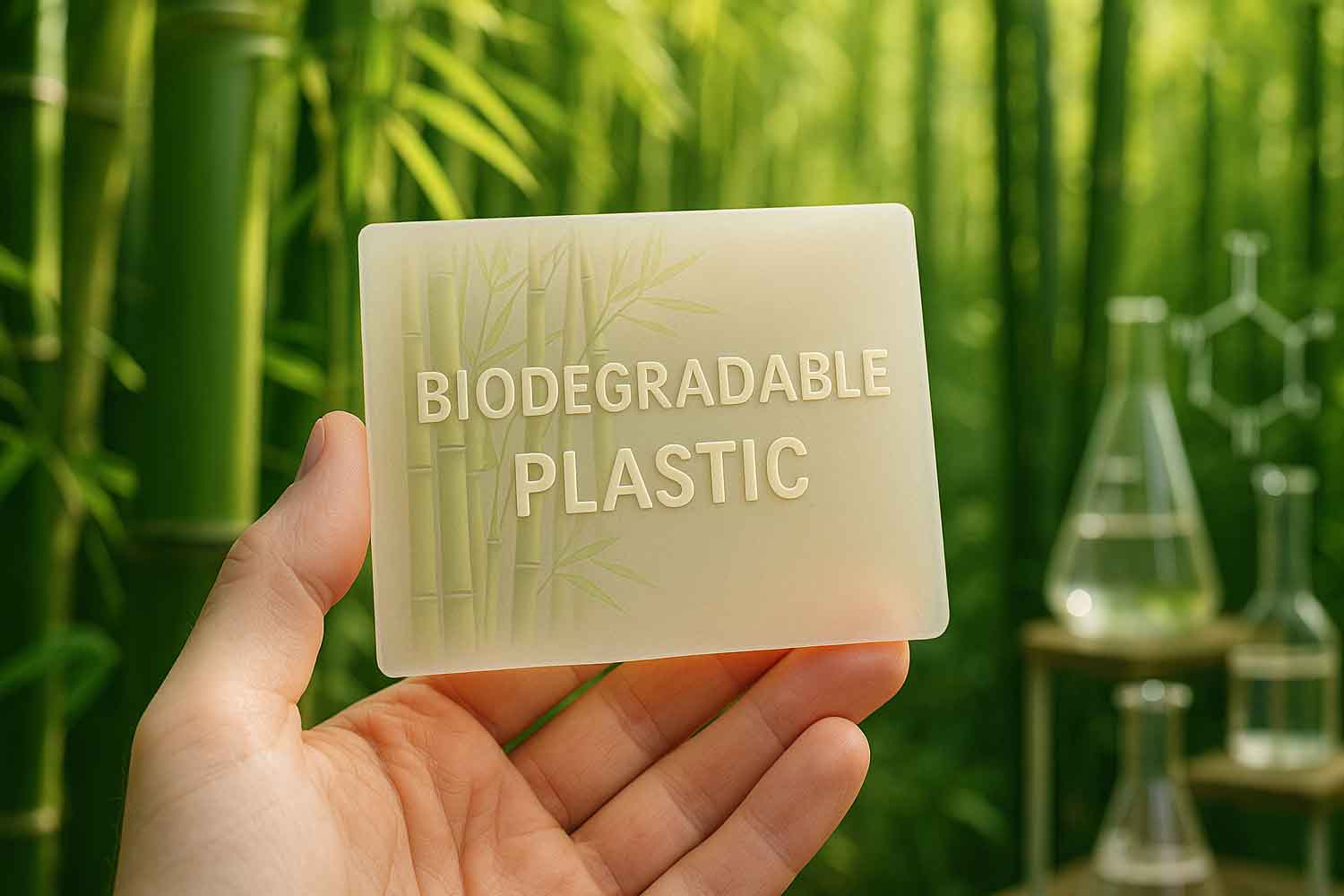
The versatility of bambooalready known for its uses in construction and crafts, is enriched with a new revolutionary application: a biodegradable plastic obtained from its cellulose, more resistant than traditional plastics and easily recyclable. It was the professor who developed it Dawei Zhaofrom the Shenyang University of Chemical Technologyin northeast China.
While progress has been made in recent years in developing flexible bioplastics to replace bags and packaging, finding a biodegradable replacement for hard plastics—such as those used in car interiors, appliances, or utensils—has remained a challenging goal. Zhao’s new bioplastic represents a turning point precisely in this area.
Production: from vegetable fibers to rigid bioplastic
The process developed by Zhao takes advantage of the bamboo cellulosea renewable material that grows rapidly and which until now was mainly used in woven or handcrafted products. Cellulose is treated with zinc chloride and a simple acidwhich break the complex polysaccharide bonds of plant fibers. Subsequently, inside the solution obtained, it is added ethanol: from this mixture a rigid plastic is born, which can be shaped using molding, injection or mechanical processing techniques.
The result is a material biodegradablerobust, and with performance thermo-mechanical superior both to traditional plastics and to other biopolymers on the market.
A limit that becomes an advantage
The only real limitation of the material is the poor flexibilitywhich does not make it suitable for every type of use. However, it is precisely in rigid applications—those that generate the most persistent and difficult to recycle plastic waste—that this bioplastic shows its greatest potential. Replacing these products means significantly reducing the environmental burden of non-biodegradable plastic.
According to what was published by the Chinese team in the magazine Naturethe new material yes decomposes completely in the soil in just 50 daysoffering minimal environmental impact. Furthermore, the cost analysis shows that the recyclability of the biopolymer allows to achieve a economic competitiveness with conventional plastics.
