
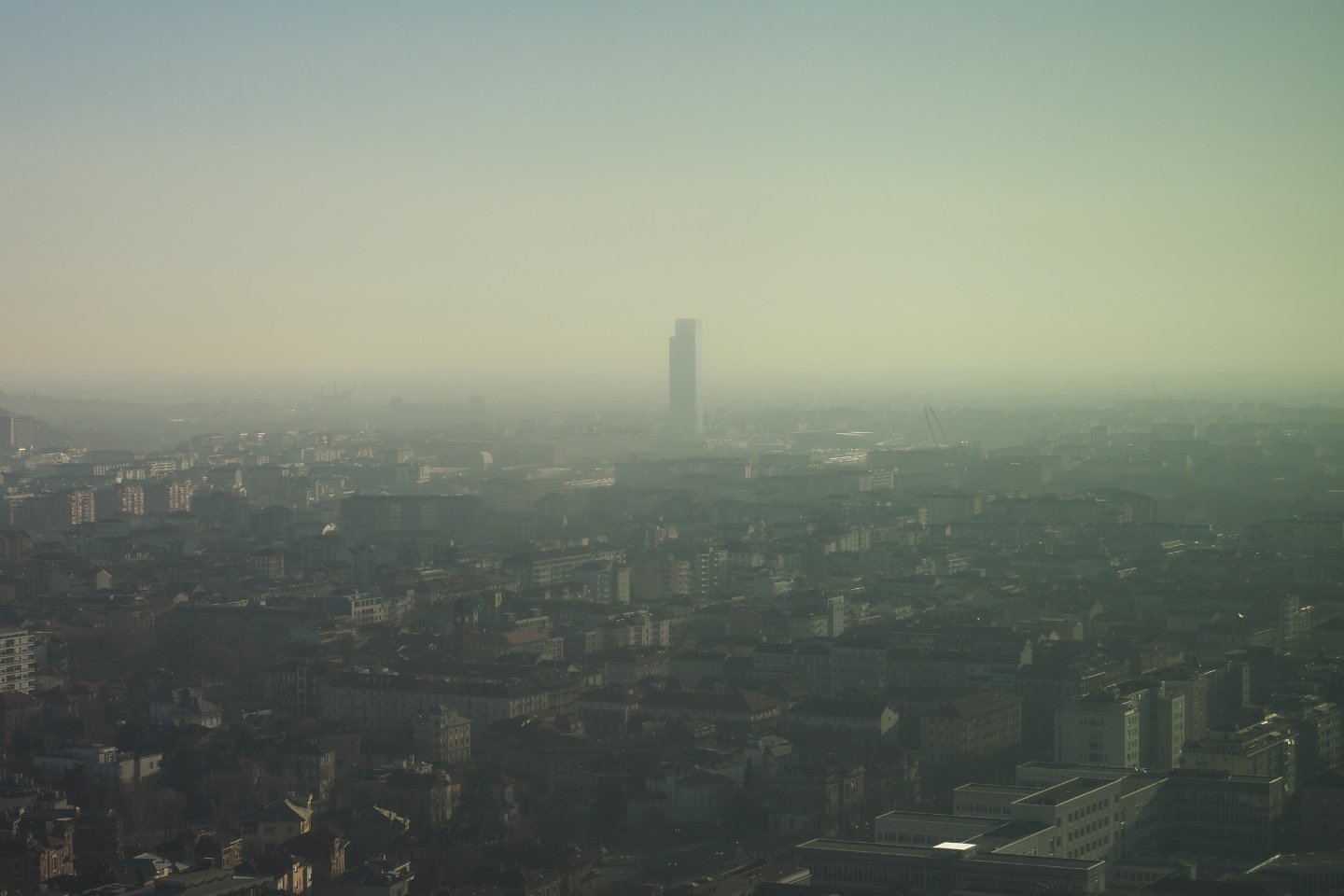
Air quality in Europe is improving, but in Italy too many people continue to die from air pollution. In our country, in 2024, an estimated 108.3 premature deaths per 100 thousand inhabitants attributable to prolonged exposure to fine dust, compared to a European average of 66.7. A gap that demonstrates the Italian difficulty in reducing one of the major environmental risk factors for health.
The situation is illustrated by the latest update from the European Environment Agency (EEA), published on 23 November 2026, which analyzes the health effects of exposure to PM2.5, atmospheric particulate matter made up of particles with a diameter equal to or less than 2.5 micrometres. Their tiny size allows them to penetrate deep into the lungs and reach the bloodstream, which also has consequences for the cardiovascular system.
Between 2005 and 2024, in the European Union, premature deaths attributable to exposure to PM2.5 concentrations above the level recommended by the World Health Organization (WHO) decreased by 57.2%. A result that confirms the early achievement of the 2030 community objective, set at 55%. Yet, in 2024 alone, the European toll was around 222 thousand premature deaths.
@European Environment Agency
Because the Italian budget is worrying
Over the last twenty years, Italy has reduced the premature mortality rate associated with exposure to fine dust by 45.1%. A progress significantly lower than that recorded in most European countries. The comparison with the other large economies of the Union is particularly significant. In France, since 2005, mortality attributable to fine particulate matter has decreased by 72.7%, in Spain by 68.2% and in Germany by 67%. Today all three countries record mortality rates less than half that of Italy. Italy is the seventh EU country for the incidence of premature deaths linked to PM2.5, preceded by Bulgaria, Romania, Greece, Croatia, Hungary and Poland.
How much the heating of our homes pollutes
European policies for improving air quality have made it possible to reduce emissions of primary fine particulates, i.e. those released directly into the atmosphere, by 42.5%. The most significant progress concerns transport (-61.5%) and industry (-47.3%). The reduction in emissions produced by domestic heating was slower (-35.1%), which remains the main source of primary fine particulate matter in the European Union. Also causing concern are ammonia emissions, mainly attributable to agricultural and livestock activities. This substance contributes to the formation of fine dust through chemical reactions in the atmosphere. Since 2005 its emissions have fallen by just 18%.
In European cities, breathing healthy air is still an exception
Perhaps the most eloquent data from the report concerns the daily exposure of citizens: in 2024, 95.1% of the EU urban population breathed air with concentrations of fine particles above the level recommended by the WHO, equal to 5 micrograms per cubic meter. The European Environment Agency urges caution: the annual fluctuations in pollution levels and associated mortality mean that the measures adopted so far must be maintained and strengthened. For Italy, where the benefits of environmental policies on health have been more limited, the priorities remain the reduction of agricultural emissions, the energy requalification of homes and investments in sustainable mobility. Interventions on which the possibility of meeting the new European air quality standards by 2030 will also depend.
