
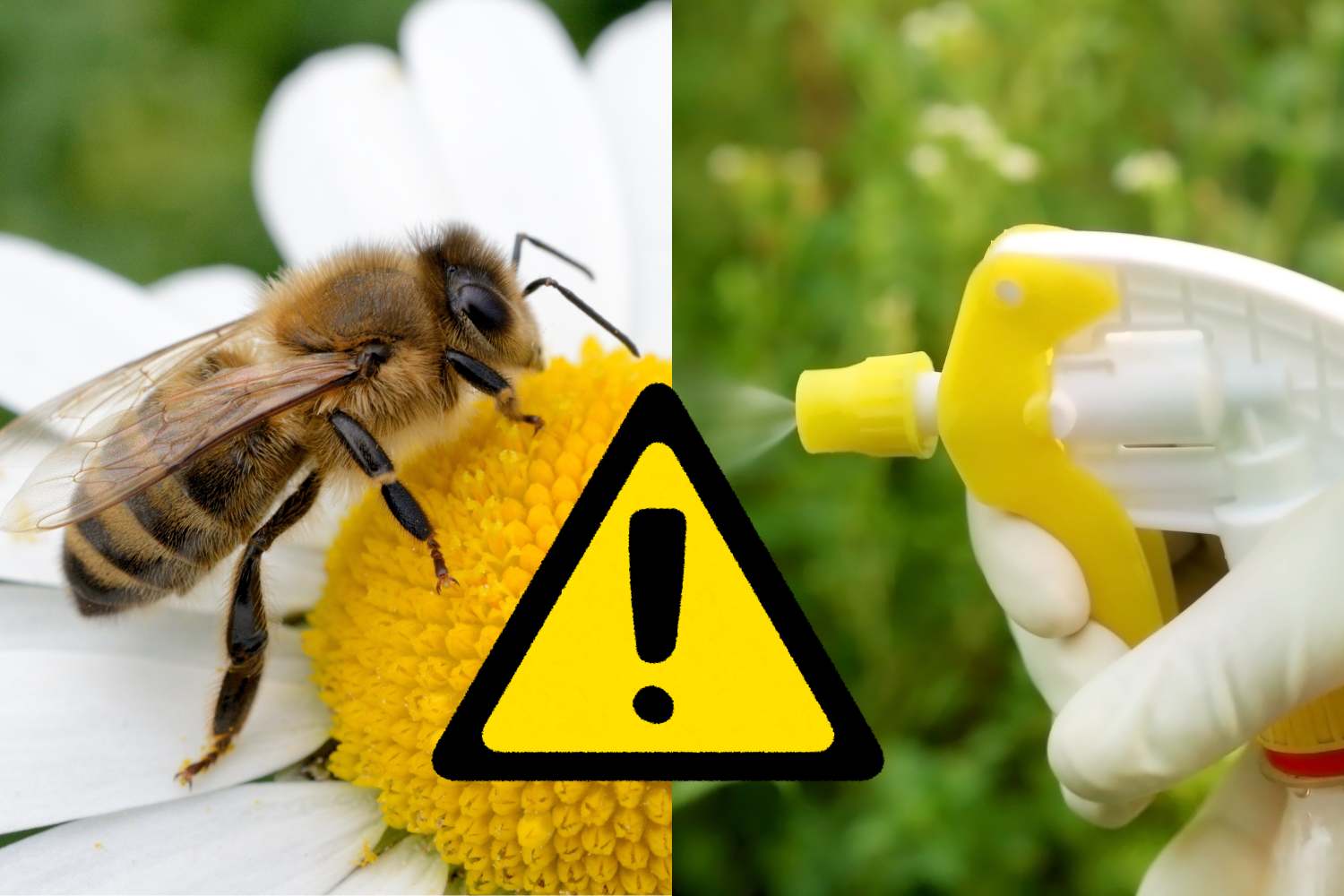
Surprisingly, Générations Futures reveals that acetamiprid, the neonicotinoid recently returned to the fore for the Duplicomb law in France, will not be authorized again as a biocida in Europe from January 2027.
If you are thinking that Europe has finally intervened to protect citizens’ health and the environment, we immediately tell you that it is not so: the decision not to renew the authorization was made by the same manufacturer, Nisso Chemical Europe, who did not submit the application for renewal, expired on July 31, 2025.
It should be specified that Nisso is the only European company to produce acetamiprid, consequently, domestic insecticides based on this active ingredient will gradually disappear from the market starting from 2027, up to a total ban at the beginning of 2028.
Good news, but only partially, because this decision only concerns biocidal use, therefore the domestic one. Acetamiprid used in agriculture remains still authorized and could continue to be used in the fields, until agricultural authorization is revoked.
What is acetamiprid and because it is scary
Acetamiprid belongs to the neonicotinoid family, pesticides that affect the nervous system of insects. Its effectiveness against parasites and harmful insects is well known, but the possible risks to human health and the environment have raised growing concerns.
Recent studies suggest potential neurotoxic effects and endocrine interference, especially on development. Consequently, EFSA (European Food Safety Authority) has revised the exposure thresholds considered safe, underlining the need to limit the use of acetamiprid to reduce risks.
Générasments Futures, already in May 2025, had asked for the withdrawal of the substance both from agricultural uses and domestic biocides, underlining that each application represents a real danger for citizens and the environment.
Total prohibition is also needed in agriculture
But how come the company now took a step back? Pauline Cervan, Générations Futures toxicologist, replied to this question:
The producers knew that acetamiprid had no possibility of being authorized again, given the unacceptable risk it represents. It is likely that they have decided to abandon its biocidal use aware of the data already available on its danger.
In fact, this decision raises many doubts about the information that the company has regarding the toxicity of the substance in question. At the same time, in fact, Nisso is leading further studies in the context of pesticides regulations to evaluate the potential of endocrine interference and neurotoxicity on development (DNT effect). The results of these studies should be presented to the EFSA in mid 2026.
“Are preliminary results of these studies that could have pushed the company to consider the abandonment of biocidal use?“Asks Generations Futures.
As we have already mentioned above, however, this backward marks only domestic insecticides. Acetamiprid used in agriculture remains still authorized and could continue to be used in the fields.
Because of this, Générasments Futures He also asks for total ban in agriculture, underlining that the risks for human health and the environment do not disappear simply because the product will no longer be sold to private individuals. The Association invites the French and European authorities not to grant new exemptions, thus protecting citizens, environment and biodiversity from this dangerous neonicotinoid.
