
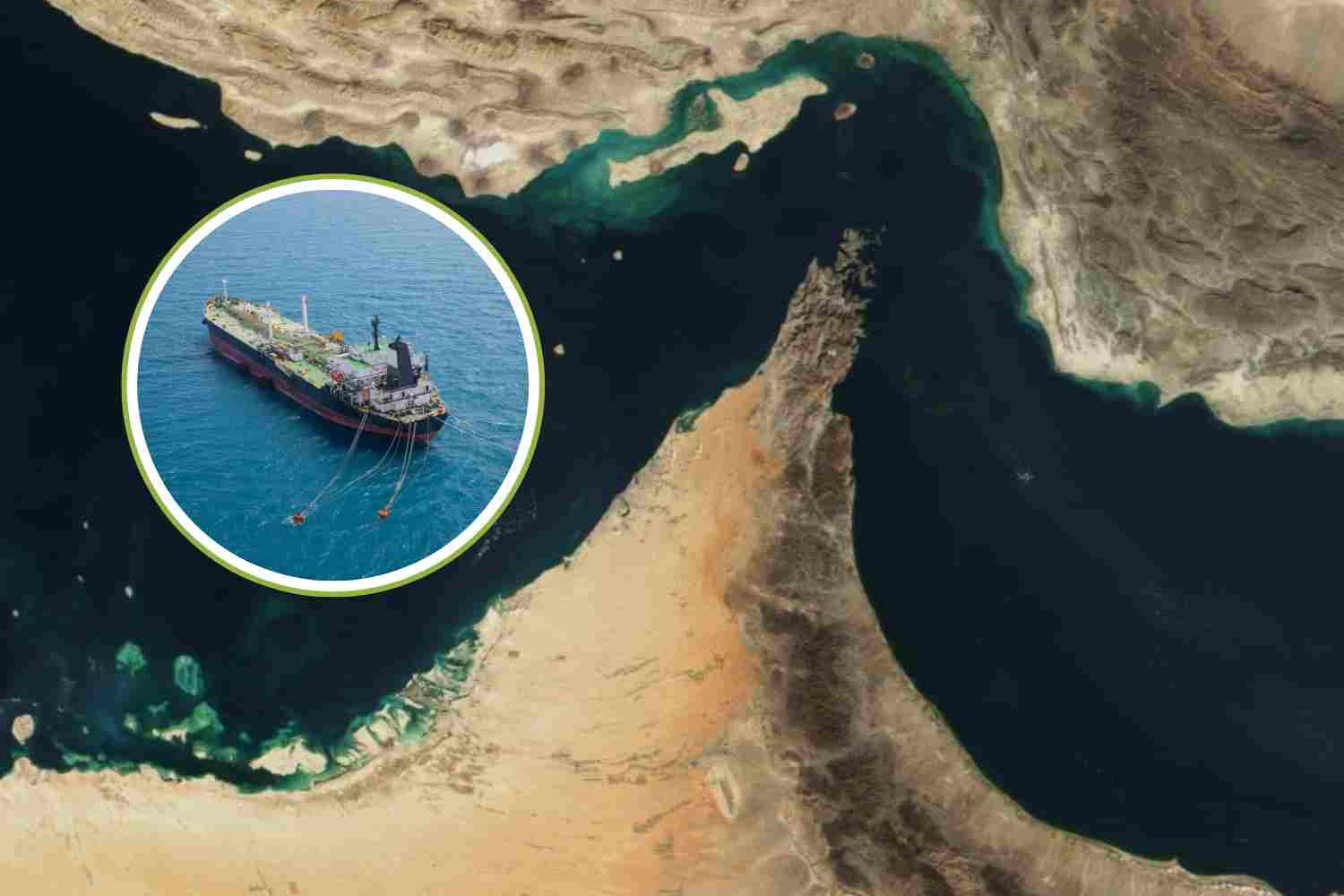
At 4pm Italian time, the naval blockade announced by Donald Trump in the Strait of Hormuz, the maritime corridor through which approximately 20% of the world’s oil transits, came into force. The decision comes after the failure of negotiations between the United States and Iran and marks a qualitative leap in the pressure on Tehran: directly hitting energy flows, without formally closing the Strait.
A high-risk “selective” blockade
On paper it’s not exactly a total closure. The US Central Command has specified that ships headed to Iranian ports will be stopped, while traffic to other ports should remain free. A distinction which, however, in an already congested and militarized area, is difficult to apply without friction. Trump has further raised the level of the conflict, threatening the use of force against any Iranian units. “If they get close, they will be eliminated,” he wrote on his social network Truth. A line which, for several observers, brings the blockade closer to an act of war rather than a measure of economic deterrence.
Prices out of control and a rush for crude oil
Markets reacted before the lockdown even came into force. Oil has exceeded 100 dollars a barrel and some trading, according to Bloomberg, has reached 140. Asian refineries, say traders quoted by agencies, are purchasing available cargoes “wherever possible”, without considering price as the main variable anymore. The issue is structural: a decisive share of global supply passes through Hormuz. Even a partial reduction in traffic subtracts millions of barrels a day from the market.
According to estimates, up to 7 million barrels of crude oil and derivatives could be missing. In a prolonged scenario, some analysts do not rule out an approach to $200.
Also fertilizers and food
The blockade is not just about oil. More than 30% of the world’s urea, a key component of fertilizers, passes through the Strait. An interruption of the routes therefore risks having an impact on global agricultural production and food prices. The first signs are already visible. According to Asia Times, more than 230 oil tankers are stopped in the area, while in the Gulf countries there are difficulties in importing essential goods. A ripple effect that goes far beyond the energy sector.
Fractures between allies and Chinese pressure
The international response is far from united. China, which absorbs about 90% of Iranian oil exports, has defended freedom of navigation, calling it a global interest. A message directed to Washington, which opens a broader geopolitical front. Divergent positions emerge in Europe. British Prime Minister Keir Starmer has ruled out direct UK involvement, while Emmanuel Macron has proposed an international mission to ensure the safety of the route. The goal is to contain the escalation without fully aligning with the American strategy.
Tehran
From Iran the response is twofold. On the one hand, there is minimisation, with the navy calling the blockade “ridiculous”. On the other, explicit warnings. Speaker of Parliament Mohammad Bagher Ghalibaf wrote: “Enjoy the current pump prices. You will soon regret them.” The armed forces have been placed on maximum alert. The risk, several analysts point out, is that a single accident at sea could trigger an escalation that is difficult to control.
Enjoy the current pump figures. With the so-called ‘blockade’, Soon you’ll be nostalgic for $4–$5 gas.
ΔO_BSOH>0 ⇒ f(f(O))>f(O) pic.twitter.com/rVxlC6vFWG
— محمدباقر قالیباف | MB Ghalibaf (@mb_ghalibaf) April 12, 2026
The impact on Europe
For Europe the consequences are immediate. Gas already remains around 40% above pre-conflict levels and a further oil shock would result in widespread increases in prices: fuel, transport, industrial production. For Italy, heavily dependent on energy imports, the effect would be quickly reflected in consumer prices. But there is also a structural issue: crises of this type tend to slow down the ecological transition. In emergency conditions, governments and businesses prioritize security of supply over decarbonisation. The result is a fragile balance: a crisis generated around fossil resources that ends up temporarily strengthening their weight.
A lever that can backfire
Washington’s stated goal is to target Iranian revenues. But the risk is broader: destabilizing markets, breaking alliances and opening new fronts of global tension. The Strait of Hormuz remains one of the most sensitive points in the world economic system. Intervening militarily means acting on a delicate mechanism, where every interruption produces immediate and difficult to control effects. More than a solution, the blockade appears like a high-risk gamble. And, as often happens in these cases, the bill could reach far beyond the Persian Gulf.
