
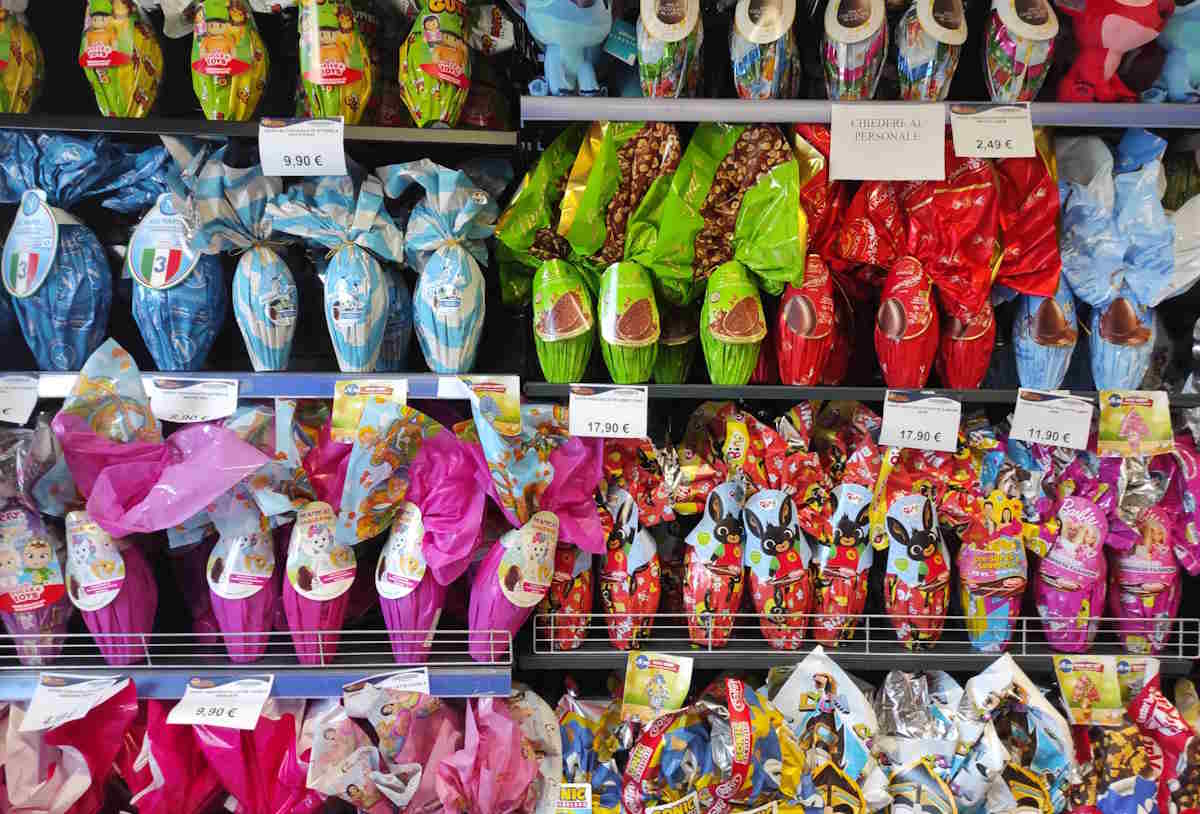
As Easter approaches, one of the symbolic products of the occasion returns to supermarket shelves: the chocolate egg. But this year, more than the surprise inside, what is surprising, in a negative sense, are the dimensions and the price. According to a survey conducted by Udicon (Consumer Defense Union) in collaboration with the Piepoli Institute, almost 9 out of 10 Italians report an increase in the prices of typical Easter products, while 46% of those interviewed perceive chocolate eggs as smaller than in previous years. 85% consider them simply too expensive.
What is shrinkflation?
To understand the phenomenon at the center of the controversy, we need to take a step back. Shrinkflation, a term born from the fusion of English shrink (reduce) e inflation (inflation), indicates an increasingly widespread commercial practice: companies, instead of openly increasing the price of a product, reduce the quantity or size while keeping the packaging unchanged and, often, also the price at the counter. The result is that the consumer pays the same, or even more, to receive less.
This is a form of “hidden” inflation, difficult to identify at a glance precisely because the packaging remains apparently identical. A pack of biscuits that previously contained 400 grams now contains 350; a chocolate bar becomes thin; an Easter egg shrinks. The phenomenon is not new, it has been documented in numerous countries since the 2000s, but it has experienced a strong acceleration in recent years, driven by the increase in the costs of raw materials, energy and logistics.
The case of Easter eggs
In the Easter context, shrinkflation is felt particularly clearly. The Udicon-Piepoli survey reveals that 84% of Italians have explicitly recognized the mechanism: prices and packaging remain the same, but the content is reduced. A phenomenon that does not go unnoticed and which has concrete consequences: three out of four consumers declare that shrinkflation directly affects their purchasing choices.
“It’s not just a question of higher prices: more and more consumers have the feeling of paying more for products that often offer less. It’s a widespread perception that affects trust and the relationship between citizens and companies.”
says Martina Donini National President of Udicon
“For this reason – he continues – it is essential that the market is increasingly transparent. If production costs increase, it is right that the price reflects this clearly, but reducing quantities while maintaining the same price risks generating confusion and mistrust. Consumers must be able to immediately understand what they are buying and how much they are paying”
Transparency and consumer protection
The discontent revealed by the survey reflects a broader issue of trust between producers and buyers. Udicon calls for greater transparency in the communication of product changes and hopes for regulatory interventions that oblige companies to visibly report any changes in quantity or format, so as to allow consumers to make truly informed choices.
In the meantime, the practical advice remains to always check the price per kilo or per liter shown on the label – the only data that allows you to compare products with different weights and unmask, numbers in hand, shrinkflation.
