
The climate crisis accelerates, raw materials become increasingly difficult to find and fossil fuels continue to weigh on European economies. Yet, just as the international scenario seems to hinder the ecological transition, new economic, industrial and environmental reasons for investing in sustainability are emerging.
This is the starting point of the fifteenth edition of the States General of the Green Economy, scheduled for 3 and 4 November 2026 at the Rimini Expo Center, as part of Ecomondo. The event, promoted by the Foundation for Sustainable Development, will bring together institutions, businesses and experts to take stock of the future of the green economy, with particular attention to decarbonisation, the circular economy and the protection of natural resources.
At the center of the first day there will be the presentation of the Report on the state of the Green Economy 2026, which will analyze the Italian situation and identify eight international factors capable of supporting the ecological transition even in the current geopolitical context.
In a critical geopolitical context due to the ongoing wars, the growing economic difficulties, the regressive and denialist policies – underlines Edo Ronchi, President of the Foundation for Sustainable Development – the risks of being dragged by narrow visions are very high and widespread, giving illusory answers that do not solve the problems and thus do not grasp the actual priorities, opportunities and positive impulses”
The 8 factors that are driving the ecological transition
1. Growing awareness of the severity of the climate crisis
Heat waves, droughts, floods and extreme weather events are making the consequences of global warming increasingly tangible. The high temperatures of last summer contributed to around 50,000 deaths in Europe, of which 8,700 in Italy, according to estimates from a study by Imperial College London. Numbers that bring attention to the need to strengthen mitigation and adaptation policies. Climate change no longer represents just a future threat, but an issue that directly affects people’s health, safety and quality of life.
2. The insecurity of supplies and the very high prices of oil and gas
Dependence on fossil fuels exposes Europe to international price fluctuations and geopolitical tensions. According to estimates, in 2026 annual European spending on gas could exceed 240-250 billion euros, compared to around 40 billion recorded in 2019. That on oil could also increase by around 45 billion. In this scenario, reducing the consumption of fossil fuels takes on a meaning that goes beyond climate protection: it also means improving energy security, reducing dependence on imports and protecting families and businesses from market volatility.
3. Supply difficulties and rising prices of numerous raw materials.
The availability of essential materials for industry is another element destined to influence economic choices in the coming years. Between 2009 and 2024, the number of export restrictions on critical raw materials introduced by various countries increased fivefold. The answer also passes through the circular economy, which aims to extend the life of products, recover materials, encourage reuse and reduce waste production. Recycling and using resources better, therefore, is not only an environmental choice, but also a tool to make economies less vulnerable to supply crises.
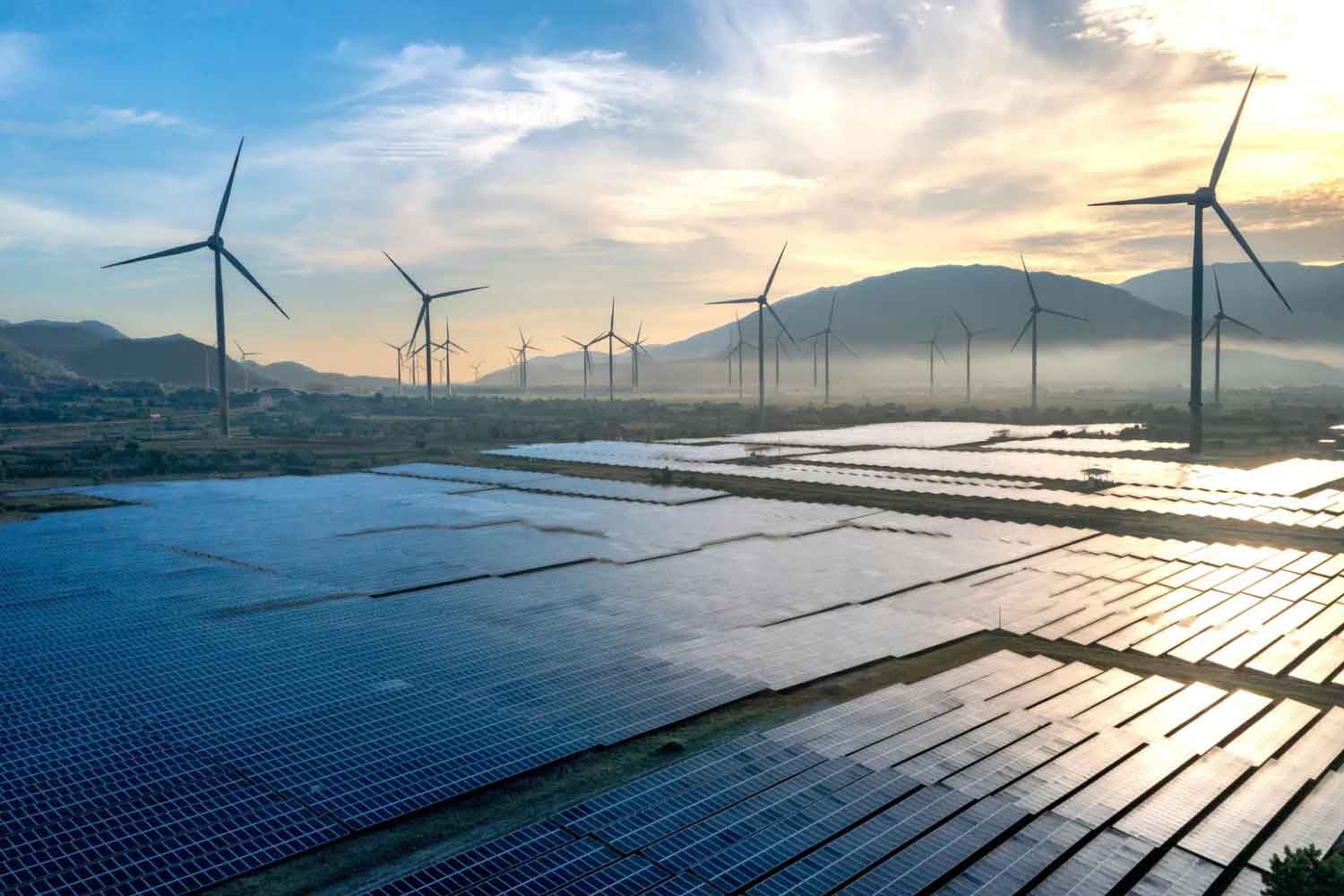
4. The rapid global growth of renewables
One of the most important signals comes from global electricity production. In this context, electricity generated from renewable sources worldwide has more than doubled from 2015 to 2025. The share generated by renewable sources has in fact risen from 23.5% to 34.1%, despite the fact that electricity consumption has grown by 33% and its costs have decreased. The increase in renewables is today not only a cornerstone of decarbonisation, but the quick and practicable way to reduce electricity bills.
5. The global spread of electric cars
The automotive sector is also undergoing a significant transformation. In 2020, electric cars represented just 5% of new registrations worldwide. Five years later, considering fully electric and plug-in hybrid vehicles, registrations have reached 21.2 million units, exceeding 25% of the global market. A growth that opens up new industrial opportunities, but also raises questions about the future of the European automotive sector, grappling with international competition and the need to reconvert part of production. According to the approach proposed by the States General, electric mobility could become a relaunch lever for European industry, provided that its development is accompanied with effective industrial policies, investments and technological innovation.
6. Evidence of the economic impacts of the natural capital crisis
The nature crisis does not only concern ecosystems and species threatened with extinction. Soil degradation, deforestation, the impoverishment of biodiversity and the reduction of water resources can have direct consequences on agriculture, industrial production and the availability of essential goods.
UNEP’s State of Finance for Nature 2026 report highlights how awareness of the risks linked to the loss of natural capital has grown. The protection of ecosystems thus takes on an increasingly important role in economic strategies. Protecting forests, soils and water resources means preserving natural services essential for food production, climate regulation and the functioning of numerous human activities.
7. The potential of artificial intelligence developments
From managing electricity networks to optimizing industrial processes, artificial intelligence offers new possibilities for using energy and resources more efficiently. Algorithms can help predict the production of renewable plants, manage smart grids, reduce waste in production processes and improve climate risk monitoring systems. But its development also brings with it important critical issues. The energy and water consumption of data centers, the concentration of technologies in the hands of a few large operators and the risks linked to the democratic control of digital systems require particular attention. For artificial intelligence to concretely contribute to sustainability, it will also be necessary to evaluate its environmental and social costs.
8. Climate change becomes a financial risk: the “green swan” phenomenon
The last factor concerns a less visible, but potentially decisive transformation: the growing awareness of climate risks among businesses and investors. The concept of “green swan” describes the effects that the climate crisis can trigger on the entire economic and financial system.
Floods, fires, droughts and other extreme phenomena can damage infrastructure, reduce productivity, disrupt supply chains and increase pressure on public budgets. Damage can also ripple through the financial system and contribute to rising prices. However, the need to manage these risks can push companies and investors to direct more resources towards low-emission technologies, resilient infrastructures and economic activities less exposed to climate impacts.
Ecomondo 2026: 4 days dedicated to the circular economy and the ecological transition
From 3 to 6 November 2026, the Rimini Fair will host the 29th edition of Ecomondo, the international event dedicated to the green, blue and circular economy, organized by the Italian Exhibition Group. Four days of meetings, conferences and insights that will bring together companies, institutions, universities and research centers to discuss the most innovative technologies and solutions for sustainability. The 2026 program will range from waste management to the recovery of critical raw materials, from the protection of water resources to soil regeneration, up to the applications of artificial intelligence for the environment. Ample space will also be reserved for circular fashion, biodiversity, sustainable cities, green finance and strategies for dealing with extreme climate events.
The events on the calendar include meetings dedicated to industrial decarbonisation, air quality, green and blue infrastructures and the role of new technologies in reducing environmental impacts. There will be no shortage of insights into cooperation between Europe, the Mediterranean and Africa and the opportunities offered by the circular economy to businesses. Alongside the States General of the Green Economy, scheduled for 3 and 4 November, Ecomondo will also offer a large exhibition area dedicated to environmental technologies and innovations for industry.
The complete program, with the times and appointments of the four days, is available on the official Ecomondo 2026 website.
