
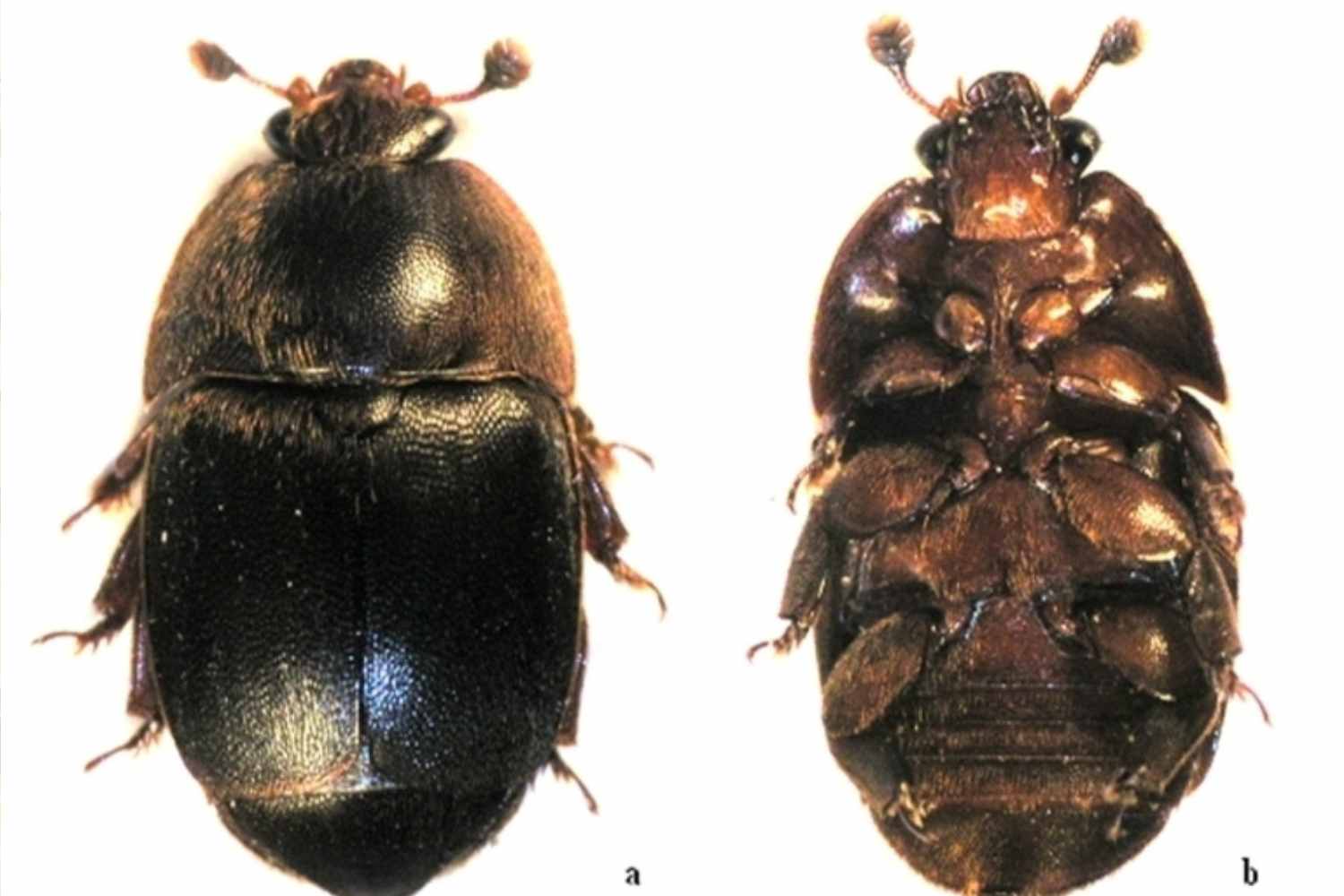
A few millimeters of insect were enough to stop an entire compartment. This is what happened in Gaeta, where theAethina tumidathe so-called hive beetle, an episode that activated the health machine. This is an alien species that until yesterday seemed confined to the extreme South and which has now moved up the peninsula, thanks to a movement of hives that was anything but regular. Confirmation came from the Experimental Zooprophylactic Institute of Lazio and Tuscany, which with the test report dated 4 June identified the parasite under an optical microscope. The offending hive, as reconstructed by the Ministry of Health, came from an apiary in the province of Vibo Valentia and had been moved on May 31st without respecting the rules on handling. On 2 June the veterinary service of the Latina ASL had already been alerted to the presence of suspicious insects.
Sixteen municipalities under observation, factories blocked
On the basis of the Aethina tumida national surveillance plan, the veterinary services of the Latina and Frosinone local health authorities have blocked the beekeeping establishments that fall within the 20 kilometer protection zone. The municipalities affected are Campodimele, Fondi, Formia, Gaeta, Itri, Lenola, Minturno, Monte San Biagio, Santi Cosma e Damiano, Sperlonga and Spigno Saturnia, to which are added the centers falling within the wider surveillance area.
The management of the Directorate General for Animal Health establishes restrictions on the movement of bees, bumblebees and products at risk from the protection and surveillance zones towards the rest of the national territory and the other Member States of the Union. The recommendation to beekeepers, also reiterated by ASL Roma 5, is to follow good beekeeping practices and, above all, the rules governing the movement of hives. Because it is precisely there, in the transfer of biological material, that the containment game is played.
What is Aethina tumida: the focus
The insect is native to sub-Saharan Africa, where it coexists with local bees without causing significant damage, given that the native colonies have developed effective defenses. The problem arises when it leaves its range. The first report in the Western Hemisphere was from a commercial apiary in Florida in May 1998, with identification confirmed on July 13 of that year. Since then it has settled in the United States, Australia, Canada and Egypt, almost always through the bee trade. In Italy it appeared for the first time in Calabria in September 2014.
The life cycle explains the danger of the parasite. The females lay masses of eggs in the cracks of the hive or directly on the brood combs; within two to four days the eggs hatch and the larvae immediately begin to feed on pollen, honey and brood. It is the larvae (which we can observe in the image below), not the adults, that do the bulk of the damage, because they dig tunnels in the honeycombs and contaminate the honey with their own excrement. The result is well described by U.S. Agricultural Extension Services: The feces causes discoloration, fermentation, and foaming of the honey, while the infested hive appears slimy, drips fermented honey, and gives off a rotten odor similar to rotting oranges, which acts as a repellent to bees. At that point the queen stops laying, the bees abandon the combs and the colony can collapse.
@commons.wikimedia
An often overlooked detail concerns the soil, given that the mature larvae leave the hive to pupate in the surrounding soil, about ten centimeters deep: for this reason the insect prefers warm and humid environments to complete its cycle and is more harmful in regions with a mild climate, as the USDA APHIS sheet reminds us. A characteristic that makes the coastal areas of lower Lazio potentially favorable terrain.
The bad news, for those hoping for a natural barrier, has been put in black and white by the European Food Safety Authority. According to EFSA’s assessment, until the beetle is eradicated it is advisable to maintain restrictions on the movement of bees, bumblebees and related products from infested areas to free areas. And the maps modeled by the Agency indicate that, once introduced, the insect could complete its cycle in all Member States of the Union between May and September. Natural diffusion is slow (the same study estimates over a hundred years to cover the 250 kilometers from Calabria to Abruzzo), the problem concerns the possible movement of even a single infected hive, which can cancel this distance in an afternoon, as happened in the case of Gaeta.
On the human health front, there is no alarm: the parasite does not pose a risk to people. The damage is entirely productive and falls on beekeepers, in a sector already affected by climate change and loss of biodiversity. Some perspectives come from research: ENEA is developing an RNA biopesticide capable of silencing an essential gene of the beetle, without effects on the environment and bees. For now the most effective weapon remains the oldest, that is, checking the hives, reporting suspicions, and not moving anything without authorization. For those wishing to delve deeper into the biology and control methods, reference can be made to the review published in Current Zoology (Oxford University Press).
