
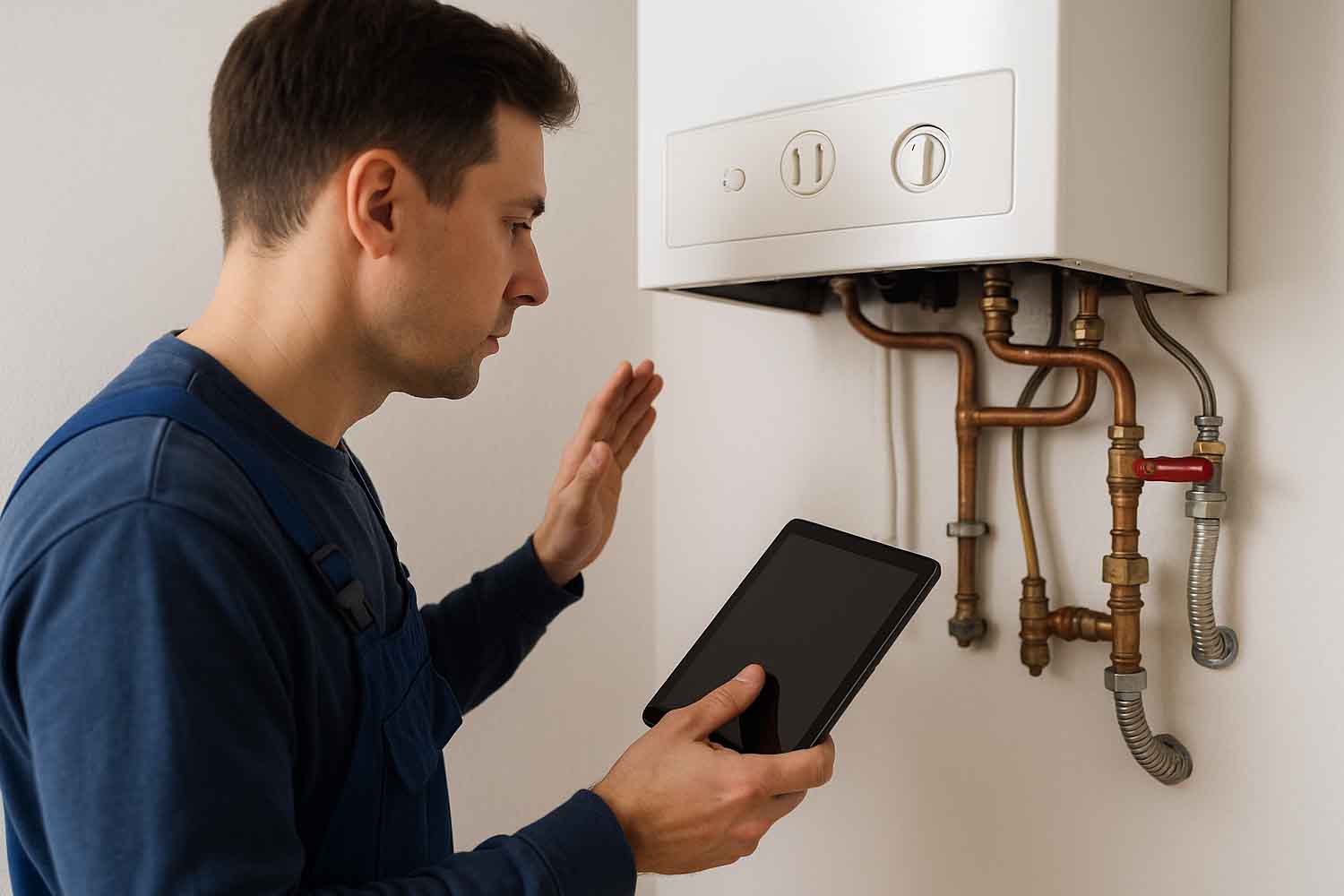
In general silence, the Ministry of the Environment and Energy Security is working on a decree intended to rewrite the rules on controls of heating systems. A technical text, still in draft, which however could have very concrete effects on the daily lives of millions of families. The provision, which should surpass the 2013 legislation, introduces a clear turning point: for boilers under 70 kilowatts, i.e. almost all domestic ones, direct inspections in homes would disappear.
In Italy we are talking about around 20 million gas boilers, with one figure that weighs more than others: 7 million are over fifteen years old. According to the new approach, these systems would only be controlled remotely, without physical verification by technicians anymore. A choice that immediately raised the concerns of the Artisans Union of Milan, Monza and Brianza, which represents thousands of operators engaged in these very activities.
Boiler inspection every four years
The heart of the decree is the introduction of a new national standard: an energy efficiency check every four years. The Regions will be able to maintain more stringent rules, but only by explaining the reasons in detail and obtaining authorization from the ministry. A uniform framework which, according to the artisans, however, risks leveling the most effective control systems built over the years by some territories.
This is the case of Lombardy, where today 5% of boilers are inspected every year, as required by regional legislation. A model that does not arise by chance: heating systems are among the main sources of emissions in urban areas and play a key role in air quality. Reducing controls, warns the Craftsmen’s Union, means accepting more waste, more emissions and less prevention.
Home safety and air quality
Periodic checks are not only used to verify energy performance. They guarantee safety, help reduce consumption and limit harmful emissions. Marco Accornero, general secretary of the Artisans Union, explains to Corriere della Sera:
It is true that these interventions have a cost for families, but eliminating them to save money is like removing the MOT from cars: the risk is having more accidents and more pollution.
The numbers from the Italian Gas Committee reinforce the alarm: between 2019 and 2023, 1,119 gas-related accidents were recorded, with 128 deaths and 1,784 injuries. Data that shows how central prevention remains, especially in a country where many systems are old and inefficient.
In the Po Valley, one of the most polluted areas in Europe, the link between domestic heating and smog is evident. In Lombardy, it is not uncommon for emergency measures to be taken when the systems are switched on to exceed the fine dust thresholds. Hence the artisans’ request to the government: to stop, review the text and evaluate the real impact of the decree before final approval.
You might also be interested in:
