
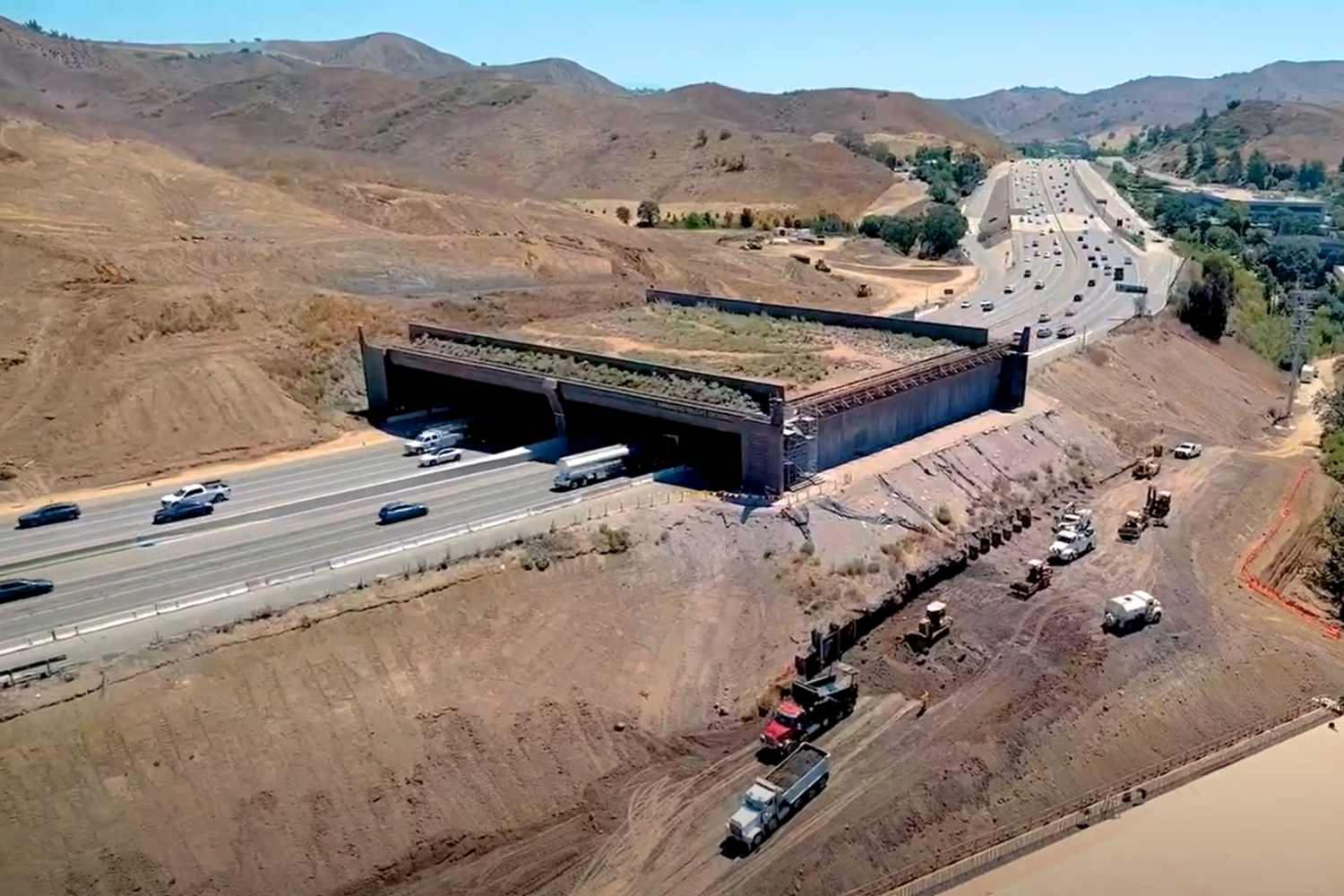
California is preparing to cross a new frontier in the protection of global biodiversity. On December 2, 2026, the Wallis Annenberg Wildlife Crossing will officially open, a majestic green infrastructure designed to span the 10 lanes of the busy US 101 Freeway in Agoura Hills, northwest of Los Angeles. With a total area of approximately 5,200 square meters – divided between the main span of 4,000 square meters above the arterial road and a second passage of 1,150 square meters above Agoura Road – the structure stands as the largest wildlife overpass in the world. The work, with a financial value of 114 million dollars, was created to restore the biological corridor between the Santa Monica Mountains, the Simi Hills, the Santa Susana Mountains and the Los Padres National Forest.
The inspiration for this impressive infrastructural challenge has its roots in the history of P-22, the famous puma which remained confined for years within the urban area of Angelina. As pointed out by Beth Pratt, regional director for California of the National Wildlife Federation, the presence of major communication arteries has transformed natural ecosystems into isolated islands, threatening the survival of wild species. The construction of the viaduct began in 2022 and required complex structural interventions, including the underground movement of high voltage power lines, the diversion of a water main and the protection of the centuries-old oak trees present in Liberty Canyon.
Botany, genetics and the restoration of biological corridors
The primary objective of green infrastructure is to break down the barrier effect caused by vehicular traffic and drastically reduce the high mortality caused by road investments. The work will allow the safe passage of numerous wildlife species, including pumas, deer, coyotes, bobcats, bears and foxes. From a genetic point of view, the passage plays a crucial role in avoiding the extinction of local feline populations: the head of the fauna section of the Santa Monica Mountains National Recreation Area, Seth Riley, highlighted how over 25 years of studies have demonstrated the serious impact of the highway on the gene flow of large predators.
The construction site is currently focusing on creating the actual natural habitat. The project involves the planting of approximately 50,000 native trees, shrubs and perennials, accompanied by the ecological restoration of a further 5 hectares of open space. A futuristic investment that promises to transform the coexistence between the urban development of Los Angeles and the wild nature of California.
