
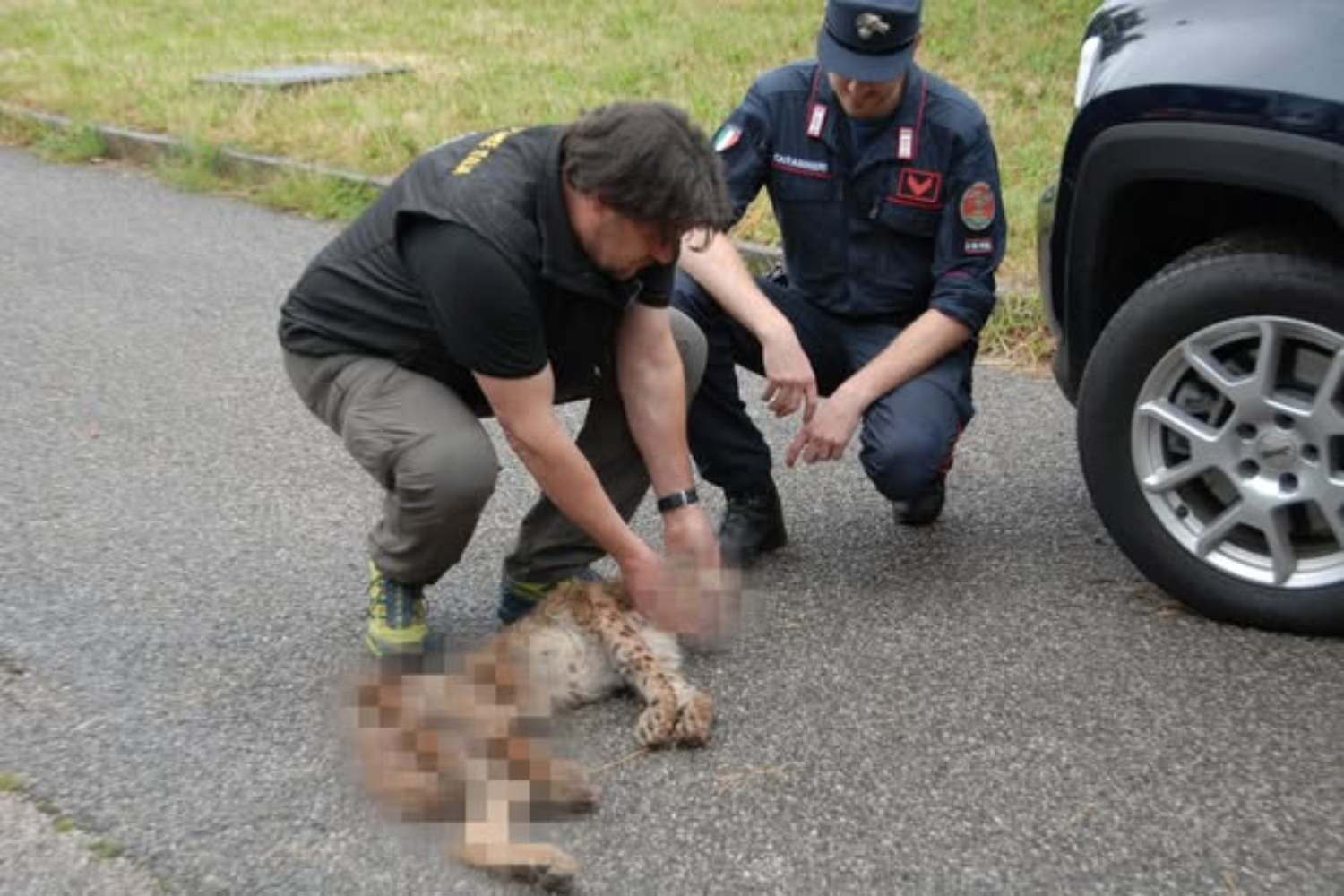
Dramatic news shakes the world of Italian wildlife conservation, bringing to light, at the same time, an incredible phenomenon of animal migration. Near the municipality of Chiusaforte, along the A23 motorway section that crosses Val Raccolana in the province of Udine, a young female lynx of just one year old was killed due to a violent impact with a vehicle.
This is the first case recorded at national level of a road collision involving this shy and very rare predator. Despite the profound regret for the loss of a reproductive specimen, the event immediately activated the researchers of the Lince Italia Project and the carabinieri of the Biodiversity Department of Tarvisio, revealing a scientific scenario of enormous importance for Alpine biodiversity.
The secrets revealed by scientific analyses
The animal’s body was handed over to experts from the University of Udine and the Friulian Museum of Natural History for in-depth biometric and genetic examinations. The results revealed that the feline was born in 2025 within the Tricorno National Park, in Slovenian territory, and had never before been registered within the Italian regional borders.
The young lynx turned out to be the daughter of Rozi, a female reintroduced in Slovenia thanks to the stages of the cross-border program Life Lynx. This data irrefutably demonstrates that the efforts made in synergy with national and international protection plans, such as the Ulycaare concretely encouraging the movement and dispersion of mammals beyond their traditional ranges.
The vital importance of wildlife corridors
However, at the same time the Chiusaforte accident puts the spotlight back on the need to implement and protect Alpine wildlife corridors. The Julian and Carnic Alps constitute an essential natural communication route for the long-term survival of large predators, acting as a strategic geographical bridge between the Dinaric population settled in the Balkans and that present in Swiss territory.
Episodes like this demonstrate that wild animals constantly move in search of new territories, but collide with insurmountable and lethal artificial barriers such as motorways and expressways. Investing in green infrastructure, such as ecoducts and specific underpasses, becomes essential to ensure that expansion and genetic exchange take place in complete safety for wildlife and motorists.
A population in slow but constant growth
The documented presence of the lynx in the Friulian valley, combined with a recent and encouraging sighting in recent months in Alto Adige, confirms the positive trend of resettlement of the species. Currently, the estimate carried out by scientists evaluates the presence of a small permanent nucleus in Friuli Venezia Giulia composed of around five or six specimens.
As underlined by the scientific coordinators led by Paolo Molinari, every single loss represents a hard blow for the conservation of the species, but the ability of these animals to autonomously colonize their ancient natural habitat sends a strong message of hope for the future ecological balance of our mountains.
You might also be interested in:
