
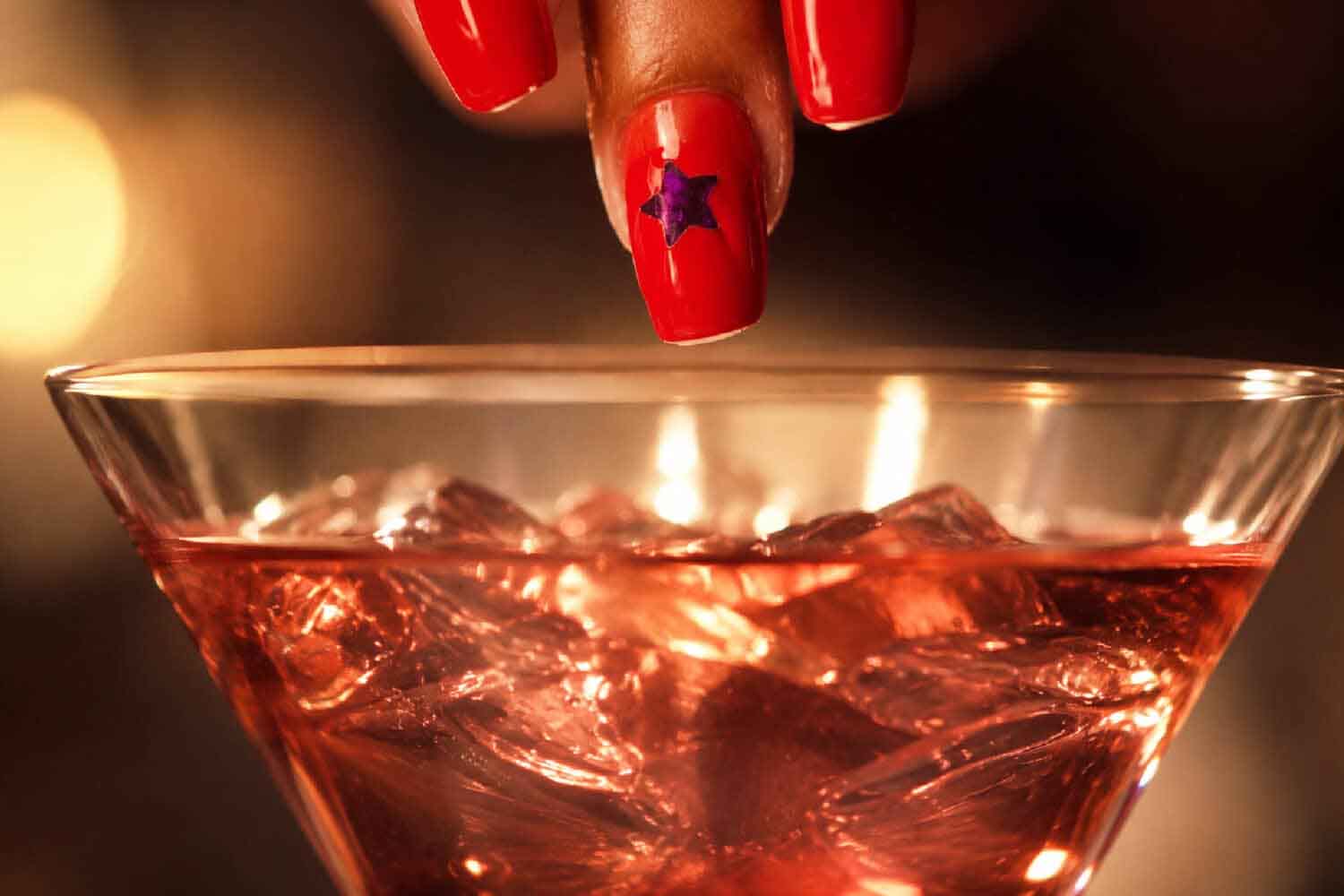
Women’s safety, too often, is squeezed into an endless series of tiny gestures. Hold the glass in your hand. Always watch it. Cover it. Go to the bathroom with a friend. Notify me when you return home. Check who offers you drinks. Stay clear, stay alert, stay ready. Even when you went out just to dance, listen to music, laugh, sweat under the lights of a club and forget for a few hours the usual effort of having to foresee everything.
Dexpert was born within this contradiction. It’s a little one nail stickersimilar to a manicure decoration, designed to change color if it comes into contact with certain substances used to adulterate drinks. An almost invisible object, as large as an aesthetic detail, which however brings with it an enormous question: how many inventions are needed before admitting that the problem lies in those who drug a glass, in those who take advantage of a vulnerable person, in those who turn an evening into a trap.
The project comes from Brazil and dates back to 2019. According to i presentation materialsDesperto was developed by Havas Health & You together with Universal Music Brasil, with a chemical formula developed by the Federal University of Bahia. The declared operation was simple: apply the sticker on the nail, immerse the finger in the drink for a few seconds and observe any color change. In the available technical materials there was talk of a chromatic reaction linked to the presence of substances from the class of aminescompounds containing nitrogen in their chemical structure.
A nail in the glass
The strength of the idea lies in discretion. Dexpertly tries to transform a potentially embarrassing or risky check into an almost normal gesture: a hand touching the drink, a decorated nail, a few seconds of waiting. In a crowded room it might seem like any other movement. This is the intelligent part of the project, because in many contexts a person who suspects that their glass has been altered may already find themselves in a situation of pressure, isolation or fear.
The phenomenon is often referred to with the English expression drink spikingthat is, the addition of alcohol, drugs or other substances to a drink without the consent of the drinker. The British government, in its tips on spikingrecommends seeking help quickly if you suspect a drink has been tampered with, by contacting friends, venue staff or emergency services, especially if you experience sudden confusion, malaise, loss of clarity or difficulty remaining conscious.
In Italy the expression is often used rape drugs to indicate GHB, also known as the “date rape drug”. The picture, however, is broader. In the information materials of the Department for Anti-Drug Policies GBL, BD, some benzodiazepines, flunitrazepam, ketamine and other substances with sedative, hypnotic, dissociative or amnestic effects are also mentioned. They can make a person confused, vulnerable, unable to react or clearly remember what happened. The GHBin particular, can cause dizziness, nausea, vomiting, sedation, amnesia, collapse and, in the most serious cases, coma. Association with alcohol increases risks, including respiratory risks.
A nail sticker, if truly reliable, economical and accessible, could therefore become an additional tool. Small, practical, inconspicuous. It is useful if it helps to save time, if it allows you to ask for help sooner or if it reduces even just part of the risk.
The burden on women
Here, however, caution must remain high. Every device designed to protect women walks a fine line. On the one hand it can offer autonomy, control and concrete tools. On the other hand, it risks adding another task to the usual list: in addition to getting dressed, going out, having fun, going home, you also have to test the glass. As if prevention were always an individual, private, silent matter. As if safety in the premises depended on the readiness of those who could be attacked.
The responsibility remains with those who alter a drink. Point. It remains those who take advantage of a person in a vulnerable state. There also remain contexts that must learn to intervene better: bars, discos, festivals, events, trained staff, clear protocols, safe spaces, the possibility of asking for help without being dismissed as exaggerated or confusing. A sticker can give a signal. The rest must be done by the environment around the glass.
Desperto was also accompanied by an awareness campaign with the Brazilian artist Malía, chosen to speak to a young audience through music. The stated objective was to combine protection and awareness. An understandable choice: the topic of rape drugs often lives in an uncomfortable area, between fear, shame, removal and lack of information. Bringing it into pop language can help, as long as the communication remains clear on the central point: no victim “should have been more careful”. Whoever attacks chooses to do so.
Even on a healthcare level, time matters. The Italian Society of Pharmacology recalls that some substances associated with attacks facilitated by drugs can cause sedation, alteration of the state of consciousness and amnesia, making it more difficult for the person to immediately understand what has happened and ask for help quickly. Furthermore, in several cases, elimination from the body can be rapid, complicating investigations if the checks are late. There timeliness it therefore becomes a concrete part of the protection.
An idea left suspended
Then there is a fundamental detail: Desperto, at least from the information available today, seems to have remained closer to the size of the prototype and the campaign than to that of a truly purchasable product. The idea dates back to 2019, the formula was described as ready for large-scale production, but no solid traces of stable marketing emerged. The domain that at the time was supposed to gather contacts and industrial interest today hosts completely different contents, dedicated to plumbing services in Brazil.
This makes Dexpert even more interesting and, at the same time, more frustrating. Because it tells of a dynamic often seen in social innovations: a good idea, an effective campaign, a simple object to understand, then the hardest step. Production, independent testing, costs, distribution, legal responsibilities, real reliability with different drinks, different substances, different concentrations. The less brilliant part, the one that decides whether an invention can leave the promotional video and really reach people’s hands.
The risk, otherwise, is to stop at the beauty of the concept. A nail that changes color works very well in the imagination. It works in countryside images. It works in the story of a small and almost elegant technology. Real life demands more: checks, margins of error, clear instructions, economic accessibility, compatibility with nail polishes and cosmetic products, the ability to truly detect the substances most used in contexts of abuse.
However, it remains a powerful insight. Because it brings together body, aesthetics and self-defense without transforming the person into an armed sentinel of anxiety. A manicure detail becomes a possible alarm. A decoration becomes a sensor. An apparently frivolous thing brings up a very serious topic, and perhaps this too has a political value: taking what is often dismissed as “women’s stuff” and making it an instrument of protection.
Dexpert does not solve the date rape drug problem. It can indicate a direction, also because safety cannot be all on one nail. It would be too convenient for those who should keep the world around the glass clean.
