
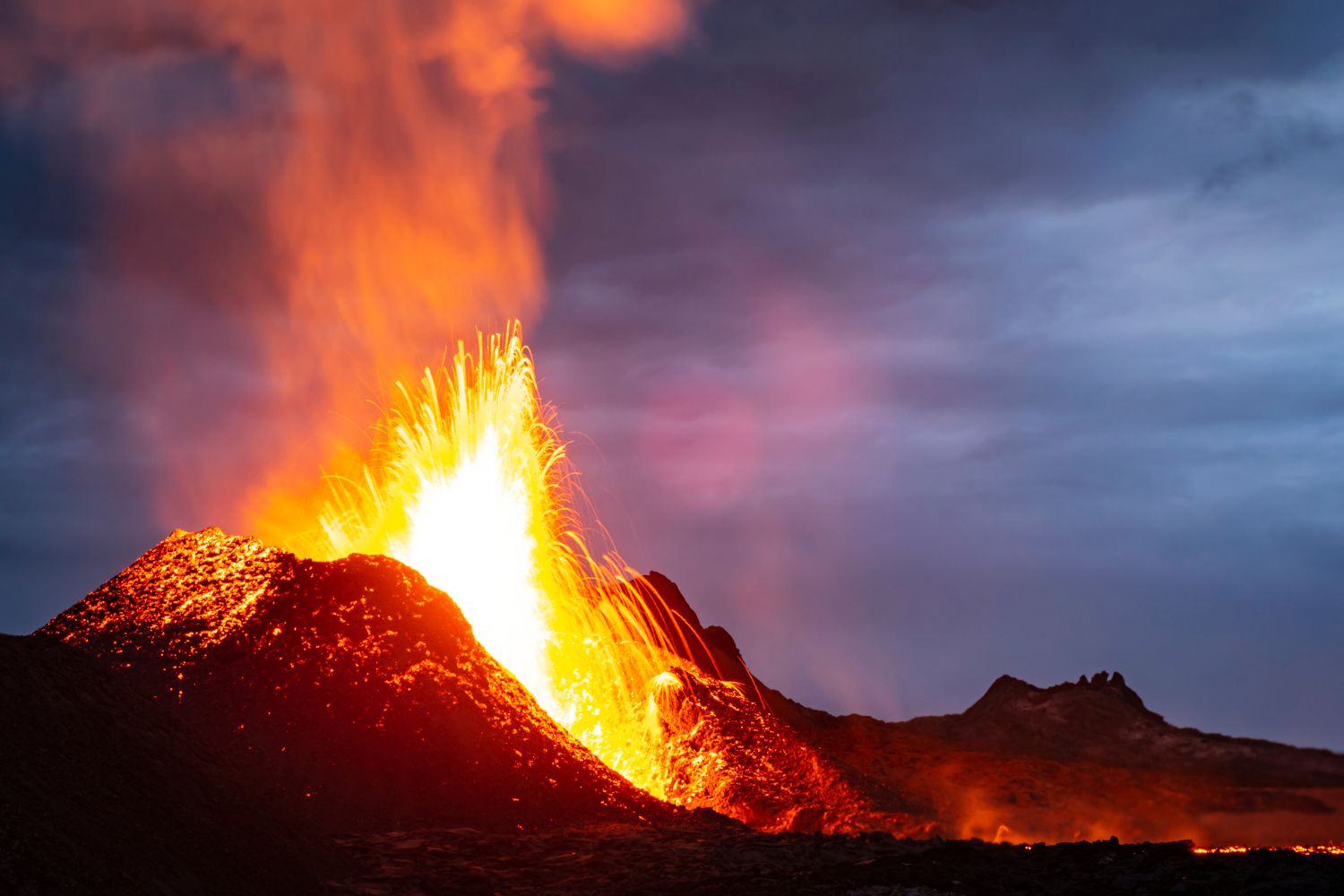
In 2021, in La Palma, lava took everything in front of it: fields, houses, streets, courtyards, walls, entire pieces of daily life. The eruption of Tajogaite, in the Canary Islands, began on September 19th and continued until December 13th, for 85 days. The flows covered 12.19 square kilometers, involved more than three thousand buildings and reached temperatures of up to 1,140 °C. Seen from the outside it was a huge, almost unreal scene. Seen from inside, however, that fury could also depend on something very small: the crystals that form, or disappear, in the magma.
A new study published in Nature Communications he tried to look right there, inside the molten rock. The point is simple, at least in its consequence: very similar magmas can give very different eruptions. Sometimes the lava descends slowly, heavy, almost “orderly”. Other times it rushes up, retains gas and turns into lava fountains, with incandescent jets exploding upwards. The composition of the magma matters, of course. Now, however, another detail emerges: how hot the magma became before rising.
Heat changes everything
Researchers speak of superheating of the magma. Translated without a shirt: the molten rock goes through a phase so hot that it melts the small crystals present inside it. They look like laboratory details, stuff invisible to the naked eye. Yet they can change how an eruption reaches the surface.
In fact, when magma contains many crystals it becomes denser. It climbs with more effort, slows down, leaves more time for the gases to release before the final release. However, when those crystals are missing, the molten rock remains more fluid. It flows better, runs more, carries more gas with it. And when he gets to the top, he can do it with much more energy.
To understand this mechanism, the research team used samples from the Tajogaite eruption and returned them to volcano conditions by heating and cooling them in the laboratory. Then he observed them with very powerful X-rays, capable of showing what happens inside the magma as the crystals begin to form.
The result is quite clear. In the samples that had not undergone strong overheating, the first crystals appeared after about 20 minutes. In the samples brought to around 90°C above the stability temperature of the crystals, however, the magma remained “clean” for more than 8 hours. No crystals. Or almost. And when they finally appeared, they were fewer and larger.
Eight hours may be enough
Eight hours, for us, are a day of work with a coffee break and silent swearing in front of the wrong email. For magma rising from underground, they can be enough to change the type of eruption.
Inside the molten rock there are tiny traces that help new crystals to be born, a kind of microscopic hold. Overheating seems to erase precisely those grips. The magma loses memory of the previous crystals and remains more uniform, more fluid, less ready to thicken.
The researchers then fed this data into models that simulate the rise of magma through about 13 kilometers of the Earth’s crust. The scenario that emerges is very concrete: if the magma remains without crystals long enough, it can rise faster and reach the surface with the gas still trapped. At that point the outburst can become more violent, with incandescent jets similar to those observed in La Palma.
However, when crystals begin to form earlier, the magma thickens along the way. The ascent slows down, the gases are able to escape more gradually and the eruption can take on a more peaceful behaviour, mainly made up of flows. Same magma family, very different outcome. The difference may also lie in that warm passage that occurred earlier, in the darkness of the crust.
One more clue for volcanoes
This study doesn’t turn volcanic eruptions into something easy to predict. Volcanoes remain complex systems, full of pressure, gases, fractures, deep reservoirs, sudden pauses and restarts. But he adds an important clue: the past temperature of the magma may have more weight than previously thought.
Usually, those who monitor volcanoes look at the composition of the magma, the gases, the pressure, the earthquakes, the deformations of the ground. From today, the thermal history of magma deserves more attention. If the molten rock arrives very hot from deep areas and does not spend enough time in shallower reservoirs to cool and form crystals, it could rise more quickly and fuel lava fountains more easily.
For warning systems, this means having more data to cross-reference with gases, earthquakes, ground deformations and magma composition. If the molten rock arrives very hot from deep areas and rises without stopping long enough to cool and form crystals, it can remain more fluid and reach the surface with greater energy. The lava comes out already loaded with what it has gone through underneath: too much heat, few crystals, gas still inside. Then find a way. And he takes what he finds.
You might also be interested in:
