
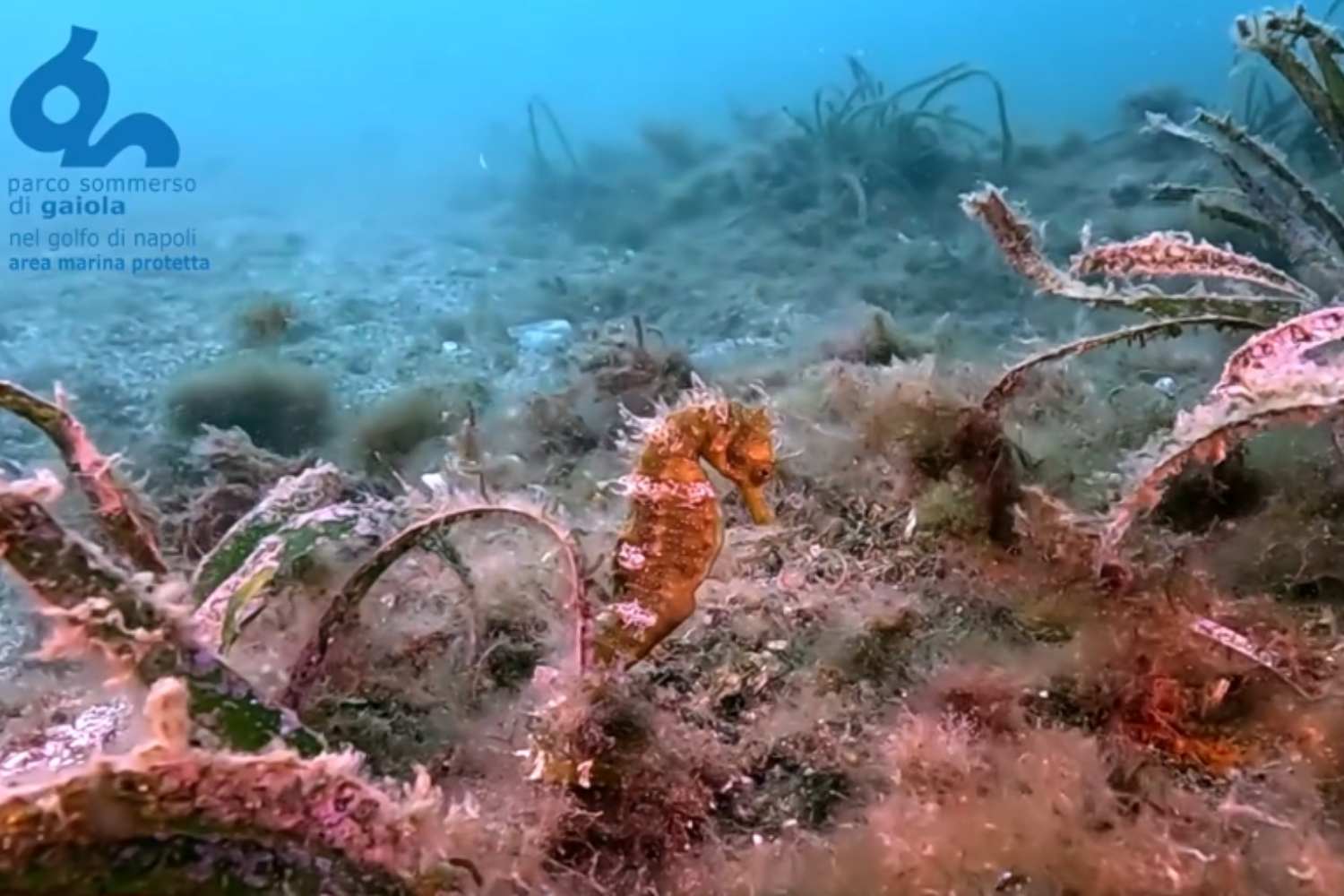
A scientific discovery of inestimable value has shocked the researchers of the Gaiola Submerged Park Marine Protected Area in the Gulf of Naples with joy. During the periodic environmental monitoring activities of the Neapolitan seabed, the scientific team came across an extraordinary and completely unexpected event: the return of the seahorse (scientifically known as Hippocampus guttulatus).
This protected species, considered among the most fragile and threatened in the entire Mediterranean Sea basin, had disappeared for several years due to the progressive destruction of its natural habitat. The sighting, immortalized in an exciting underwater film, took place within the Posidonia oceanica meadows. The reappearance of the hippocampus is not accidental, but represents the culmination of an ambitious ecological restoration project that began in 2023.
View this post on Instagram
The success of scientific cooperation and the cuttings of the Kingdom of Neptune
The success of this biological repopulation operation has its roots in a virtuous synergy between various protected areas of Campania. The marine reforestation project was in fact made possible thanks to the precious donation of the first cuttings of Posidonia oceanica by the AMP Regno di Nettuno. This strategic collaboration allowed the Gaiola biologists to start the replanting of vegetative nuclei on seabeds previously desertified by anthropic action, triggering a chain reaction that has progressively attracted new marine life.
In protected areas, researchers had already observed the first signs of renaturalisation, with the appearance of small fry of thrushes and damsels, followed by starfish, spirographs and cerianths. The presence of the seahorse, which clings firmly to the fronds of the plant with its prehensile tail, officially certifies the regained health of the ecosystem. The Park management itself wanted to underline the historical significance of the event:
Seeing that little hippocampus clinging to the leaves of those Posidonia plants that are slowly growing back where human wickedness had erased them a few decades ago, truly represents the symbol of life being reborn.
A unique but still threatened archaeological ecosystem
The extraordinary Gaiola reserve represents a unique site in the world, where the treasures of nature merge with the archaeological remains of the majestic Roman villa of Pausilypon, dating back to the 1st century BC. This underwater paradise also hosts the only three coral reefs in the entire Neapolitan and Phlegraean area. However, the survival of this newly reborn fragile ecosystem remains tied to a thin thread: activists and scientists denounce the persistent danger linked to the sewage discharges that flow into the protected marine area on days of strong bad weather, urgently requesting structural interventions from the local authorities.
