
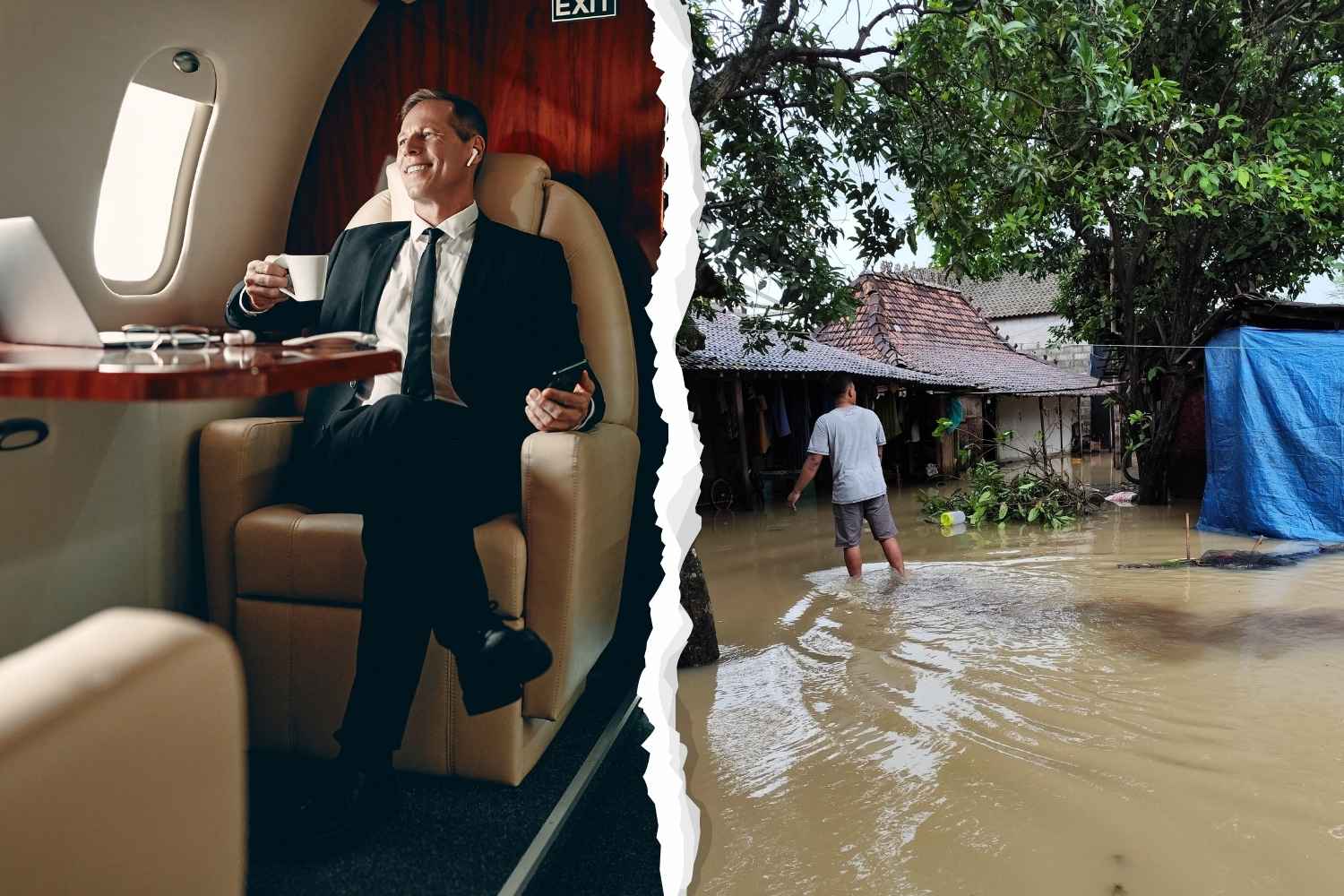
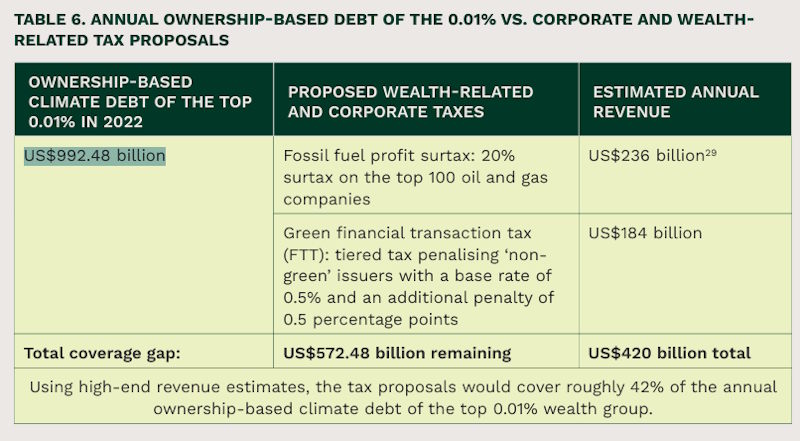
While citizens are asked to change habits and reduce consumption, there is a tiny slice of the world’s population that continues to weigh disproportionately on the climate. How Much According to a new report by Greenpeace Africa, the climate debt accumulated every year by the richest 0.01% of the planet is close to 1,000 billion dollars.
A huge figure that represents the economic value of the climate damage associated with emissions generated above a quota considered fair and compatible with the objective of containing global warming to within 1.5°C.
What is climate debt?
It is the cost of damage caused by greenhouse gas emissions that exceed the fair share of carbon compatible with the goal of limiting global warming to 1.5°C. “Ownership-based climate debt” measures climate liability linked to ownership of carbon-intensive companies, stocks and investments. In other words: who owns and profits from the activities that generate the most emissions?
@Greenpeace Africa
But why focus on the super rich? Because climate debt is highly concentrated in the highest segments of global wealth. The top 0.01% of the population owns a disproportionate share of polluting assets and, consequently, very high climate responsibility.
The report
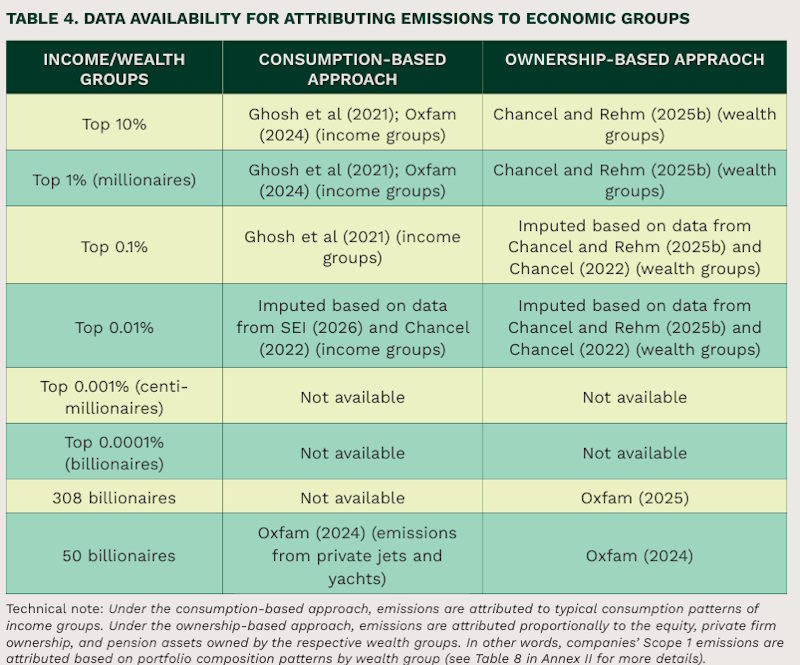
Perhaps the most interesting fact concerns the origin of this impact: it is not just yachts, private jets or luxury consumption that make the difference. Above all, investments weigh the most. In fact, the report estimates that the climate debt linked to the assets and investments of the richest 0.01% of the world’s population – people with assets exceeding 38 million dollars – amounts to approximately 992 billion dollars a year. The one associated with consumption instead stops at 405 billion.
@Greenpeace Africa
In other words, the problem is not just how the super rich live, but above all where they invest their money.
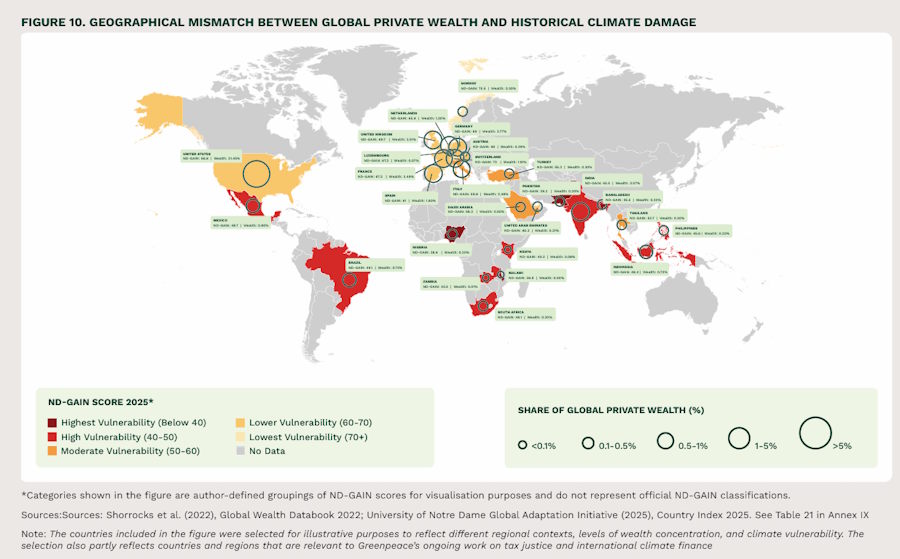
According to Greenpeace, the climate crisis is also a crisis of wealth concentration. For this reason, climate policies should begin to consider not only the emissions produced by industries and consumers, but also those linked to large financial assets and shareholdings in highly carbon-intensive companies.
@Greenpeace Africa
The numbers help to understand the scope of the phenomenon: in 2022 each individual belonging to the richest 0.01% was associated with an average climate debt of over 1.24 million dollars deriving from their investments, more than double the approximately 507 thousand dollars attributed to personal consumption.
For Greenpeace, these data reinforce the need to concretely apply the “polluter pays” principle. Taxing extreme wealth and the most polluting investments could in fact help cover a significant part of the financial needs necessary to support the ecological transition and help the most vulnerable countries deal with the impacts of the climate crisis, estimated at at least 1,000 billion dollars per year.
We are discovering that the climate impact of the super rich is much more serious than we imagined – observes Clara Thompson of Greenpeace International. A statement that brings to the center a question that is increasingly difficult to ignore: if the climate crisis affects everyone, who should really bear the costs?
For the environmental organization the answer is clear. Governments should introduce more effective tax systems against the very wealthy and the companies most responsible for emissions, while strengthening tax transparency and the fight against tax avoidance.
@Greenpeace Africa
Because, while millions of people suffer increasingly intense droughts, floods and heat waves, a substantial part of the climate bill continues to be generated by a very small global elite.
HERE is the full report.
