
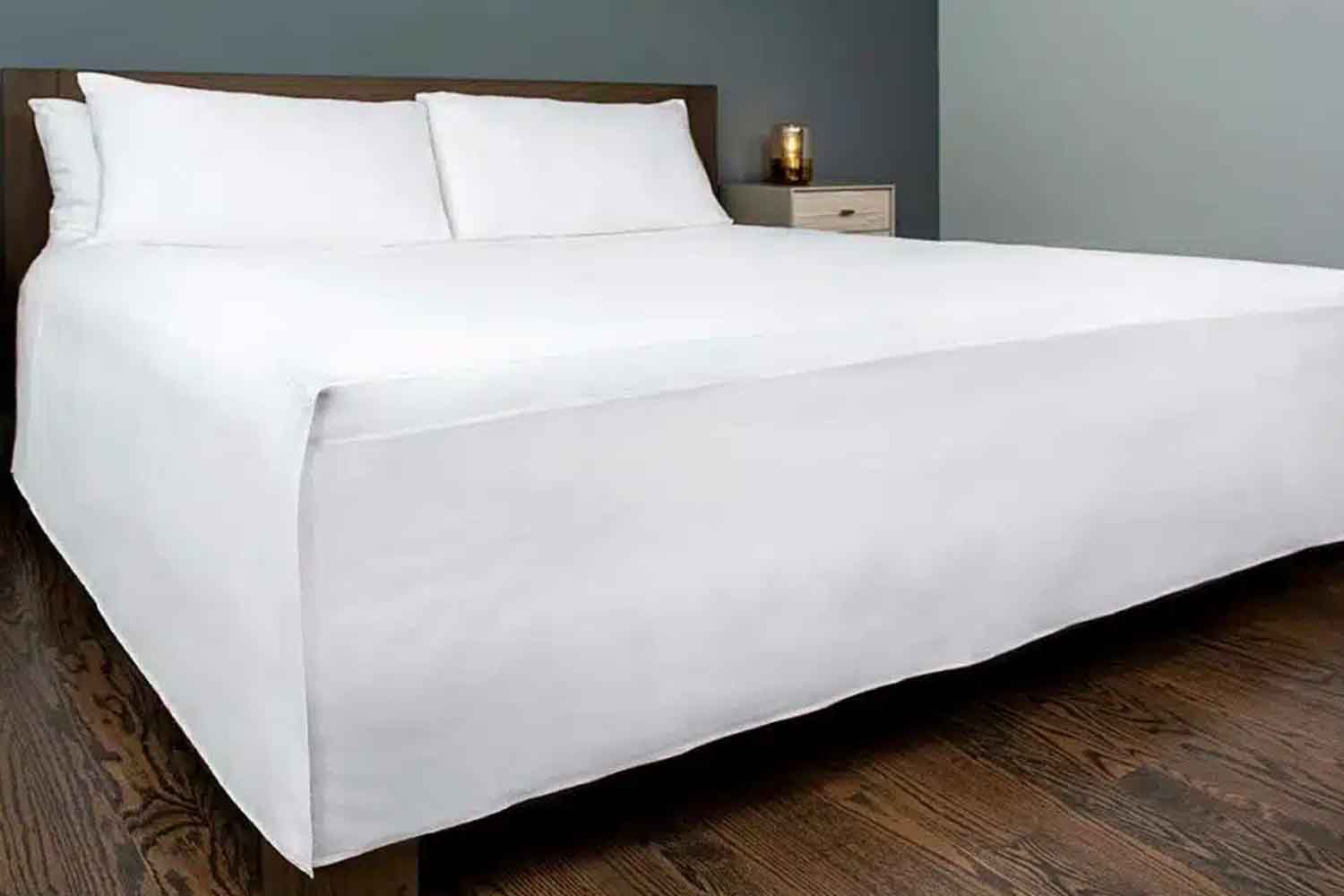
There is a gesture that we do almost without thinking about it, and that we take for granted until it makes us lose patience: making the bed. In particular, fix the fitted sheetthe one that should remain still on the mattress and instead often slips out, curls up, rebels. A seemingly trivial domestic nuisance which, in other contexts, becomes much more.
From this daily experience, shared by millions of people, the idea of was born Ruth Young-Loaezaformer cleaner in the hotel sector and now founder of NEET Sheets. Her invention, a completely redesigned fitted sheet, won her an award from $750,000 in an international competition dedicated to innovation. Not a stroke of luck, but the result of years of physical work, observation and attempts.
A simple object only in appearance
Before becoming an innovative product, the fitted sheet was a working tool for Ruth Young-Loaeza. For years he made beds in hotels, thousands and thousands of times. More than twenty thousand, according to his estimates. A gesture repeated every day, often while running, bending the back, forcing the wrists, struggling with ever higher and heavier mattresses.
What few people know is that making the bed is considered one of the most tiring and risky activities in the hotel sector. There are studies that link this gesture to a high number of accidents at work, due to repetitive movements and incorrect postures. In this context, the sheet that doesn’t stay put isn’t just a nuisance: it becomes a health and safety problem.
The idea of NEET Sheets was born precisely from the observation of that gesture repeated endlessly. Ruth Young-Loaeza wondered if it was really inevitable to put in so much effort for such a simple operation. The answer came in the form of a differently designed fitted sheet, with a structure designed to stay firmly on the mattress and be placed more quickly.
The result is a system that improves the tightness of the sheet and significantly reduces the time needed to make the bed. The tests conducted by the company speak of a reduction in times up to 47%a fact that makes a huge difference for those who work in the sector. Less effort, less physical stress, less risk of accidents.
But the effect is also evident at home. A sheet that doesn’t come off during the night means you sleep better, without having to wake up to fix raised corners or annoying creases.
Because this invention also speaks to those who make their bed every day at home
The value of this story also lies in its starting point. It was not born in a high-tech laboratory, but from work that is often invisible, little talked about, yet fundamental. Rethinking such a common object means recognizing the dignity of those who use it every day, for work or for necessity.
The NEET Sheets fitted sheet does not promise to change the world, but it concretely improves a daily gesture. And it does so starting from direct experience, not from an abstract theory. This is perhaps why it convinced an international jury and drew attention to an object that usually doesn’t make the news.
