
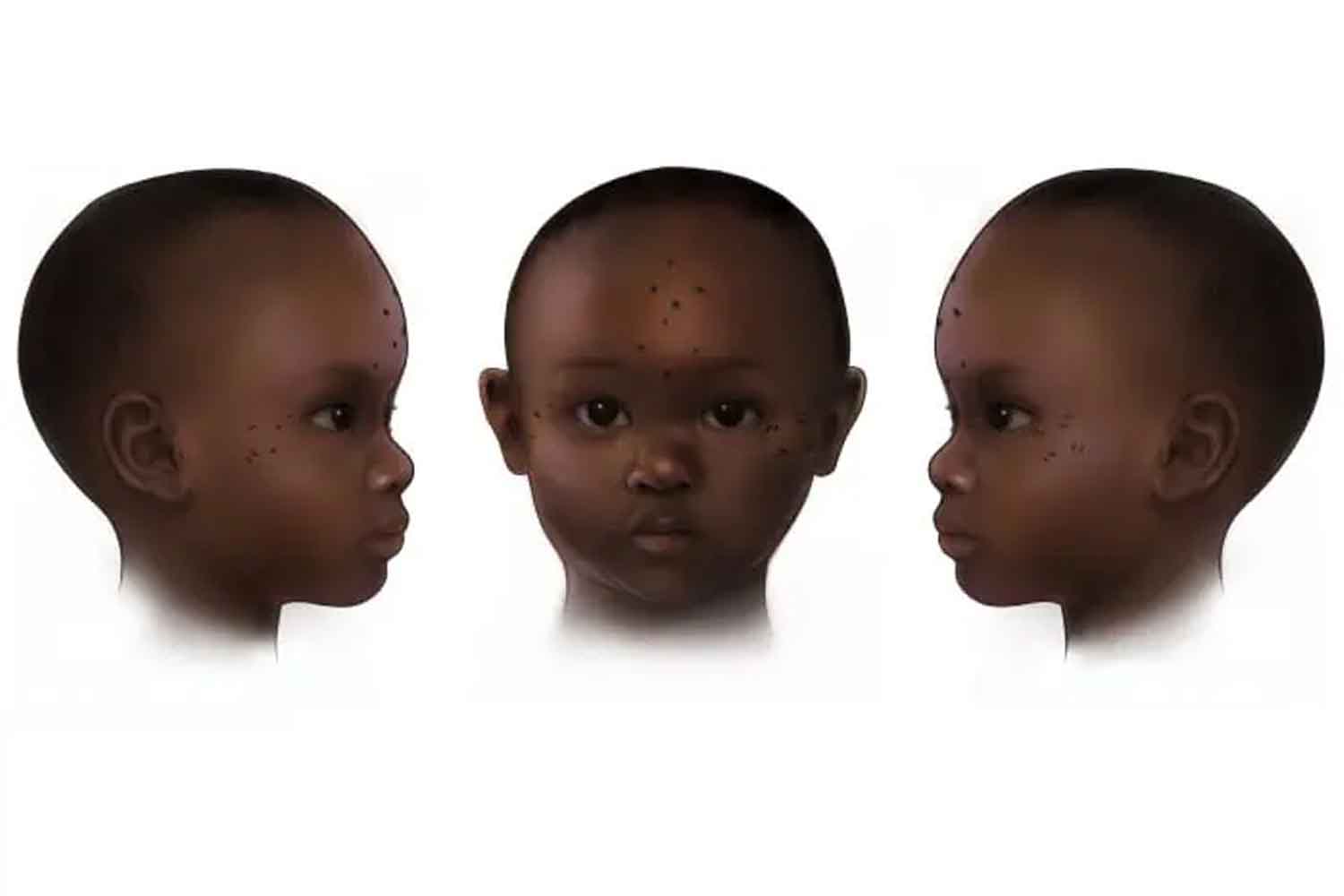
Along the Nile, in present-day Sudan, a group of researchers has brought to light a surprising reality: children, in some cases little more than newborns, were tattooed as early as the first millennium AD. This is not a suggestive hypothesis, but a discovery based on advanced scientific analyzes applied to human remains discovered decades ago and which remained underestimated for a long time.
The bodies analyzed come from three key archaeological sites in Nubia: Semna South, Qinifab and Kulubnartiareas excavated between the 1960s and 1970s and subsequently preserved at Arizona State University. For years, many tattoos had remained invisible due to fading of the skin. The turning point came thanks to the use of infrared lighta technology capable of penetrating slightly beneath the skin surface and re-emerging the ancient ink.
The study, published on Proceedings of the National Academy of Scienceshe considered 1,048 individuals who lived between 350 BC and 1400 AD. In twenty-seven cases, certain or probable tattoos were identified, almost double what was previously known for the entire Nile Valley. Of these, twenty-five were completely unknown to the scientific literature.
Leading the research was bioarchaeologist Brenda Baker, who had long suspected the presence of barely visible tattoos, supported by archaeologist Anne Austin and researcher Tatijana Jovanović. Thanks to multispectral imaging, traces of ink literally began to emerge from the darkness, revealing a much wider spread of tattoos than previously believed.
Ancient Nubian tattoos between Christianity, protection and health
The most striking case comes from the site of Kulubnarti, a medieval Christian community active between 650 and 1000 AD Here at least 19% of the population is tattooedan impressive fact. Even more surprising is the presence of tattoos on children under three years oldin some cases superimposed on older drawings, a sign that the body was tattooed several times during early childhood.
The decorations identified are predominantly dots and lines arranged in geometric lozenge patternsinterpreted as possible representations of the cross. In a profoundly Christian context, the tattoo may have had a symbolic function comparable to a rite of belonginga sort of permanent baptism engraved on the skin. According to Anne Austin, branding children from an early age could be a way to visually and spiritually affirm the community’s Christian identity.
It is not excluded, however, that Ancient Nubian tattoos also had a therapeutic purpose. The presence of overlapping tattoos, even on very young children, suggests an intentional repetition of the gesture. Brenda Baker hypothesizes a connection with recurring diseases such as malaria, historically widespread in the Nile valley and characterized by cyclical fevers and severe headaches. In other cultures, tattooing is documented as a protective or healing practice, and in two adult individuals the markings were spotted on their backs, a location often associated with healing rituals.
From a technical perspective, the tattoos appear to have been done with small blades and not needlesproducing quick and easy designs. A practice which, according to researchers, should not be judged with a contemporary gaze. Comparing these tattoos to the modern idea of pain or violence would be misleading: for Nubian communities, carving the skin of a child could be perceived as a gesture of care, no different from piercing the ears of little ones.
Tattooing is an ancient practice, attested on famous bodies such as Ötzi and on Egyptian mummies. What makes Nubia unique is the age of the tattooed subjectsa detail that opens new reflections on the profound link between body, faith and health from the first years of life.
