
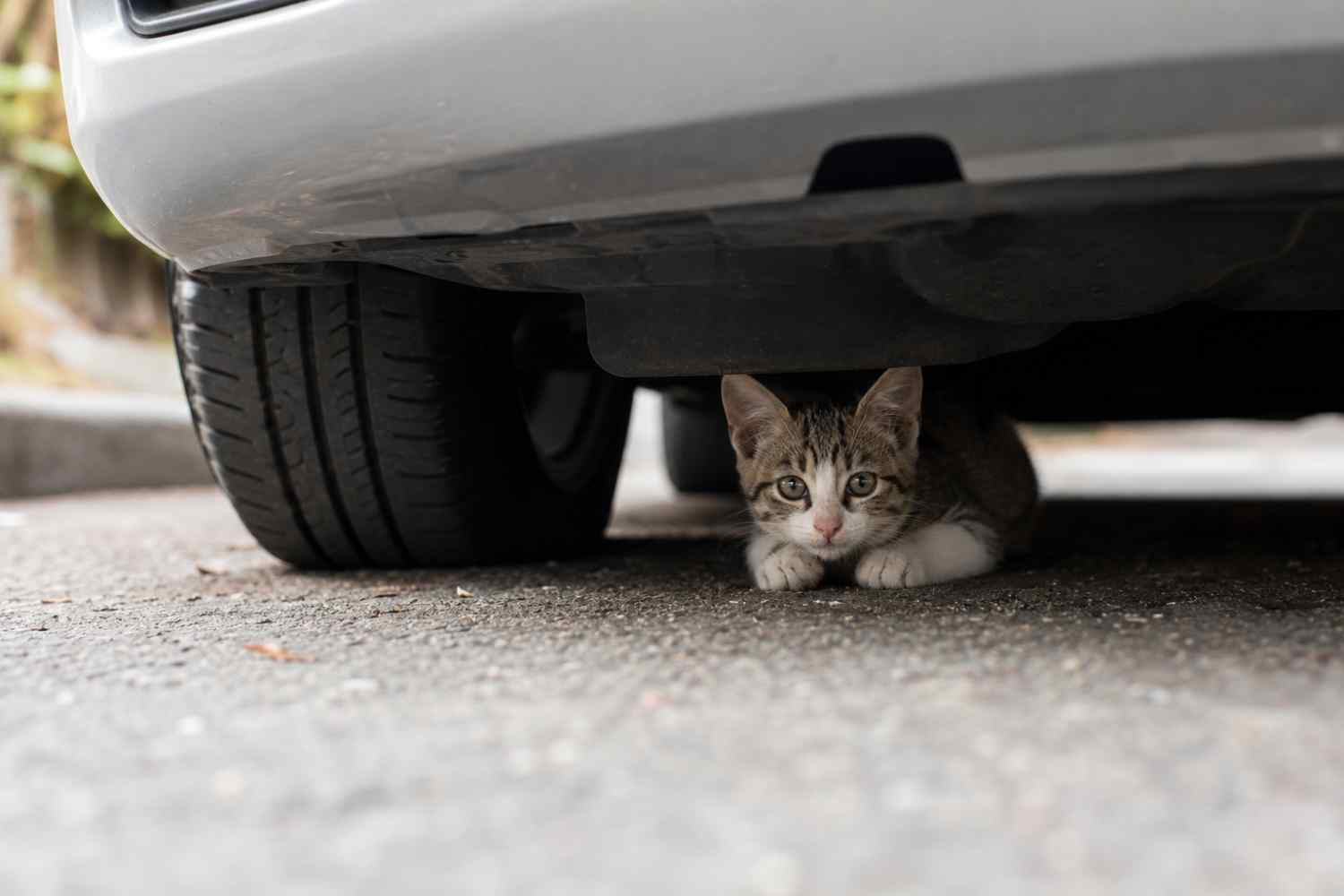
BYD has filed a new patent that aims at a goal as simple as it is important: preventing animals, or people, hidden under a parked car from being injured when the vehicle starts moving again.
The system was filed on June 12 with the Chinese Patent Office (CNIPA) under the number CN122200729A and is based on an image comparison. A camera stores a reference image of the area beneath the car when it is stationary, after which subsequent frames are compared in real time with that reference. The system thus identifies the regions that have changed compared to the initial state, and these “suspicious” areas are analyzed more thoroughly to understand if they contain a living being.
Detecting objects under a vehicle is not trivial: shadows, variable light, dirt, road debris and uneven surfaces make it difficult to distinguish, for example, a sleeping cat from a simple leaf blowing in the wind, especially at night. For this reason, BYD has chosen a two-phase approach, which first isolates changes with respect to the static state of the car (suspension, battery, aerodynamic elements) and then applies recognition algorithms only on those areas, thus reducing the risk of false alarms.
This patent joins another already developed by BYD to detect children or passengers forgotten inside the passenger compartment. Together, the two systems outline the Chinese company’s ambition to build a 360-degree monitoring ecosystem, combining computer vision, radar and intelligent sensors for safety both in and around the vehicle.
BYD, moreover, is also filing patents in other key areas, such as solid-state sulfide batteries for energy storage, a sign of an innovation strategy that ranges from everyday safety to the energy technologies of the future. As is often the case with patents, it remains to be seen how long it will take before this technology actually arrives on production models.
