
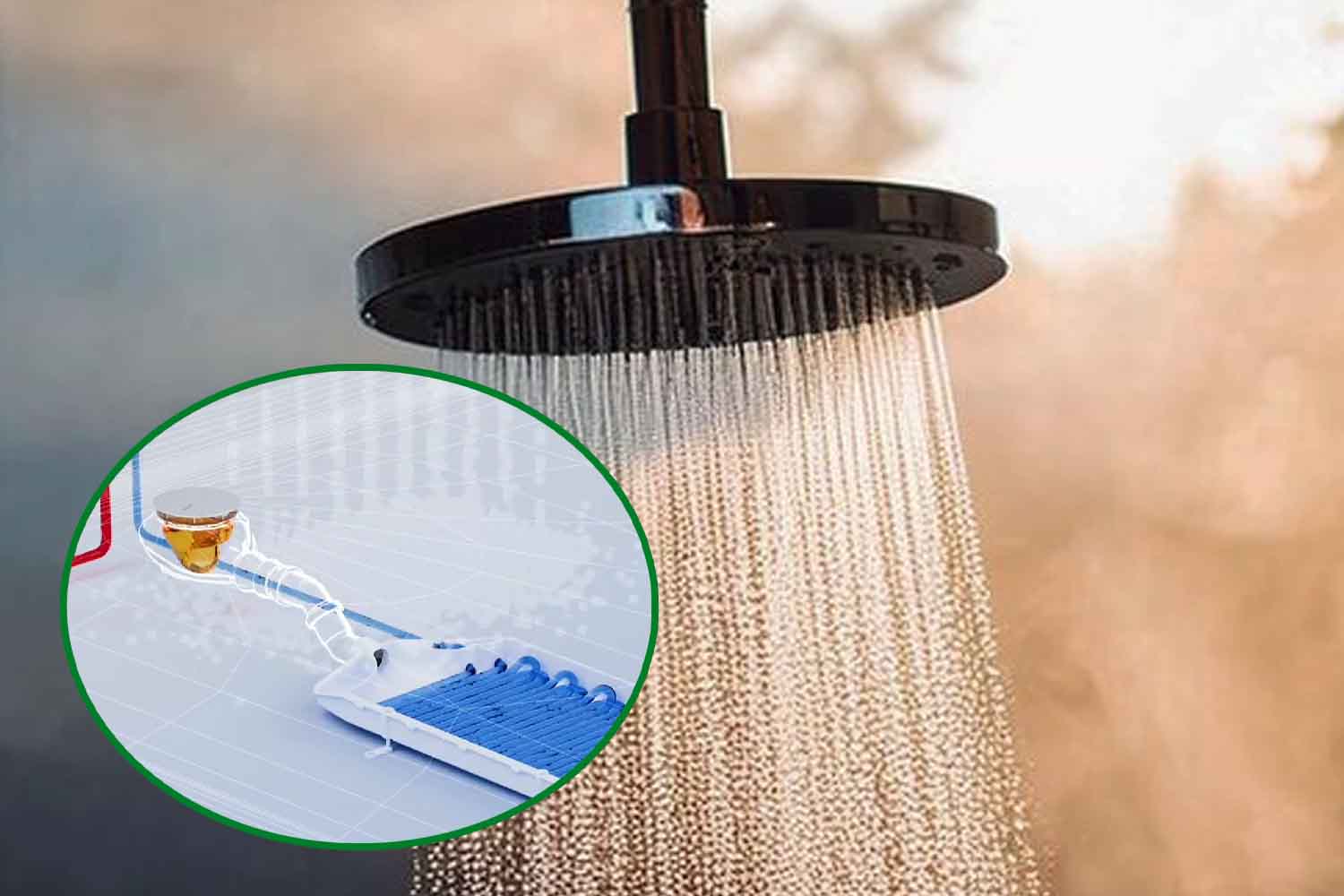
Every time we take a shower, along with the water that flows down the drain, a good part of the energy used to heat it also goes away. A device called Zypho manages to recover some of that heat and use it to preheat incoming cold water, reducing the energy needed for showering.
According to the manufacturer, under the most favorable conditions savings can reach 50%. The technology is back in the spotlight in France, where Nicoll, a company based in Cholet, received the Trophée de l’Innovation 2026 from Action Logement, an organization active in the housing sector.
How the shower heat recuperator works
The principle is quite simple. When we take a shower, the water we have just heated flows towards the drain while it is still lukewarm. Zypho intercepts this flow through a heat exchanger, installed under the shower tray or along the drain pipe.
Two separate circuits pass inside the device: one transports used water, the other cold water coming from the water mains. The heat passes through the walls of the exchanger and heats the clean water, which can be sent to the mixer, the water heater or both.
To get an idea of the result, Aliaxis describes a setup where cold water enters at 10°C and is preheated before reaching the mixer. At that point less energy is needed to bring it to the desired temperature. The system works without motors, batteries or electrical connections. It simply exploits the temperature difference between the two water flows, which remain separated thanks to the structure of the exchanger.
However, there is a fundamental condition: the hot water must flow into the drain while the cold water to be preheated is used. This is why recovery works particularly well during a shower, while it is less useful when filling a tub and emptying it only after a bath. And be careful: Zypho recovers thermal energy, not water. Water consumption remains the same, but the amount of energy needed to heat it decreases.
How much do you really save with Zypho?
Savings depend on the model installed. The range includes horizontal devices, designed to find space under the shower tray, and vertical devices, which use a portion of the drain pipe. According to the technical specifications published by Nicoll, the iZi 30 model can reduce the energy needed for hot water by up to 25%, while the Slim 50 reaches 40%.
The more efficient PiPe DW vertical models can recover up to 64% of the heat available in the waste water, with energy savings of up to 50%. These are interesting results for a device that, once installed, works without consuming electricity and without requiring any action on the part of those who use the shower.
Of course, 50% represents the maximum declared value for specific conditions of use, not an automatic discount on your household bill. The manufacturer also takes a family of four as a reference, with a daily shower of eight minutes each. The actual savings will therefore depend on household habits and the system used to heat the water. The technology, however, has already obtained certifications and technical checks from bodies such as Kiwa and CSTB, while the Slim 50 model also received the 2024 Red Dot Award for product design.
How much does it cost to install it and when is it worth it?
The price remains the aspect to be evaluated most carefully. According to estimates communicated by Nicoll in France, a complete installation can cost around 1,300-1,400 euros, depending on the configuration of the shower and the work required.
The manufacturer speaks of a possible amortization of the investment in three or four years, especially in homes where significant quantities of hot water are consumed. The savings naturally vary based on the number of occupants, the frequency of showers and the price of energy.
The device appears particularly interesting in new buildings and during renovations, when work on the plumbing systems is already planned. The more compact horizontal models require a few centimeters of space under the shower tray, while the vertical ones can be inserted into the drain pipes when the configuration of the building allows it.
The technology could also find space in condominiums, hotels and collective residential buildings, where the daily consumption of hot water makes energy recovery even more interesting. Moreover, the recognition received in France comes precisely from the housing sector. The system, originally developed in Portugal and now part of the Aliaxis group, is already present in the company’s Italian catalogue.
For those who are designing a new bathroom, therefore, Zypho represents a concrete possibility to reduce energy consumption without changing their habits. Those who already have a perfectly functioning shower will have to evaluate whether the savings justify the necessary work. Once installed, the system does everything by itself. And it recovers something that we normally let slip away every morning, without even realizing it.
