
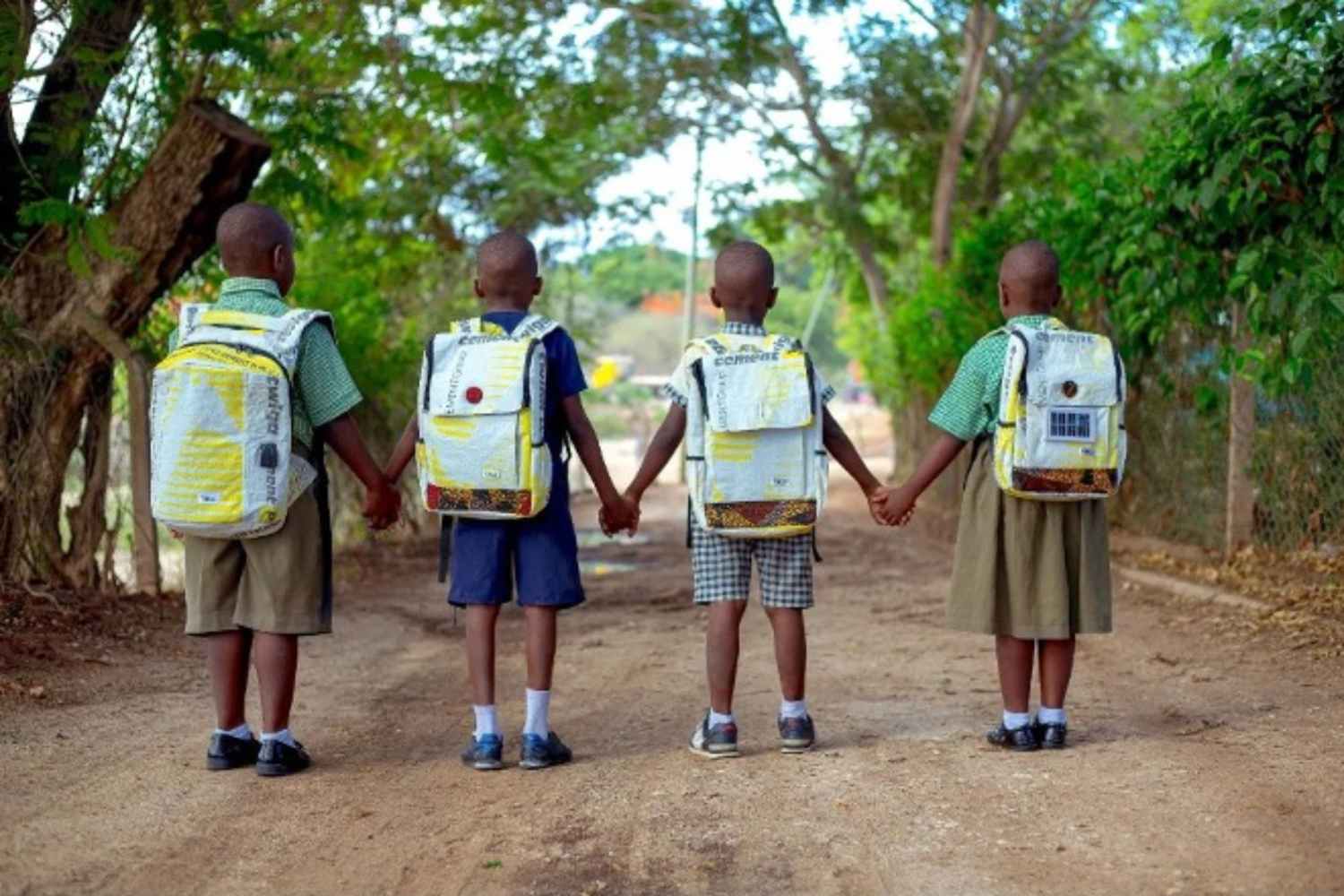
In Tanzania a local entrepreneur is facing two problems simultaneously, transforming old concrete bags in backpacks equipped with a small solar panel to feed a reading light. This initiative not only reduces urban waste, but also helps the children of rural areas a Study after sunset.
The project obtained the support of the United Nations development program (UDP) for its problem resolution potential. The company, called Soma Bags, takes 85 rural workers to satisfy a demand for 13,000 backpacks per month, even if they currently cannot fully satisfy this request.
The idea was born from Innocent James, originally from the Mwanza region, in the north of Tanzania. James remembers having studied in the light of a lantern in Cherosenea method still used by many rural families. However, the lantern to kerosene are expensive to manage and dangerous to use And many parents cannot afford to make them use their children.
Where everything started from
The inspiration for James’ solution came from a university professor who had a Solar panel sewn in the jacket to load the phone. James then decided to sew economic and flexible solar panels outside the bags to feed a reading light.
Started producing bags in 2016, cooking about 80 backpacks per month e selling them for the equivalent of 4-8 dollars in Tanzanian Scellinia cost comparable to that of making a lantern to CHEROSENE for about 15 days.
The funguo innovation program of the UNDP, financed by the European Union and the government of the United Kingdom, supported James’ activity, highlighting collaborative efforts to promote sustainable solutions and educational opportunities in disadvantaged communities.
The impact of the Soma Bags was significant: the bags provided children with one reliable light source, improving school performance and allowing them to study more effectively. In addition, the bags facilitated access to information and communication, allowing children to stay in touch with their families and friends.
The company generates income through the sale of exclusive backpacks and partnerships with brands, contributing to the storage of the environment reusing up to 200,000 bags of cement per month, avoiding that they become road waste.
