
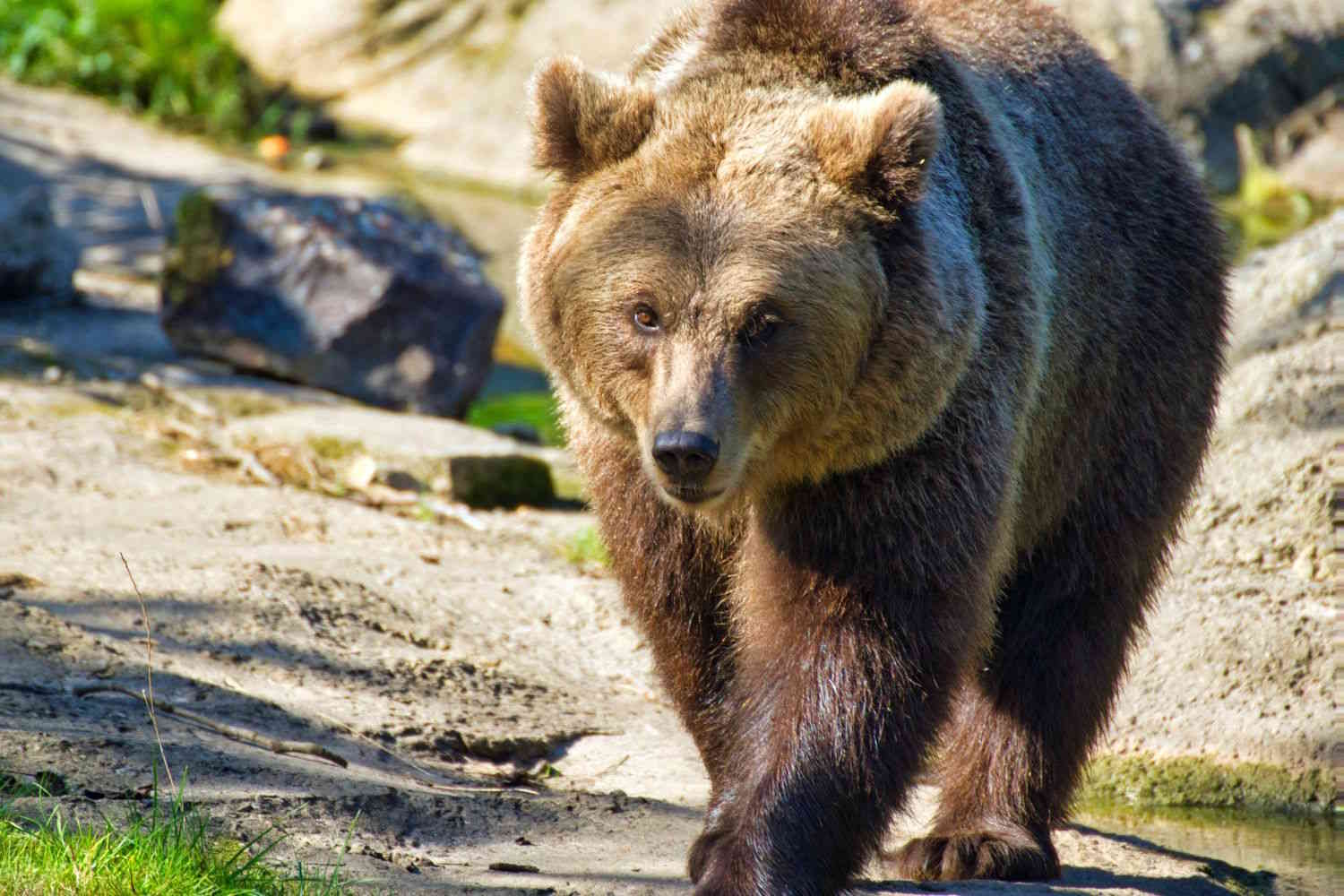
In the eyes of scholars and enthusiasts, Marsican brown bears have always been considered a species as precious as they are unique, distributed in the Apennine areas of the country. Smaller in size than their northern Italian cousins, these specimens also have a more gentle nature which has undergone alterations over time, and their DNA confirms this.
This was revealed by a recent scientific study published in the magazine Molecular Biology and Evolution which investigates the nature of the Marsican wild animals and the factors that influenced its course.
By comparing the genome of different specimens of brown bears from central Italy, Europe and North America, the researchers focused their attention on the Apennine bear population and conducted investigations on specific samples. Analyzing the results, they deduced that the genetic diversity of Marsican brown bears would be associated with lower aggression, and so would their genes.
There In fact, research has revealed how the behavior of Marsican brown bears, a subspecies of the brown bear, is the result of an evolutionary process with a particular development, not without consequences and unknowns.
Moreover, it is not surprising that these bears “took their way” already over 2000 years ago, when the impact of human activities began to resize the territory and, with this, reshape the habits of many wild species including bears.
But how and what could have contributed to influencing the temperament of Marsican brown bears to the point of defining them as less aggressive than other bears? For scholars, this change should be interpreted as a response to anthropic pressures, a need-ability to adapt to survive in an increasingly reduced and distorted habitat.
To better understand this process it is useful to retrace the dynamics implemented in the area. In the case of Apennine Italy, one of the main transformations that affected the region was deforestation for the development of agricultural activities and urbanization through the creation of small and large villages. These resulted in an isolation of the Marsican brown bear population for over 1000 years. But that’s not all.
Added to this isolation are some historical habits, which today have unfortunately not been completely overcome and which may have had a crucial role in shaping the temperament of the Marsicans. One of these is the killing of bears considered among the most dangerous, responsible for aggression or damage. Although the persecution of bears was already attested in Roman times, the repeated selection carried out by man, combined with the elements already mentioned, may have pushed the Marsican bears to adapt their behavior in order to escape death, avoiding potential opportunities for conflict.
Bears therefore more peaceful, more tolerant of human presence and more exposed to dangers of all kinds. Traces of these alterations are visible in the genome of these animals, a notable finding for experts.
Lights and shadows of adaptation
Observations in nature but also in urbanized contexts continue to show today how these plantigrades actually have a different lifestyle from other brown bears, but the price to pay for this selection is high, very high indeed.
We know well how difficult coexistence is between bears and humans in anthropized territories. We are not just talking about the threats that these animals face but also about the consequences of past actions that are still reflected in the present. Professor Andrea Benazzo, professor at the University of Ferrara and one of the authors of the study, clarified this in an interview:
Our work highlights the demographic decline and genetic erosion, linked to the fact that the number of specimens is very limited. A result that has direct implications for conservation”
The low genetic diversity and high inbreeding that affect these bears remain causes of concern for scholars. We remind you that the species is classified as in danger of extinction due to the decline in the number of specimens.
While on the one hand the new scientific work contributes to a better understanding of the species and its evolution, on the other it raises questions about the future of these animals, reiterating the importance of protecting Marsican specimens in a broader conservation perspective. Their fate is in our hands.
Today, according to data collected by technicians of the Abruzzo, Lazio and Molise National Park, cradle of the Marsican bear, around fifty individuals live in the protected area. Investigations are currently underway for a more precise and current estimate of the population.
