
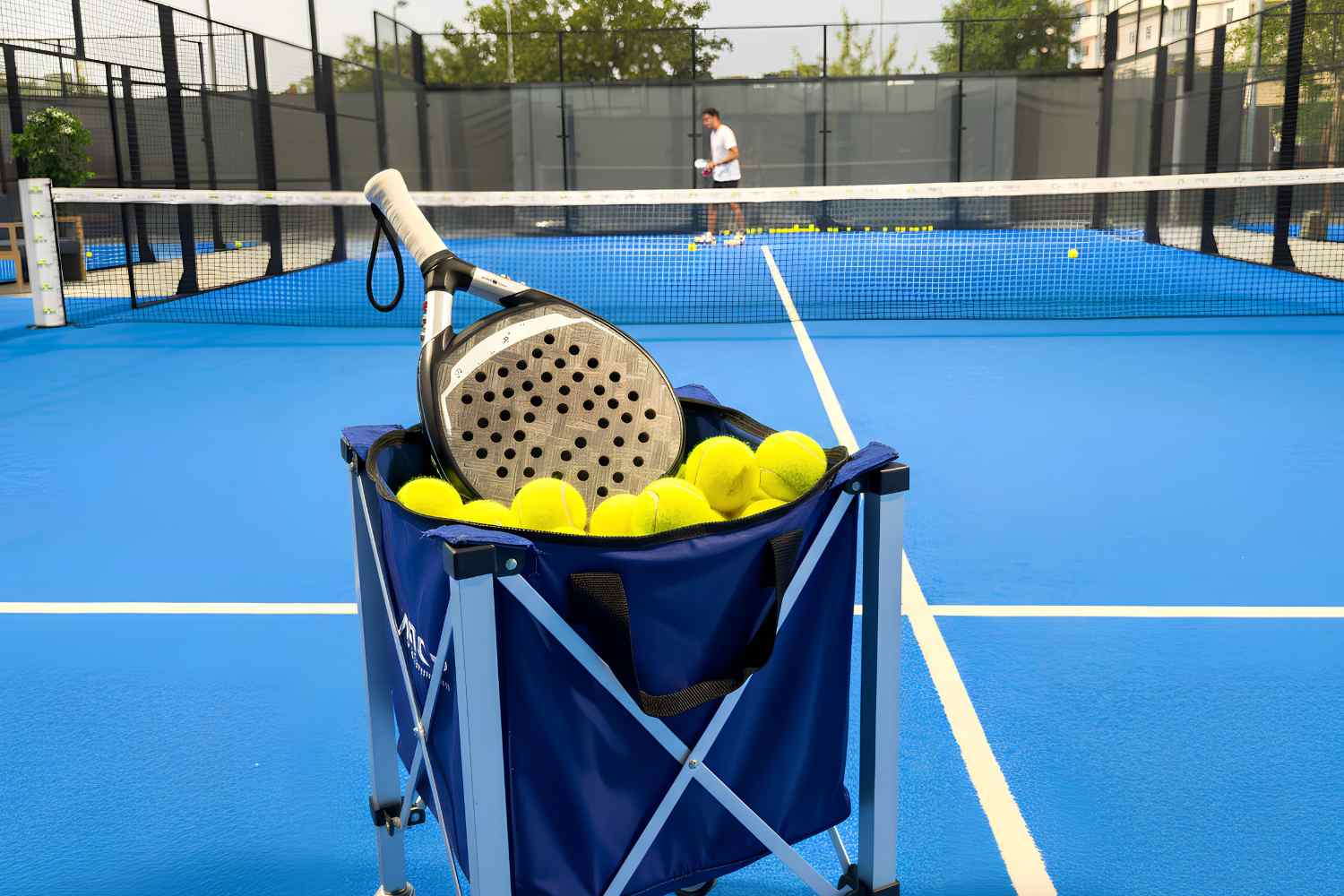
The padel phenomenon in Italy has now passed the emerging phase to become a solid and structured sporting reality. With over 10,200 courses distributed across almost 3,800 clubs (data updated to October 2025), the Belpaese has established itself as the second European power in the sector, representing 11% of continental enthusiasts.
The growth has been overwhelming: between 2020 and 2025, Europe saw an increase of more than 33,000 padel courts, a jump of 185%. In this expansion, Italy played a leading role together with Sweden, especially in the initial three years. Currently, with 10,220 camps registered as of June 2025, the country is going through a phase of consolidation after the explosion of recent years.
The capital leads the professional movement
If the entire national territory has embraced this discipline, it is Rome that has established itself as the true epicenter of Italian padel, both for its infrastructure and for its weight in the international circuit.
The eternal city hosted the BNL Italy Major in June, a prestigious tournament included in the Qatar Airways Premier Padel circuit, managed by the International Padel Federation (FIP). It is one of the most important events on the global calendar, which places Rome at the center of the world scene.
Italy doesn’t stop at the capital: Genoa has also hosted P2 category events, while Milan has organized multiple editions of P1 tournaments, consolidating the country’s role as a hub for high-level competitions.
A hotbed of unprecedented talent
But Rome does not only shine for the organization of events. Analyzing the birthplaces of the players in the Top 300 of the FIP Ranking, the Capital is the first non-Spanish city in the world for contribution to this elite. Globally, it ranks seventh overall for the number of athletes – men and women – born in the city and ranked in the Top 300.
A figure that tells how the padel phenomenon in Italy has not remained confined to the amateur and infrastructural dimension, but is generating a real school of professional talents capable of competing at the highest international levels.
While the country consolidates its over 10,000 fields, Rome confirms itself as the beating heart of the movement: organizer of Major tournaments and cradle of the best Italian players, projected towards the top of the world rankings.
