
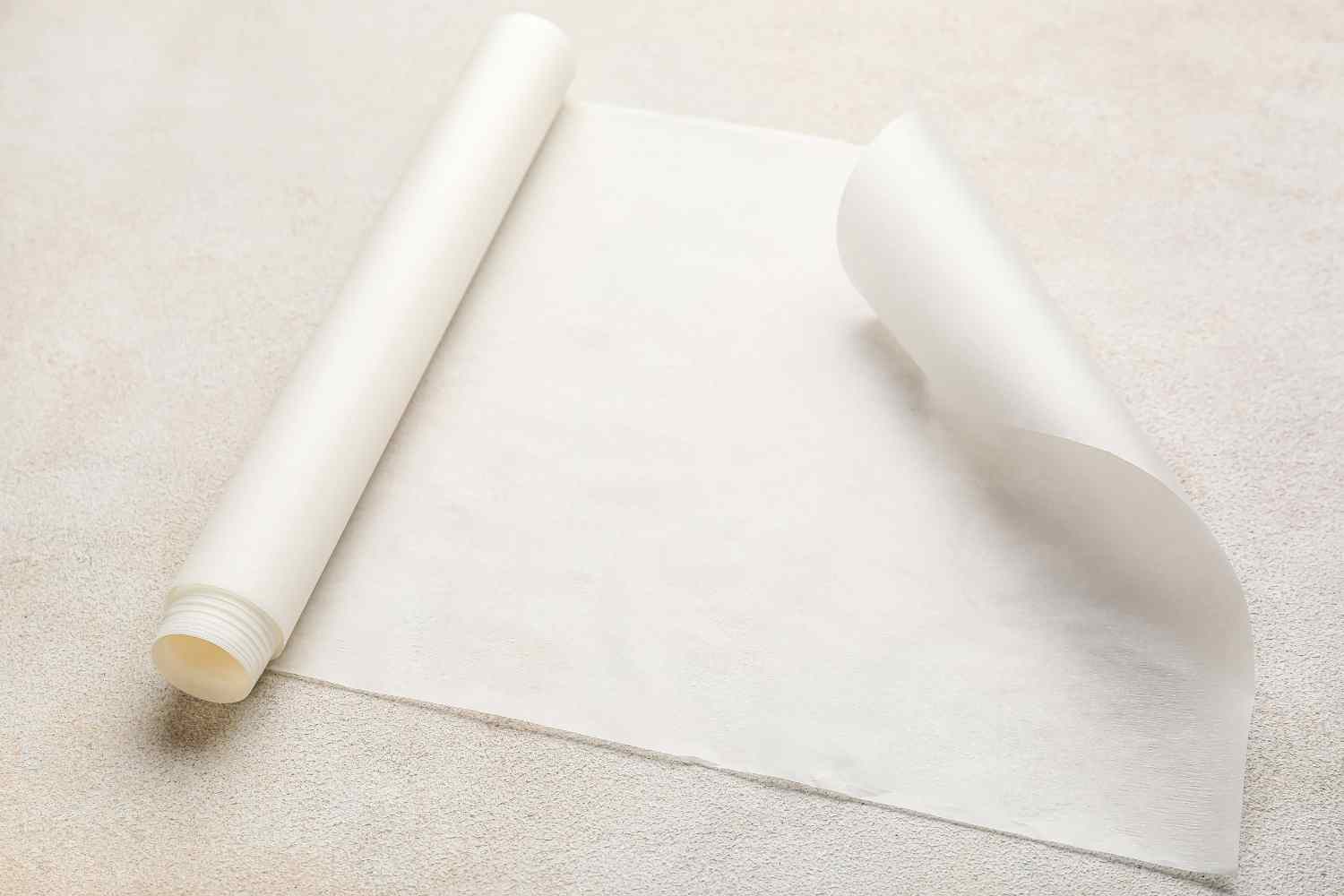
Baking paper has become an almost automatic object in the kitchen: when you put something in the oven, be it a tray of biscuits or a roast, the first thing you do is spread the sheet on the baking tray. It is comfortable, prevents food from sticking, makes cleaning easier and guarantees regular results. But there is a problem that we often ignore: it is a disposable product and, from an ecological point of view, its environmental footprint is surprisingly high. Not only is a considerable quantity of virgin wood used to produce it, but once used it ends up directly in unsorted waste, without the possibility of recycling.
During the Christmas period, when the ovens are working at full capacity with gingerbread, spiced biscuits, stollen and buttery sweets, the consumption of baking paper reaches its peak. It is precisely in these weeks that it is worth asking whether there are more sustainable and equally effective alternatives. The answer is yes: you can cook very well without sacrificing practicality and results. You just need to know the right options.
Because baking paper can’t really be recycled
Even though it resembles a sheet of plain paper, baking paper is anything but plain. To make it resistant to grease, humidity and high temperatures, it is treated with specific chemicals, in particular silicones. These coatings waterproof it and give it its non-stick characteristics, but at the same time make it incompatible with the recycling of traditional paper.
During the recovery phase, the fibers cannot be separated from the coating, and this not only compromises the regeneration of the cellulose, but also hinders its biodegradability. For this reason, baking paper – dirty or clean – must be disposed of in unsorted waste. A rather quick end for a product that requires precious raw materials such as virgin wood.
Anyone who thinks of composting it in the waste bin or in home compost must immediately abandon the idea: the material does not degrade properly and can contaminate the compost with unwanted residues, even if we are starting to find some baking paper that goes into waste on the market.
Grease the pan: the simplest method, always used
Before the arrival of baking paper, the only way to prevent a cake from sticking was to grease the pan. It is an ancient but still very valid technique. A small amount of butter, margarine or neutral oil is enough to create a thin protective layer; if you want to increase safety, you can add a sprinkling of flour or breadcrumbs.
It’s true: final cleaning requires more effort than simply lifting a disposable sheet of paper, but the environmental advantage is notable and the cooking result is natural and effective. Furthermore, this technique becomes almost mandatory when temperatures exceed 220°C: baking paper, beyond that threshold, risks deteriorating and releasing less than desirable substances onto food.
Those who bake bread or pizza at high temperatures often use a baking stone, which completely eliminates the need for protective mats or sheets.
Silicone Baking Mats: The most popular reusable alternative
In recent years, silicone baking mats have become widespread, designed as a durable substitute for baking paper. They are flexible, washable, practically infinitely reusable and enormously reduce waste production. Several independent tests have verified that food-grade silicone mats resist heat well and do not release harmful substances if used correctly.
Before first use, however, some consumer protection bodies recommend “activating” them by keeping them in the oven at 200°C for an hour and then washing them thoroughly. This step serves to eliminate any production residues.
The situation is different for PTFE (Teflon) mats: these contain fluorinated compounds that are very persistent in the environment, the famous PFAS. Not only can they release unwanted substances during cooking, but their production and disposal are environmentally problematic. For safer and more sustainable cooking, it is best to avoid them.
Non-stick baking trays and refractory stones: investments that last
Another practical alternative is to invest in a good quality baking tray. Tempered glass or ceramic-coated baking trays, for example, allow you to cook desserts and cakes without additional coatings: often a light layer of fat or, sometimes, not even that is enough.
For those who love homemade bread or pizzas cooked at very high temperatures, the refractory stone is an irreplaceable ally. Made with materials such as clay or lava stone, it accumulates heat and releases it evenly. However, a little patience is needed: it needs to be preheated for a long time, and this involves a certain amount of energy consumption. From an environmental point of view it is not the lightest choice, but it guarantees professional results and reduces the need for disposable sheets.
Cooking on wafers: the ancient idea that still works
An interesting method, perfect for moist doughs such as macarons or almond-based biscuits, is the use of wafers. Already used in the Middle Ages by German pastry chefs for Christmas desserts, they have a very similar function to baking paper, with an added advantage: they are edible.
Not only do they prevent the cookies from sticking to the pan, but they also prevent the base from darkening too much. By reducing the formation of burnt parts, you also limit the production of acrylamide, a substance that forms at high temperatures and which, in high quantities, can be problematic.
Reusing baking paper: not perfect, but better than nothing
Although it is not a truly zero waste solution, reusing baking paper at least a couple of times is still possible. However, not all papers behave in the same way: it depends on the type of coating and the production process, information that is almost never indicated on the packaging.
To be safe, only sheets explicitly labeled as suitable for multiple uses should be reused. With the arrival on the market of baking paper certified with the “Blue Angel” eco-label, expected from 2025, the situation should improve: these products will be designed to be reused for longer.
The rule is simple: the more a sheet has already cooked, the sooner it should be thrown away. When it has dark spots, burn marks or becomes crumbly, it’s time to dispose of it. If it is only dirty with light residues, a wipe with a damp sponge can extend its useful life.
We also recommend:
