
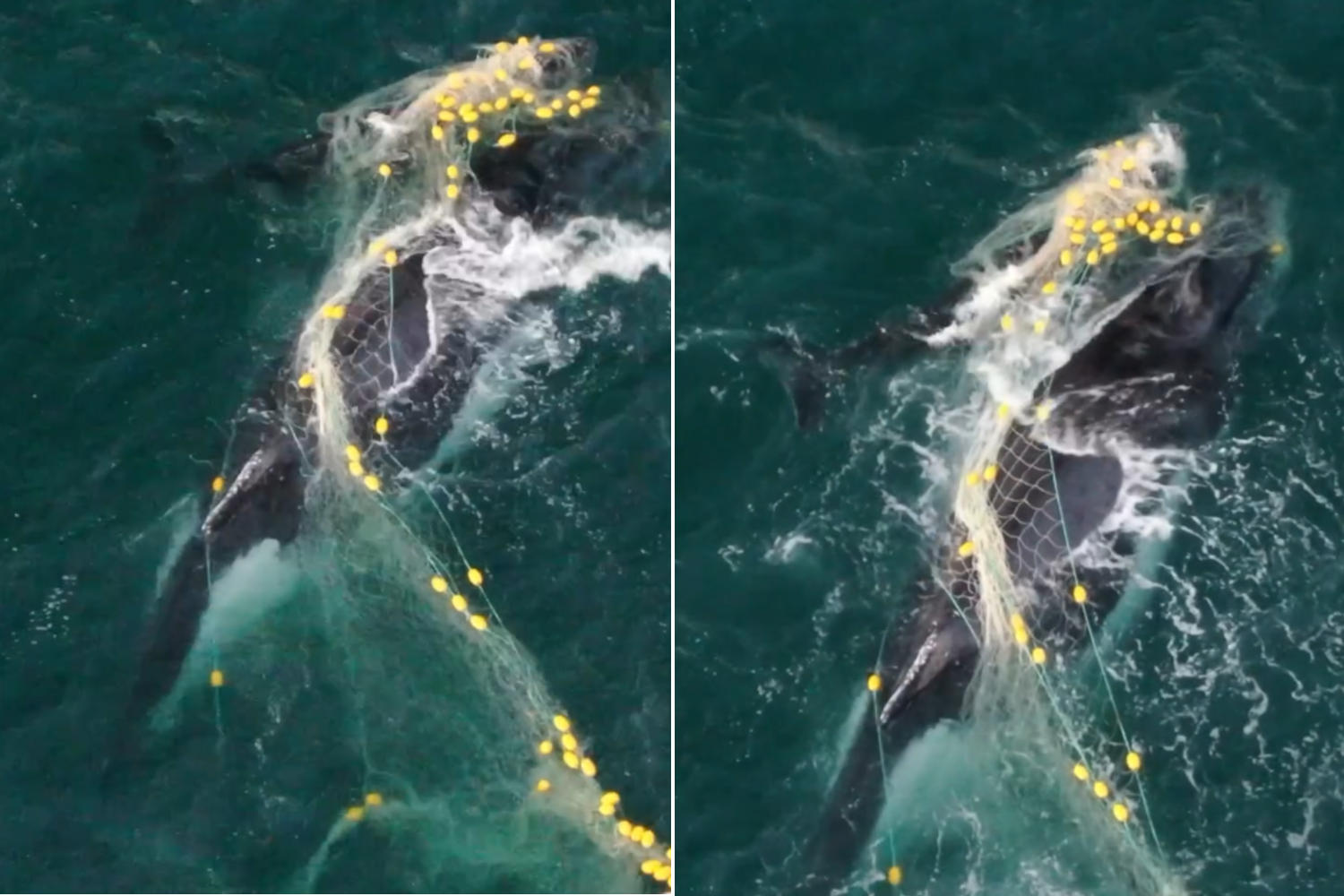
A heartbreaking scene widespread on social media from the Sea Shepherd account shows a whale and his little one trapped in an anti-Squal network off the coast of Noosa, in Queensland. In the images you can see the two animals in difficulty, forced to fight against a barrier that should have protected bathers, not to imprison innocent cetaceans.
The drama consumed to drop the night, when the rescue teams were unable to intervene, leaving the animals to fight against the shirts of the nets. The puppy, who appears wrapped in cables without the possibility of freeing himself, aroused greater concern.
View this post on Instagram
Totally ineffective networks that damage marine fauna
A case that unfortunately is not isolated. In Australia, in fact, the problem with sharks is not related to an increase in attacks, but to these networks installed for “safety”. Used since the 1930s, they have shown that they are an ineffective and above all harmful system for marine fauna.
A recent study conducted by the University of Wollongg and environmental associations such as Humane World for Animals underlined the devastating impact of these barriers: only between September 2023 and April 2024, on the beaches of New South Wales, 255 animals were trapped. And only 15 belonged to species of sharks considered dangerous; All the others were collateral victims such as dolphins, sea turtles and tuna.
The ineffectiveness of the networks has led to increasingly sensational protests. Last November, a group of swimmers swam from Bondi Beach forming a 150 -meter human chain that wandered the barrier without effort. A symbolic gesture to demonstrate that if people manage to overcome them, sharks can also do it.
Alternative solutions
This is why more modern and sustainable solutions are being studied. Among these are the drum line, buoys floating with baits and sensors that allow to intercept the sharks away from the shore. The captured animals are marked and monitored, and an app warns swimmers if they approach too much to the coast. Another promising technology is the patrol with drones, already tested since 2017. The data show that, in the presence of drones, the number of attacks has fallen practically zero.
A future without networks
The case of Noosa has turned on the debate again: these networks not only do not protect, but represent a death sentence for many innocent animals. The hope is that the Government of Queensland listens to the voice of citizens and environmentalists and finally decides to retire a cruel and now overcome method.
You may also be interested in:
