
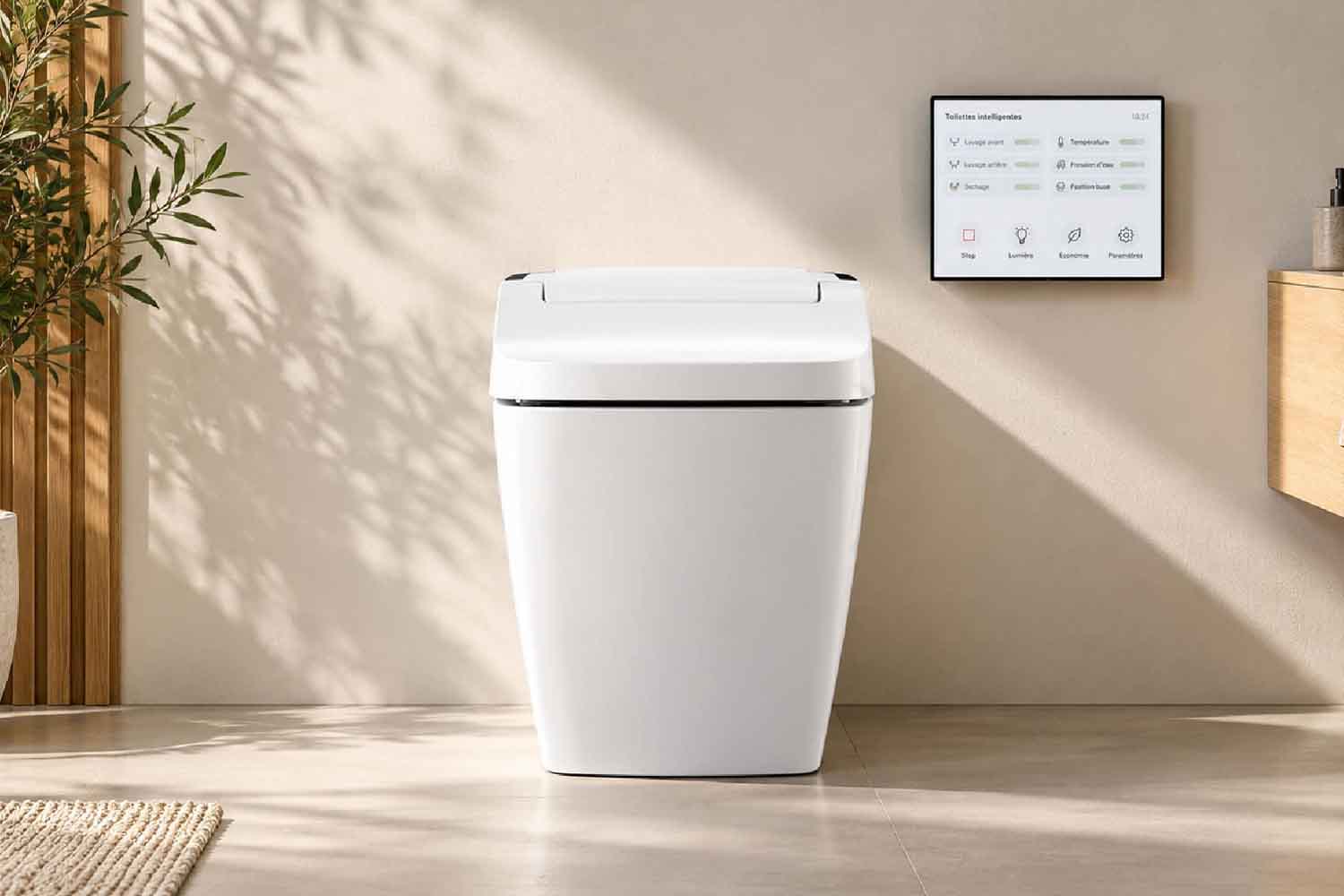
You sit down, do what you have to do, and while the toilet takes care of the lid, flush, and flush, a small screen on the wall displays information derived from the urine. If no one returns to the bathroom for several hours, an alert goes off on a family member’s phone. The I WANT NEO it brings the smart home to a place that, until now, has seemed to have resisted the temptation to send us notifications pretty well.
The TCB-090SA was recognized as an Honoree at the 2026 CES Innovation Awards in the Smart Home category. Costa, according to the launch materials, $4,990 and combines the now almost classic functions of technological sanitary ware – heated seat, bidet, hot air drying, automatic opening and draining – with two decidedly less ordinary features: a sensor for urinalysis and a system that monitors how much time passes between one use and another.
The toilet that also watches what ends up inside
The integrated sensor should monitor some signals mainly related to hydration and general well-beingshowing the results in real time on the display mounted in the bathroom. The documentation presented for the CES also goes as far as talking about early identification of changes in health status.
However, they are not explained in detail in the publicly available materials consulted which urinary parameters are measured, with what accuracy and with respect to which laboratory method. Therefore, the information needed to treat the VOVO NEO as a true diagnostic tool is lacking.
The CES award should also be read for what it is. The Consumer Technology Association itself, which organizes the program, specifies that the products are evaluated for engineering, functionality, design and innovation and that . The recognition therefore certifies the technological interest of the project, not the clinical reliability of the urinalysis. In short, the family doctor can continue to sleep peacefully. At least for now.
If the bathroom remains empty for too long, a message arrives
Perhaps the most interesting part, however, concerns the elderly who live alone. The system is called “Jindo the Dog” and uses toilet usage habits as a kind of home sentinel: when too much time passes without the person going to the bathroom, it can automatically send an alert to a registered family member.
There is even a small discrepancy in the stated times. The sheet published by CES speaks of an alarm afterwards 8-10 hours without use; the product presentation materials indicate instead over 12 hours. The principle remains the same: use a daily and repetitive gesture as an indirect signal to understand if something in the routine has changed.
It’s a much less sci-fi function than it sounds. An elderly person living alone may fall, feel ill, or simply suddenly stop their routine. The WC does not know what happened and, above all, . However, it can signal an unusual absence, leaving someone real to check.
And it is probably here that a bathroom fixture costing almost 5 thousand dollars stops for a moment from seeming merely the result of someone who, faced with home automation, asked himself “what else can we connect to the Internet?”.
Automatic in practically everything, economical decidedly less so
For the rest, NEO retains a lot of the DNA of the smart toilets that VOVO already sells: automatic opening and closing of the lid, contactless flushing, bidet jet adjustable for pressure and temperature, heated seat, hot air drying, deodorization and self-cleaning nozzle. The company also offers these systems for people with reduced mobility, because various operations can be performed without using your hands.
There is also a drain management that adapts the amount of water to the time spent on the seat. The throne evidently takes note of the duration of the hearings.
Price remains the most obvious barrier: $4,990. More interesting than the product itself, however, may be the direction it points. Sleep, heart rate, physical activity and temperature have already ended up in smartwatches and rings. Urine has the advantage of containing a lot of biological information and the bathroom has the even more practical advantage of being used without having to remember to wear or activate anything.
For this transition from the toilet to the small home laboratory to become truly sanitary, we will need data that we do not yet see in the presentation of the VOVO NEO today: measured parameters, accuracy, independent validation, management of false alarms and, inevitably, what happens to rather intimate information collected every day in the bathroom.
For now, NEO knows how to open the lid, wash, dry, observe the routine and virtually call a family member if you disappear for too long. It does not replace the doctor. However, at this rate, the old porcelain toilet is almost starting to look like that of the family who hasn’t opened the WhatsApp group yet.
