
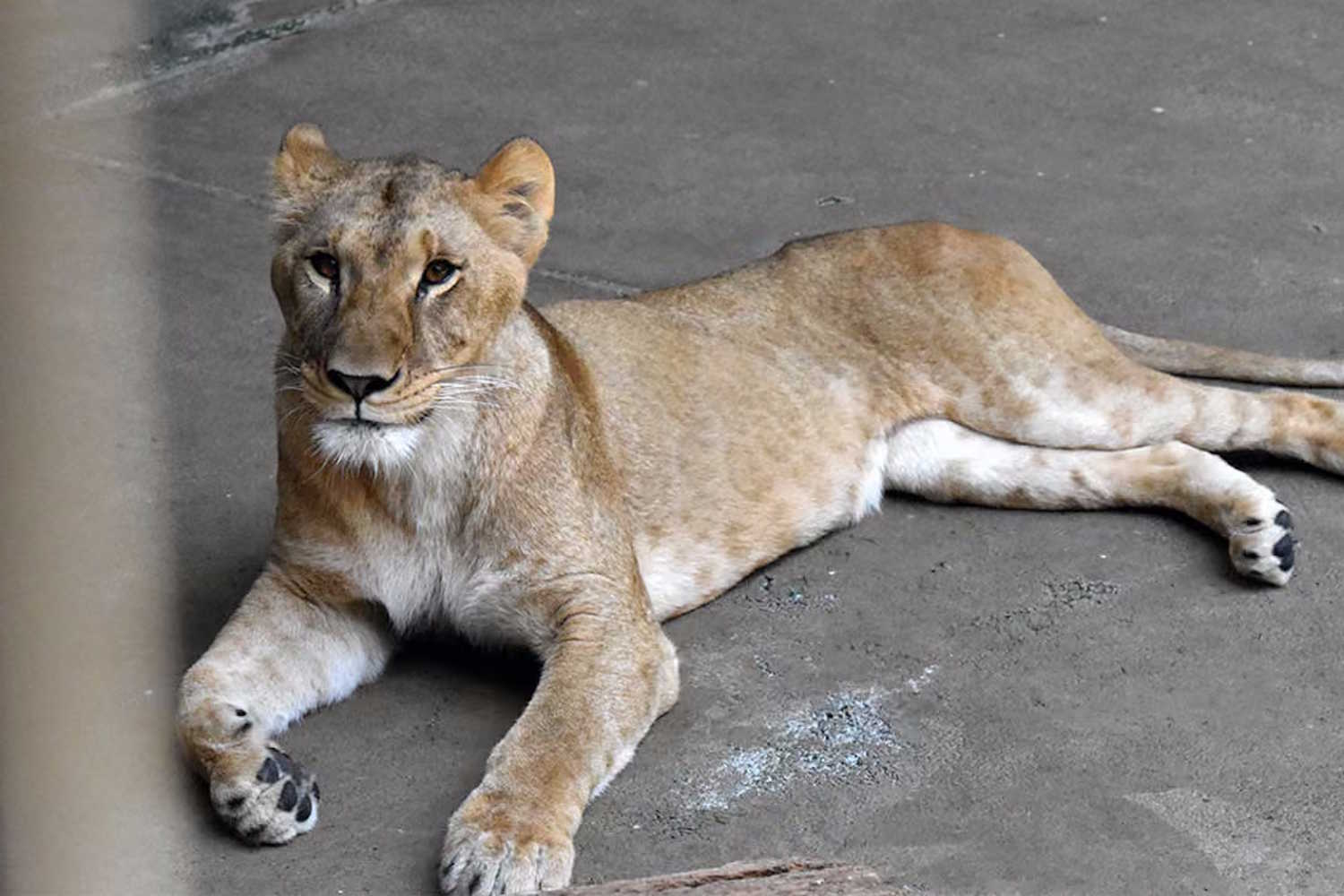
Three lionesses have died in a Tokyo zoo, probably due to heat stroke. A dramatic episode that brings a very current question back to the center: how vulnerable are wild animals forced to live in artificial environments while the planet becomes increasingly hotter?
The three females lived at Tama Zoological Park, where in recent days many of the 16 lions present have shown signs of suffering: loss of appetite, low energy and reduced activity. According to the zoo, the lionesses died one after the other over three days. Veterinarians observed dehydration and multiple organ failure, both consistent with heat stroke.
Although lions are animals associated with the warm climates of Africa, the situation in Japanese zoos is – needless to say – very different from that of the savannah. The problem is not just the temperature, but the humidity.
Lions are considered heat-tolerant, but the Japanese heat is accompanied by high humidity, different from the dry air of Africa, a zoo spokesperson said.
A fundamental difference. When the air is very humid, animals also have more difficulty dispersing heat through breathing and evaporation. The body overheats more easily and the risk of collapse increases.
A record-breaking summer
Japan is facing one of the most extreme summers on record. In 2025 the country had experienced the hottest summer in its history and in recent weeks some areas have reached temperatures around 40°C, so much so that the authorities introduced a new definition for “extreme and dangerous” hot days.
Between July 20 and 26 alone, approximately 18,600 people were hospitalized for heat-related problems and 45 died upon arrival at the hospital, according to the Japan Emergency Management Agency.
But, as is clear, the record heat does not only affect humans. It also affects those animals that, in zoos, cannot choose where to move, seek a cooler environment or follow the natural rhythms of their species. After the deaths, the Tama Zoological Park announced the strengthening of measures against the heat: greater ventilation, water spraying and installation of air conditioners in the most critical areas. And in the meantime some lions are still under observation.
Of course, let’s read them as necessary interventions, but they also tell of a deeper problem: the animals housed in zoos are completely dependent on the ability of human beings to predict and manage increasingly unpredictable environmental conditions. A lion in nature can seek shade, move away, change its behavior. A lion in an enclosure does not have this possibility.
Scientists now agree that climate change is increasing the frequency and intensity of heat waves in Japan and many other parts of the world. And, while we talk about the effects of heat on people, episodes like the one in Tokyo remind us that the climate crisis affects all forms of life. Animals are not just victims of environmental changes, they are beings capable of experiencing stress, fear and suffering. Even behind the bars of a zoo, even far from the savannah, a body remains a body. And when the planet gets too hot, everyone suffers.
