
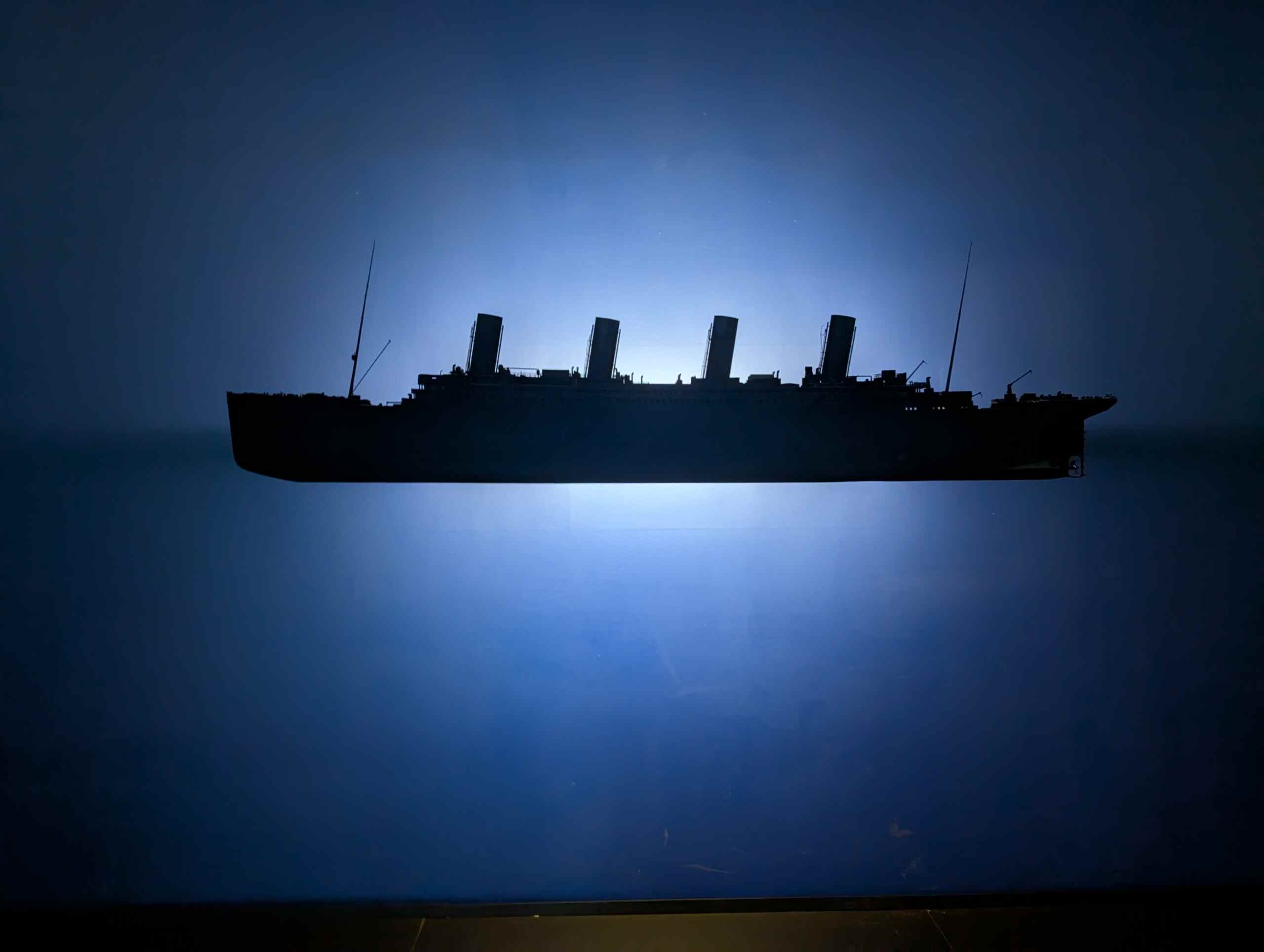
There are stories that never stop speaking to us. Not because we don’t know them, but because each generation finds a new way to look at them. The Titanic it’s one of them. More than a hundred years after the night of its sinking, the ship symbol of technological arrogance and human fragility returns to the center of attention thanks to an instrument that in 1912 was pure science fiction: a supercomputer. Not to fuel the myth, but to try to understand, with new eyes and data in hand, what really happened in those hours in the North Atlantic.
This time it’s not about suggestive hypotheses or cinematic reconstructions. A team of researchers used highly advanced digital models to simulate the entire sinkingminute after minute. The result is not a spectacular truth, but something more disturbing: a technically coherent, inevitable sequence of events that makes the tragedy even more real.
A digital simulation that combines science, technology and historical memory
At the basis of the study there is a extremely detailed three-dimensional reconstruction of the transatlantic. The researchers brought together data collected over decades of expeditions to the wreck, very high-resolution underwater images and historical information on the ship’s materials and structure. Everything was entrusted to a supercomputer capable of simulating not only the impact with the iceberg, but also the real behavior of steel, rivets and sheets subjected to progressive stress.
The ship is not treated as a rigid object, but as a complex organism that reacts, deforms and gives way. This is where the simulation changes perspective: there is no single fatal moment, but a chain of events that are triggered one after the other. The impact with the iceberg causes a series of damages distributed along the hull, paving the way for water to enter several watertight compartments. From that moment on, the fate of the Titanic was sealed.
The numbers help to understand why. In the first hour after the impact, according to the simulation, the ship was boarding between 138 and 243 tons of water per minute. The on-board pumps, while functioning correctly, managed to expel just over 11 tons in the same amount of time. A huge imbalance, impossible to fill. The water that entered not only increased the overall weight of the ship, but altered its structure, amplifying the stress on the structure.
Impact, maneuver choices and the slow collapse
One of the most interesting aspects of the simulation concerns the impact with the iceberg. The model does not take into consideration just one scenario, but analyzes different angles and collision modes. A sobering fact emerges: if the Titanic had hit the iceberg head-on, the damage would probably have been more concentrated and would have involved fewer watertight compartments. The ship could have stayed afloat longer, especially if the speed had been reduced in time.
This does not mean that the tragedy would have been avoided, but it shows how much the decisions made in a few moments had an impact on the final outcome. The lateral blow, however, acted like a long and irregular wound, compromising multiple sections of the hull. The simulation also goes into detail about the interaction between ice and steel, showing how the shape and rigidity of the iceberg produced a series of micro-failures, rather than a single obvious flaw.
As time passes, water accumulation and increasing stress lead to the point of no return. The structure of the Titanic can no longer distribute the stresses and collapses. The ship breaks in two, in a way that today matches perfectly with the actual layout of the remains of the Titanic wreck on the ocean floor.
This reconstruction does not rewrite history, but makes it more understandable. Observing that event today through advanced calculation tools does not serve to judge the past, but to read it with greater clarity. It helps to remember that even the most sophisticated systems have points of fragility and that trust in technology, without full awareness of its limits, can turn into a risk. A lesson that remains relevant, well beyond the tragic night of 1912.
