
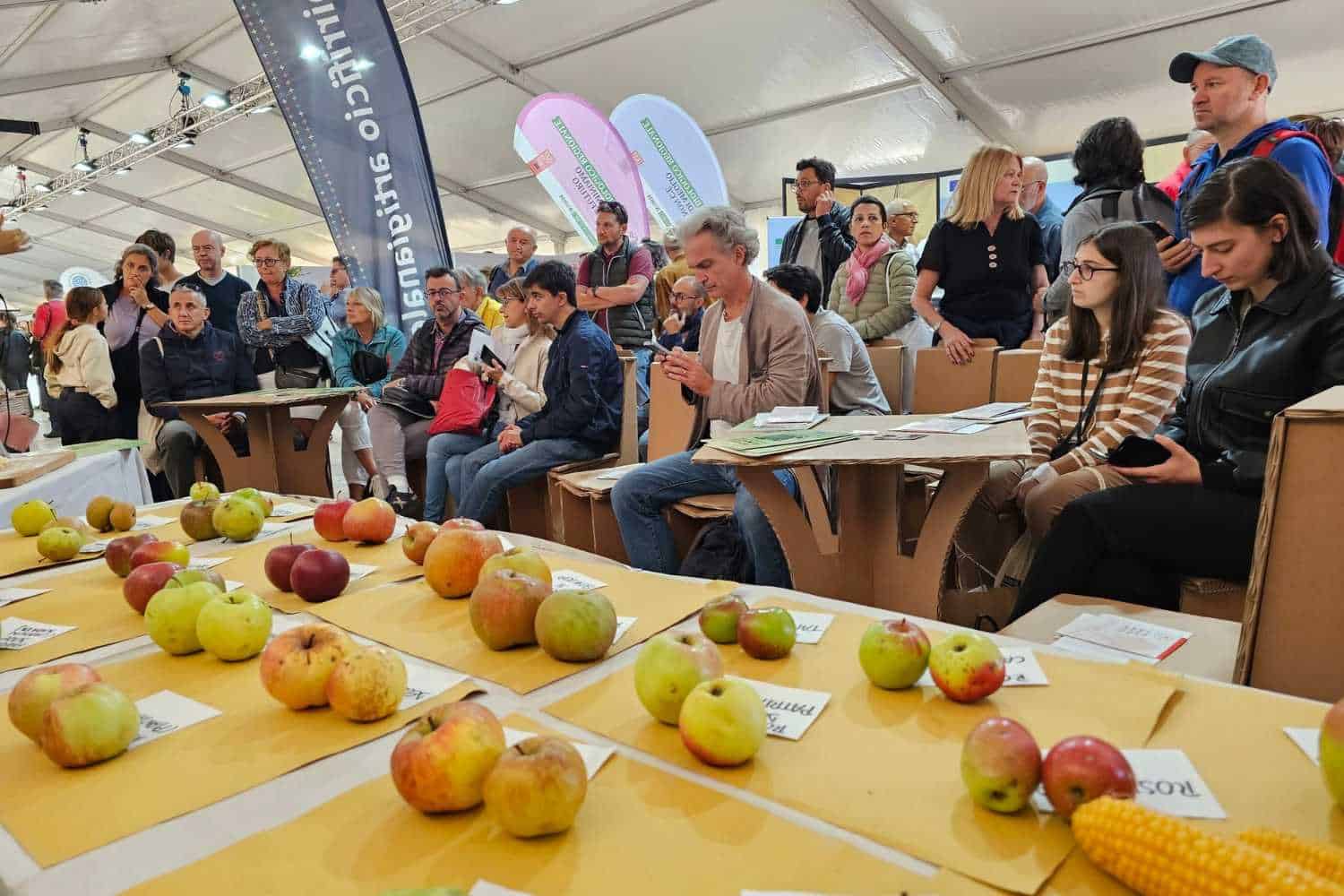
There was a time when walking through the orchards of Trentino you could come across apples of every shape, color and flavour. Some ripened in autumn, others were preserved throughout the winter, still others were particularly suitable for preparing desserts, such as the delicious Strudel. They have curious and fascinating names, such as White Rosemary, Boskoop Beauty, Pineapple Renetta or Champagne Renetta. Today many of these varieties have been almost completely forgotten, supplanted by a few cultivars intended for large-scale production, where pesticides are often used (and abused).
To recover and protect this precious biodiversity heritage, the historic apple varieties of Trentino have become a Slow Food Presidium, thanks to meticulous research and rediscovery work that lasted several years.
Until the middle of the last century, before industrialization transformed the economy and landscape of the Trentino valleys, ancient apple varieties were widespread in home gardens and small family plots. Today the situation is very different. “Trentino has been a region with a fruit-growing vocation for at least one hundred and fifty years, but in recent decades we have somewhat forgotten the varieties widespread in the past” explains Nely Webber, Slow Food representative of the Presidium.
In the province there are around 10 thousand hectares of apple cultivation, for a production of around 500 thousand tonnes per year. Approximately one in four Italian apples comes from Trentino and, of these, two thirds belong to a single variety: the Golden Delicious. Numbers that demonstrate how production specialization has reduced the extraordinary diversity that once characterized local fruit growing.
The ancient varieties of apples recovered
Nely Webber and the agronomist Federico Bigaran brought attention to this heritage which risked falling into oblivion, through a long process of consulting books and historical documents, also conducted thanks to the collaboration of the Mach Foundation, and mapping the territory. There are around twenty varieties identified and included in the specifications of the new Slow Food Presidium. These include the Renetta, such as the Pineapple Renetta, the Orléans Renetta, the Canadian Renetta, the Champagne Renetta, the Royal Rust Renetta and the Autumn Gray Renetta, and the Calville, including the Winter White, the Winter and Autumn Red, the Yellow Belfiore and the Ronzone Belfiore.
Then there are the Pink apples, such as the Rosa di Fondo, the Rosso nobile, the Rosa gentile, the Fragone and the Rosa mantovana, the Rosmarine, white and red, and other varieties with equally particular names: the Bella di Boskoop, the Palmandor, the Grafenstein and the Limonzino. Each of these apples has its own characteristics, from the consistency of the pulp to the flavour, through to ripening times and the ability to be preserved. A wealth of shapes, colors and scents that we rarely find on supermarket shelves today.
The production area in question includes the foothills of the Trentino valleys, in particular Val di Sole, Val di Non, Valli Giudicarie, Valsugana, Val d’Adige, Vallagarina, Val di Cembra, the Pinè plateau, Primiero and the Folgaria plateau.
The Trentino orchards: when different crops coexisted in the orchards
At one time apple trees were grown in the so-called brolifamily orchard fields where numerous crops coexisted. Next to the fruit trees grew vines, mulberries, vegetables, legumes, cereals, potatoes and plants intended for animal feed. The choice to grow different varieties of apples also responded to very concrete needs: having fruit available at different times of the year, reducing the risks linked to plant diseases and having apples suitable for different uses in the kitchen.
“The apple trees cultivated were also of different varieties: not only for a question of taste, but also of resistance to pathogens, of scalarity in the ripening period of the fruit and of the possibility of conservation and use” underlines Webber.
A diversity that, at least in part, we also owe to the spontaneity of nature. As agronomist Federico Bigaran explains, in fact, an apple tree born from seed will never be genetically identical to the mother plant, due to the genetic recombination that occurs with pollination.
“Nature, if it is allowed to take its course, sometimes bears interesting fruits: and so some varieties have gradually been spread” highlights the expert.
The recognition of Slow Food therefore represents an opportunity not only to save apples that risk disappearing, but also to recover an agricultural model in which diversity was a precious resource and protect the future of agriculture also from challenges such as the climate crisis.
