
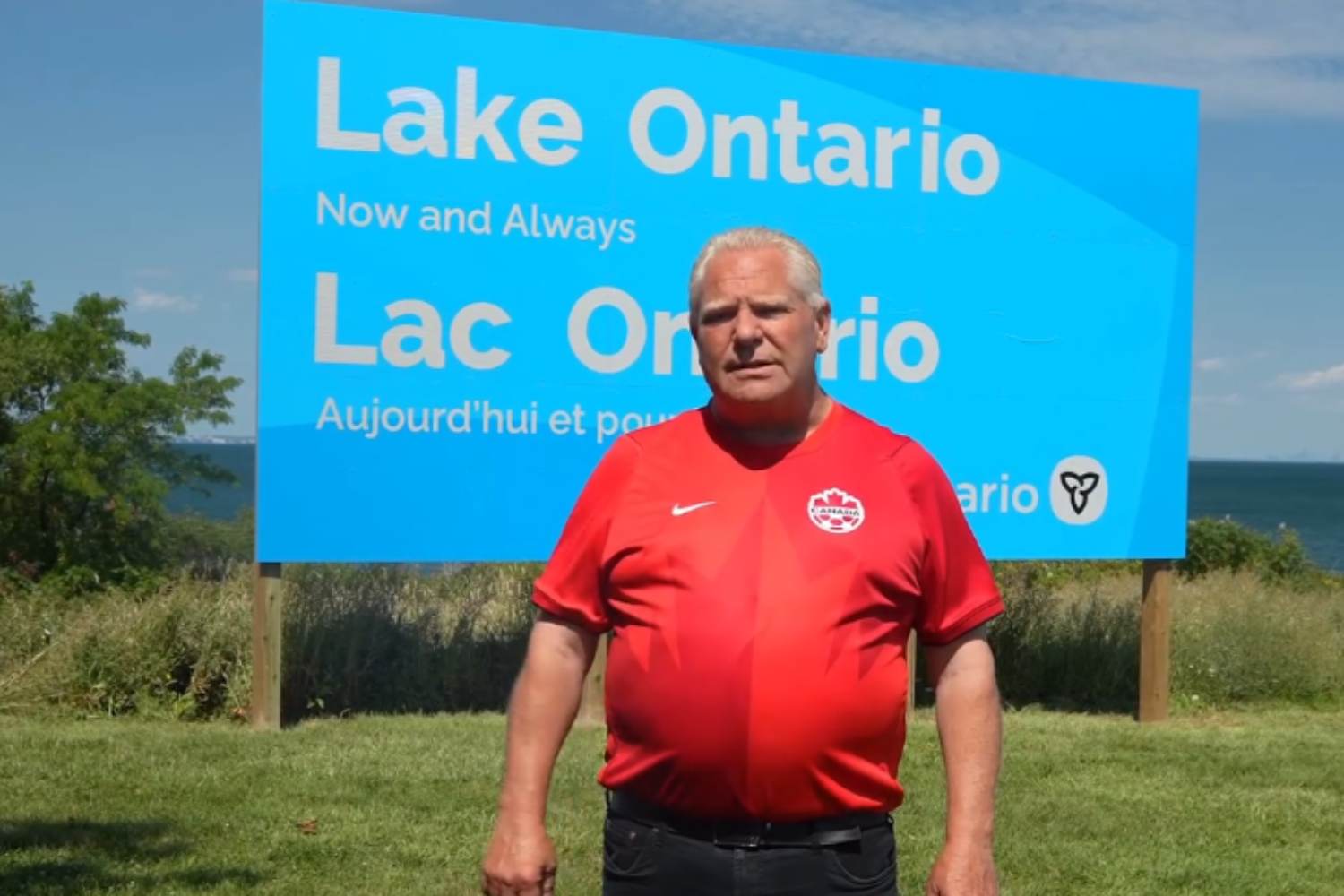
The diplomatic tension between Washington and Ottawa reaches unprecedented levels and does so (also) through a back-and-forth on social media. It all started with the absurd decision of United States President Donald Trump who signed an executive order on August 27, 2026 with the aim of officially renaming Lake Ontario to Lake America within US federal documents and maps.
The measure requires Interior Secretary Doug Burgum to update the System Information Geographic Names, the official federal archive of names, within 30 days. The decision comes at the height of a bitter trade dispute, resulting from the American imposition of 50% tariffs on a total value of 20 billion dollars of Canadian goods. In response, the Canadian government has already announced mirror tariff countermeasures of up to C$27.6 billion effective starting in September.
EFFECTIVE IMMEDIATELY: Lake Ontario is renamed to LAKE AMERICA! pic.twitter.com/ZFww8PexiW
— The White House (@WhiteHouse) August 27, 2026
Doug Ford and Mark Carney’s reaction along the border
Canadian institutions reacted firmly and immediately to the White House’s move. The premier of the province of Ontario Doug Ford had an imposing sign installed on the Canadian shores bearing the words “Lake Ontario. Now and Always” (“Lake Ontario. Now and always“), claiming the historical sovereignty of the place. Doug Ford’s protests were joined by the official statements of Canadian Prime Minister Mark Carney, who recalled how the term derives from the indigenous word wendat Ontarioin use for over four centuries and therefore predating the birth of both nations. On a technological level, the Google company has adapted the Google Maps application by showing the name Lake America to users residing in the United States, maintaining Lake Ontario for the Canadian public and showing both nomenclatures in the rest of the world.
View this post on Instagram
Digital provocations and the sad drift of geopolitics
The controversy has also taken on grotesque contours on digital platforms, where Donald Trump has released videos generated by artificial intelligence in which he destroys the Canadian sign to the rhythm of the song YMCA. This episode, which follows the previous American decision to rename the Gulf of Mexico to the Gulf of America, reflects a disconcerting unilateral drift in contemporary diplomacy.
Trump’s claim to be able to rewrite the geography of the planet at will reveals an absolutist idea of power, in which history and international law are subordinated to the mood of the individual head of state. Precisely for this reason, in the face of attitudes that mistake global governance for a personal arena, the firm opposition raised by Canada’s leaders is a fundamental act of democratic resistance and respect for the dignity of nations and can only deserve applause.
