
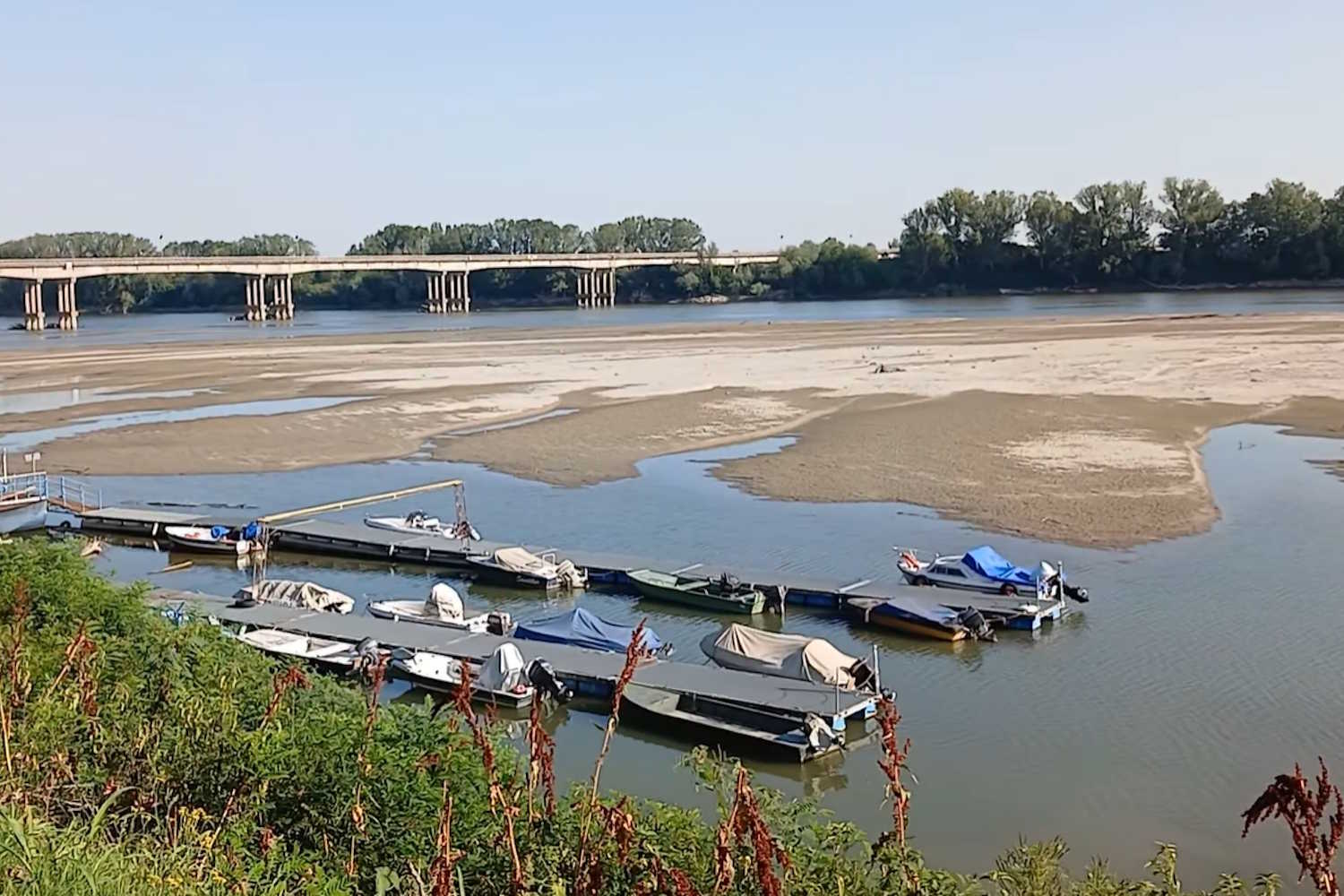
Veneto has declared a state of emergency due to the water crisis, while the numbers released by Arpav photograph a situation that is once again scary. After a brief relief brought by the rains of mid-June, the intense heat and rainfall that has been missing for weeks have once again dried up water reserves, bringing the main rivers in the region back to extremely critical levels.
The most alarming data concerns the Po, which records a flow rate 70% lower than the historical average. And the Adige is not doing any better, stuck at -60%, while Brenta and Bacchiglione show values between 53% and 60% below the norm. Mountain streams are also suffering, with flows reduced by between 30% and 45%.
A situation that has pushed the Veneto Region to maintain high attention on the water availability front, while agriculture, ecosystems and civil supply look with growing concern at the evolution of the coming weeks.
It rains less and it’s warmer
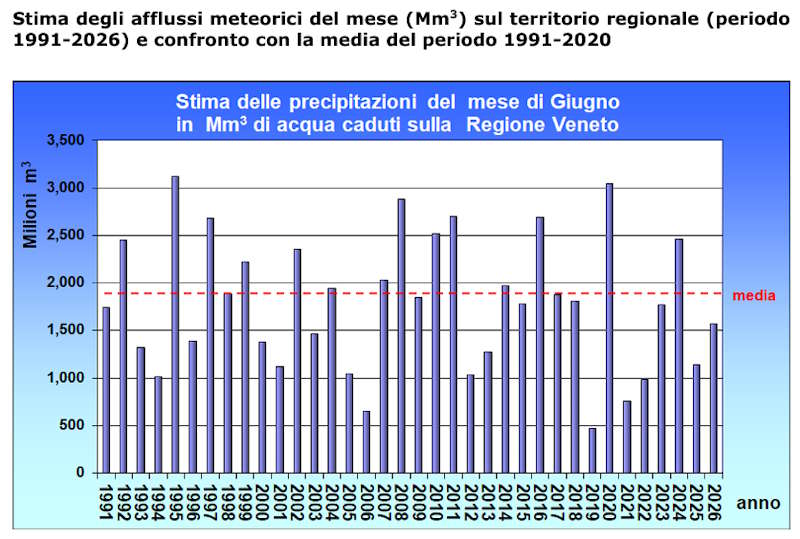
According to the latest Arpav report, an average of 85 millimeters of rain fell in the month of June compared to 100 millimeters in the reference climate period 1991-2020. An apparently limited deficit, but sufficient, in the presence of high temperatures and strong evaporation, to compromise the regional water balance.
@ARPAV
The rainfall in the first half of the month had allowed a partial recovery of water reserves, but the improvement was short-lived. The heat waves that affected Northern Italy in the following weeks quickly canceled out the benefits of the rains, once again worsening the hydrological situation.
The data confirm a situation of suffering for our territory which requires maximum attention and careful management of resources, declared the regional councilor for the Environment and Climate Elisa Venturini.
@ARPAV
Climate change makes water increasingly vulnerable
While remaining slightly less dramatic than the historic drought of 2022, the current situation once again highlights the growing instability of water resources in Northern Italy.
These numbers put us before a climate reality that we cannot underestimate – explained Venturini. The gap compared to historical averages testifies to the impact of climate change which makes water availability increasingly variable and vulnerable.
What is worrying is not only the reduction in rainfall, but also the combination of increasingly snow-poor winters, record temperatures and longer and more frequent dry periods. A dynamic that reduces the natural storage capacity of water and puts entire territorial systems under pressure.
Meanwhile, water scarcity is already having effects that go far beyond river levels. Agriculture is among the most exposed sectors, especially in the areas of the Veneto plain that depend on irrigation during the summer months. River ecosystems are also affected by the reduction in flow, with consequences on biodiversity and water quality.
In the meantime, Veneto and Lombardy are also looking to the Alpine and pre-Alpine territories to guarantee the necessary supplies during the hottest season. In Trentino, where the situation is currently considered more stable, some administrations have already adopted ordinances to encourage more careful use of the water resource, while monitoring of the basins that feed the large rivers of the Northeast continues.
While waiting to understand whether the next few weeks will bring significant rainfall, a clear invitation comes from the institutions: avoid waste and use water consciously.
The crisis affecting the Veneto is in fact not an isolated episode, but the umpteenth manifestation of a climate transformation that makes an essential resource for life, agriculture and ecosystems increasingly fragile. And as the major rivers continue to fall below their historical averages, the risk is that water emergencies will become less and less an exception and more and more a condition to be reckoned with every summer.
Sources: Veneto Region / ARPAV
