
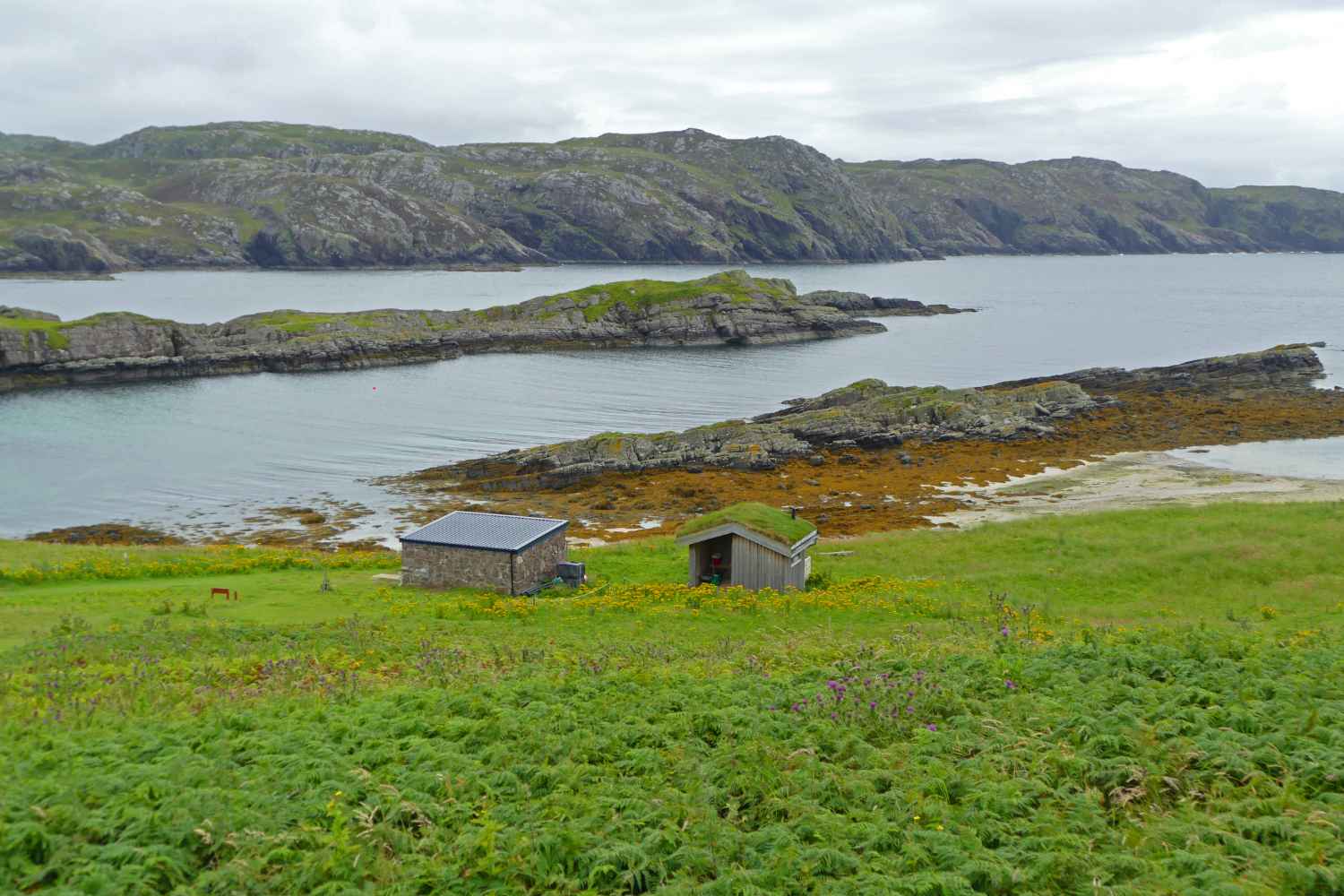
The Scottish Wildlife Trust is looking for a ranger willing to move to Handa, a tiny strip of land off the coast of the Scottish Highlands where no one has lived for over a century. The contract has a six-month duration and promises a decidedly atypical professional experience: protecting an extraordinary ecosystem also means learning to live with the total absence of modern conveniences.
The challenge of daily life
Handa covers around 760 acres and can only be reached via a short ferry crossing from the marina at Tarbet, near Scourie. There are no shops, laundry services or other structures typical of contemporary civilization on the island. The guardian will therefore have to plan regular trips to the mainland to obtain fresh food, wash clothes and obtain the gas cylinders necessary for cooking and heating the rooms. However, when sea conditions become prohibitive, connections can be interrupted for entire days, testing the ability to organize and self-sufficiency of those who live there.
A naturalistic paradise to be protected
The island is home to impressive colonies of seabirds: puffins, guillemots and razorbills number in the tens of thousands. From the cliffs you can spot whales, basking sharks and seals swimming in the surrounding waters. The ranger will have the responsibility of monitoring these animal populations, paying particular attention to nesting birds, and of coordinating a group of volunteers who collaborate in conservation. During the summer the island welcomes around eight thousand visitors, whose presence must be managed in order to preserve the balance of the ecosystem.
Forced cohabitation included in the contract
One of the most challenging aspects concerns the social dimension of the assignment. The ranger shares accommodation with the volunteers, spending not only working hours with them but also relaxing moments in the evening. According to Rab Potter, head of the Trust’s nature reserves, we need a person who knows how to feel at ease in community life, capable of leading a group without losing the ability to adapt to collective dynamics.
Salary and practical details
The post offers an annual salary of £26,112, calculated pro rata for the six months of actual employment, March to September. The accommodation is free and consists of a bothy, a traditional Scottish refuge, built specifically for those who work on the island. The last permanent inhabitant abandoned Handa in the nineteenth century, returning the entire territory to natural balance.
An opportunity for a few
This role requires physical resistance, solid naturalistic knowledge, organizational skills and a genuine predisposition to live far from everything. But for those who want a truly different professional experience, Handa represents an increasingly rare opportunity: the chance to immerse yourself in the silence and slow rhythm of nature, in one of the wildest and most fascinating corners of Scotland.
