
Fuel crisis is “dramatic evidence” of global dependence on fossil fuels that is fueling geopolitical instability and health impacts. To say it is Christiana Figueresan international climate negotiator who helped deliver the Paris Agreement in 2016 and is now co-chair of a Lancet Commission examining how rising sea levels are reshaping health, well-being and inequality.
With perfect timing, this consideration comes right at the height of the US-Israel war against Iran. Not a coincidence, but the real state of things: the world is held hostage by dependence on fossil fuels and, as Figueres put it, the impacts on climate health are “the mother of all injustices”.
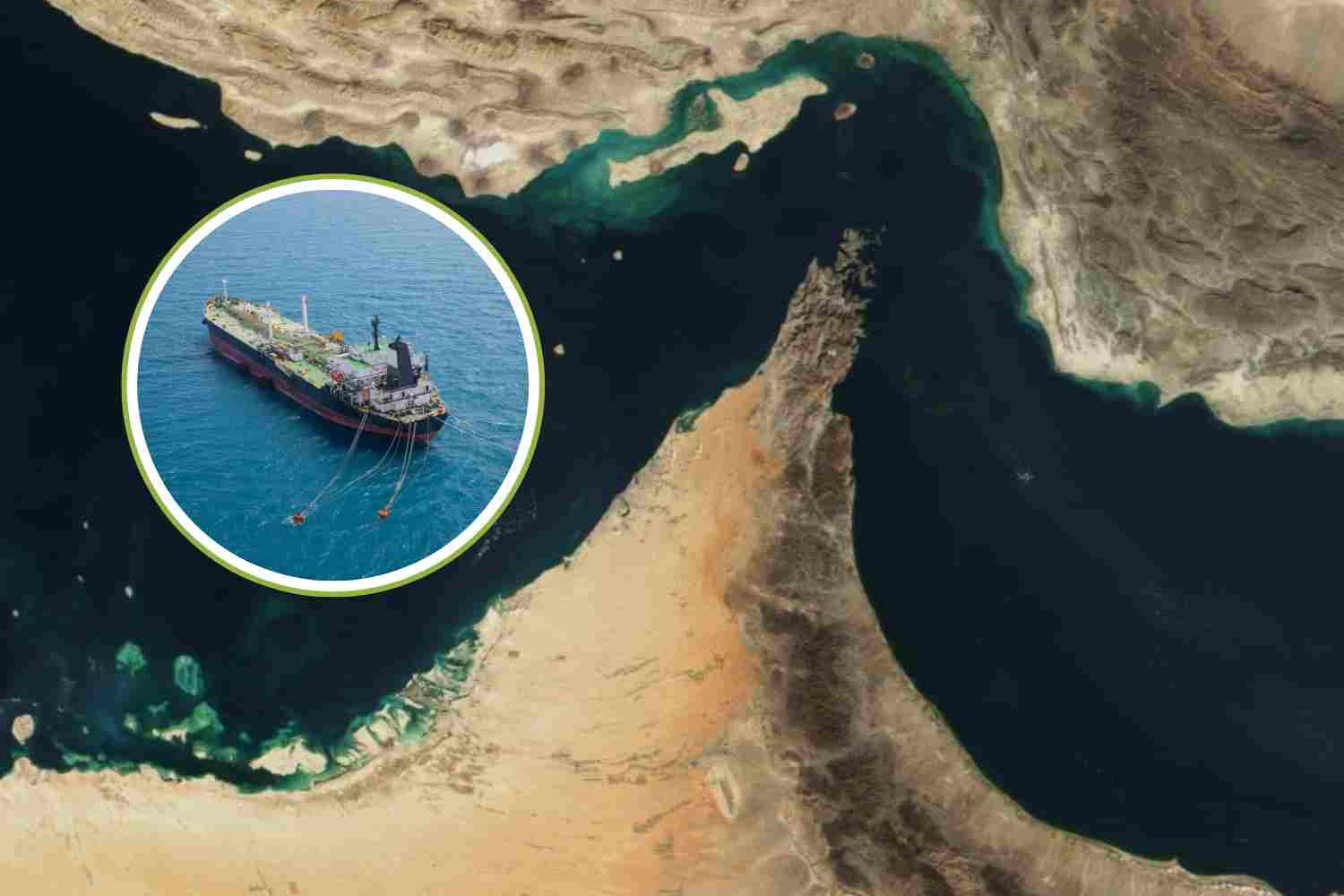
The focal point around which, at this crucial moment, the interests of half the world revolve is the Strait of Hormuz, the maritime passage through which approximately one fifth of the world’s oil and liquefied natural gas transits: after the “truce” announced in the last few hours, the strait is no longer completely closed, but remains highly limited and the reopening is only partial: a “selective safe passage” for some authorized vessels, while thousands of vessels remain stationary in the surrounding waters.
Strait closed and oil skyrocketing
According to the latest ship tracking data, only about 11 ships passed through the strait in the past 24 hours, accounting for about 8% of the normal daily traffic of around 60 to 135 ships. Traffic stood at approximately 1.3 million tonnes of deadweight, or 12.1% of average levels.
In short, the Iranian response, orchestrated by the Pasdaran, caused an immediate collapse in maritime traffic of more than 90%, with Western ships or ships linked to Washington’s allies blocked, threatened or forced to give up transit, while only some boats coming from countries considered “friends” – such as China, India, Russia, Pakistan and Malaysia – managed to pass under authorisation.
In the first month of the crisis, over 34,000 shipping routes were diverted, forcing ships to circumnavigate Africa at a sharp increase in time and cost, temporarily reshaping the geography of global trade.
The global consequences are, obviously, immediate and profound: on the energy front, flows amounting to around 20 million barrels per day have been interrupted, pushing oil prices upwards and causing the cost of petrol to skyrocket. On the agricultural level, there is a shortage of fertilizers which in turn threatens increases in food prices in Europe and the States. As for transport and industry, however, pressure on aviation fuel and widespread delays in supply chains are also inevitable in this case. Analysts underline that the crisis does not only affect oil, but the entire global maritime trade system, of which the Strait of Hormuz represents a crucial hub.
The Strait of Hormuz today is not closed, but not even truly open: it is in an intermediate, regulated and fragile phase, which highlights how vulnerable the bottlenecks of global trade are and how quickly a localized crisis can translate into concrete effects on daily life, from the price of petrol to food shopping, while the world waits to understand whether this fragile truce will hold or whether the system will fail again.
The issue of fossil fuels
People’s health, dignity and daily lives are at stake, and the main causes are global warming and continued dependence on fossils. The Lancet Commission will seek to establish legal frameworks that hold countries accountable for health damage caused by rising sea levels.

The world is becoming hostage to its dependence on fossil fuels, we said with Figueres, according to whom the consequences of these transformations disproportionately affect the most vulnerable populations, in particular those of the Pacific islands, where rising waters threaten to make entire countries such as Tuvalu, Kiribati and Fiji uninhabitable. The crisis is not just affecting the islands: coastal cities such as New Orleans, London and Amsterdam are also under threat, with rising sea levels damaging water resources, agricultural crops and forcing people from their homes.
Figueres underlined that the climate crisis is already negatively impacting public health: climate change has devastating effects on drinking water, food security and health conditions due to the salinization of coastal lands.
Furthermore, the global impact of the use of fossil fuels is not limited to the environmental crisis: it directly affects people’s well-being, amplifying economic and social inequalities and forcing entire communities to migrate due to the loss of their livelihoods. From the pages of The Guardia, Figueres speaks of a “intergenerational pain” linked to forced displacement and describes the situation in island countries as a suffering that cannot be measured in economic terms.
An international response is needed which, in addition to reducing emissions, addresses the inequalities caused by dependence on fossil fuels, he concludes.
What should the objectives be? The most polluting countries should reduce emissions not only for environmental reasons, but also for economic and social stability reasons. Governments and businesses should achieve concrete reductions in emissions once and for all, in order to guarantee a sustainable and fair future for each of us.
But, given the state of affairs, how far away does this solution seem to us?
Sources: The Guardian / BBC
