
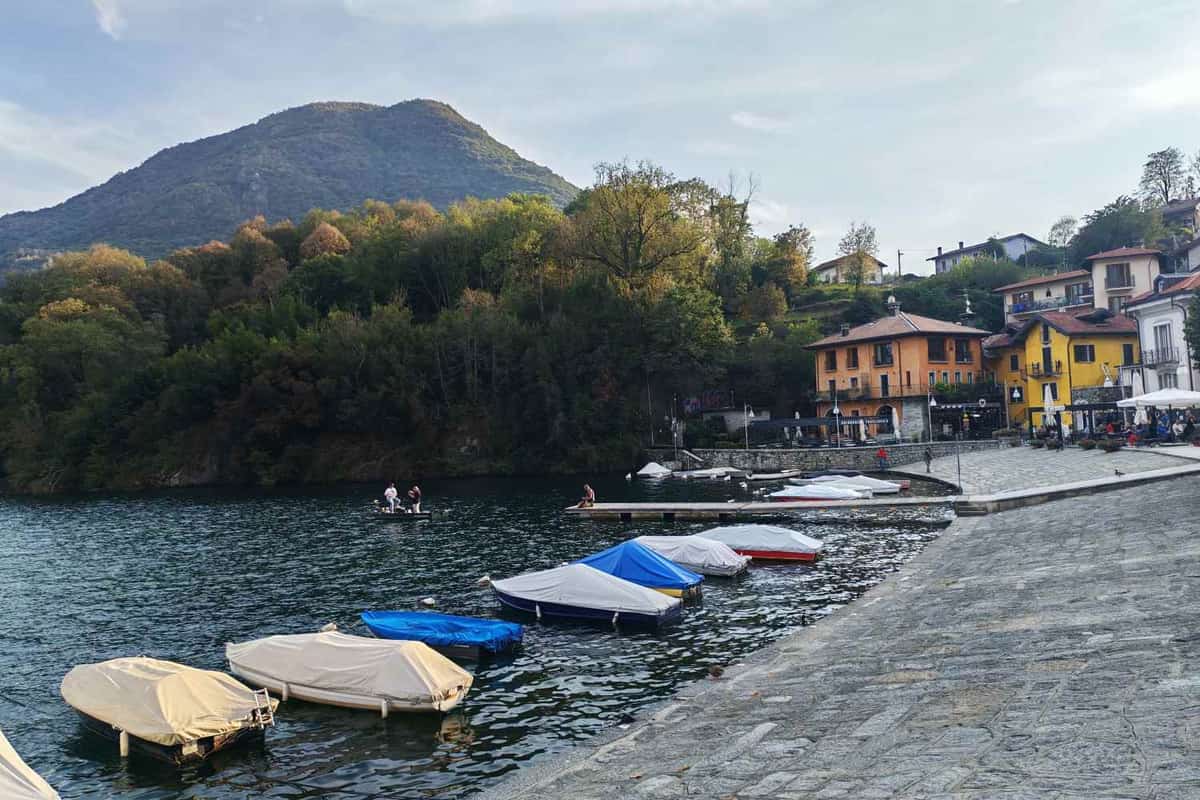
For me the lake is home: I am lucky enough to live in a place full of bodies of water that the whole world envies for the reflections they create and which attract tourists from everywhere. One of these, however, is little known compared to the more famous Maggiore or Como, but it has a particularity: it is one of the cleanest and clearest in Europe. I’m talking about Lake Mergozzo, nestled between the Lepontine Alps in the province of Verbano-Cusio-Ossola, in Piedmont.
With a length of 2.5 kilometres, a width of just over 1 kilometer and a depth of up to 74 metres, this little Piedmontese jewel holds a fascinating geological secret: until around 500 years ago it was an integral part of the nearby Lake Maggiore, before the continuous floods of the Toce river deposited the debris necessary to create a dividing strip of land.
Walking along its shores, what is immediately striking is the total absence of motor boats, banned by law together with the absence of local industries, a virtuous choice that preserves the crystalline purity of the lake and makes it a true paradise for lovers of slow tourism, open water swimming and water sports such as canoeing and windsurfing.
@RebeccaManzi/GreenMe
Among the alleys of the historic village and the granite traditions
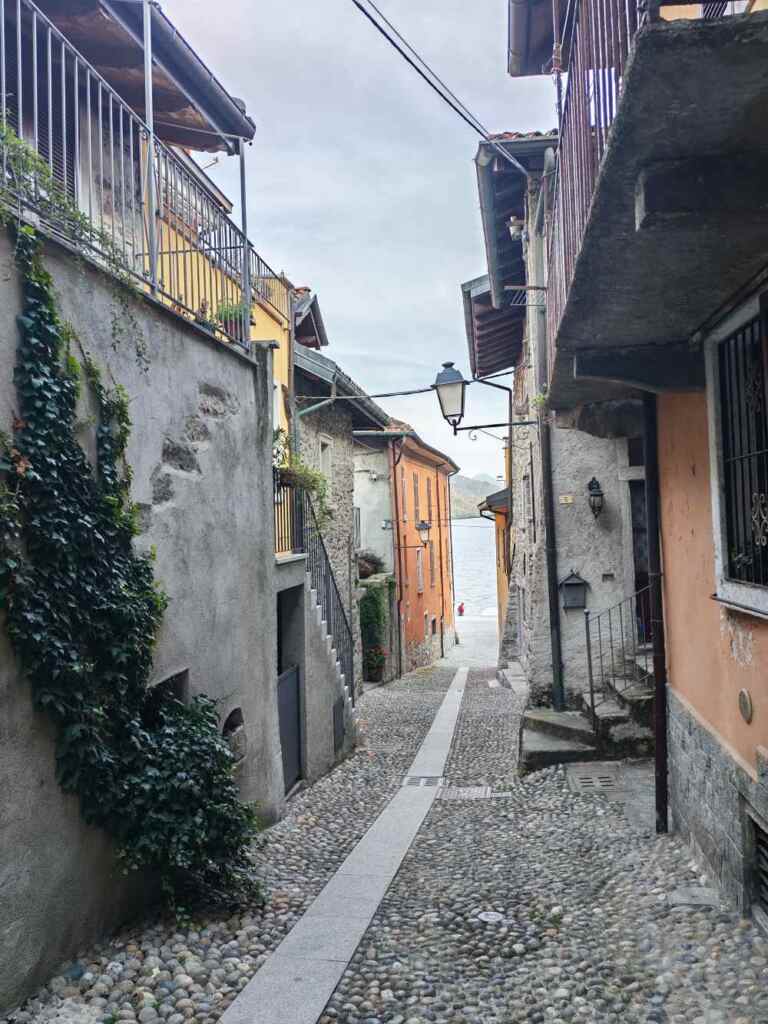
Overlooking Lake Mergozzo is the village of the same name, decorated with the Orange Flag of the Italian Touring Club and structured around picturesque cobbled streets called locally strece.
@RebeccaManzi/GreenMe
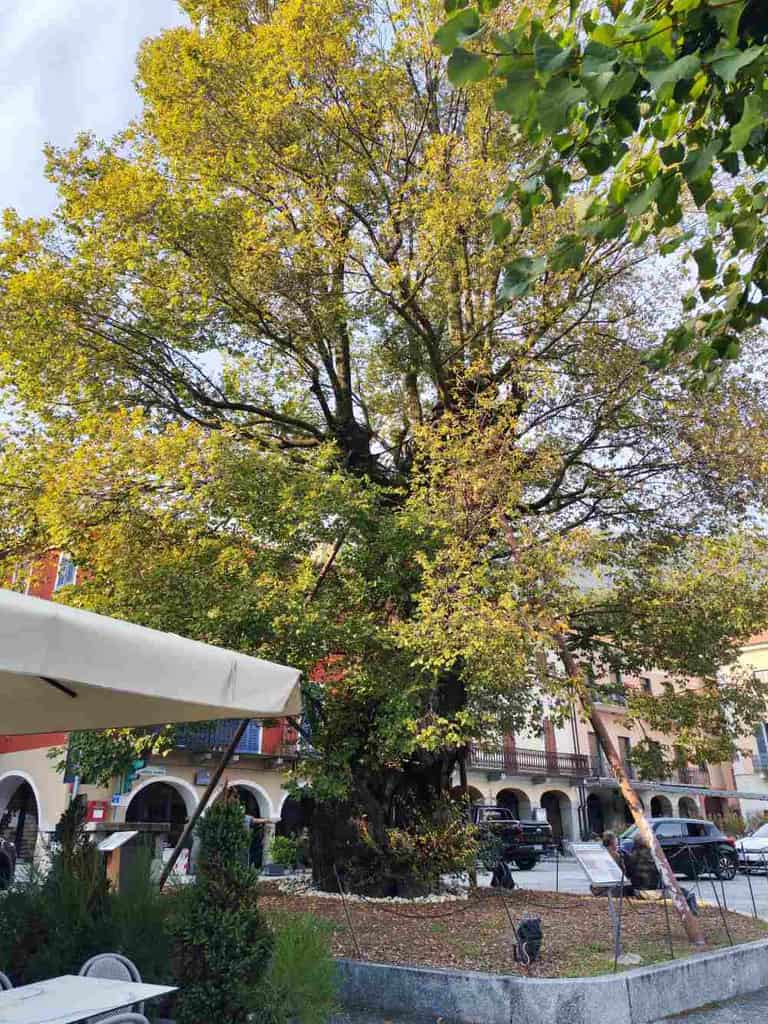
In the main square on the lake, nestled near the boats arranged in a fan, we stopped to contemplate the undisputed symbol of the town: a centuries-old elm tree completely hollow inside, protected by supports but still incredibly alive and thriving after over four centuries of history.
@RebeccaManzi/GreenMe
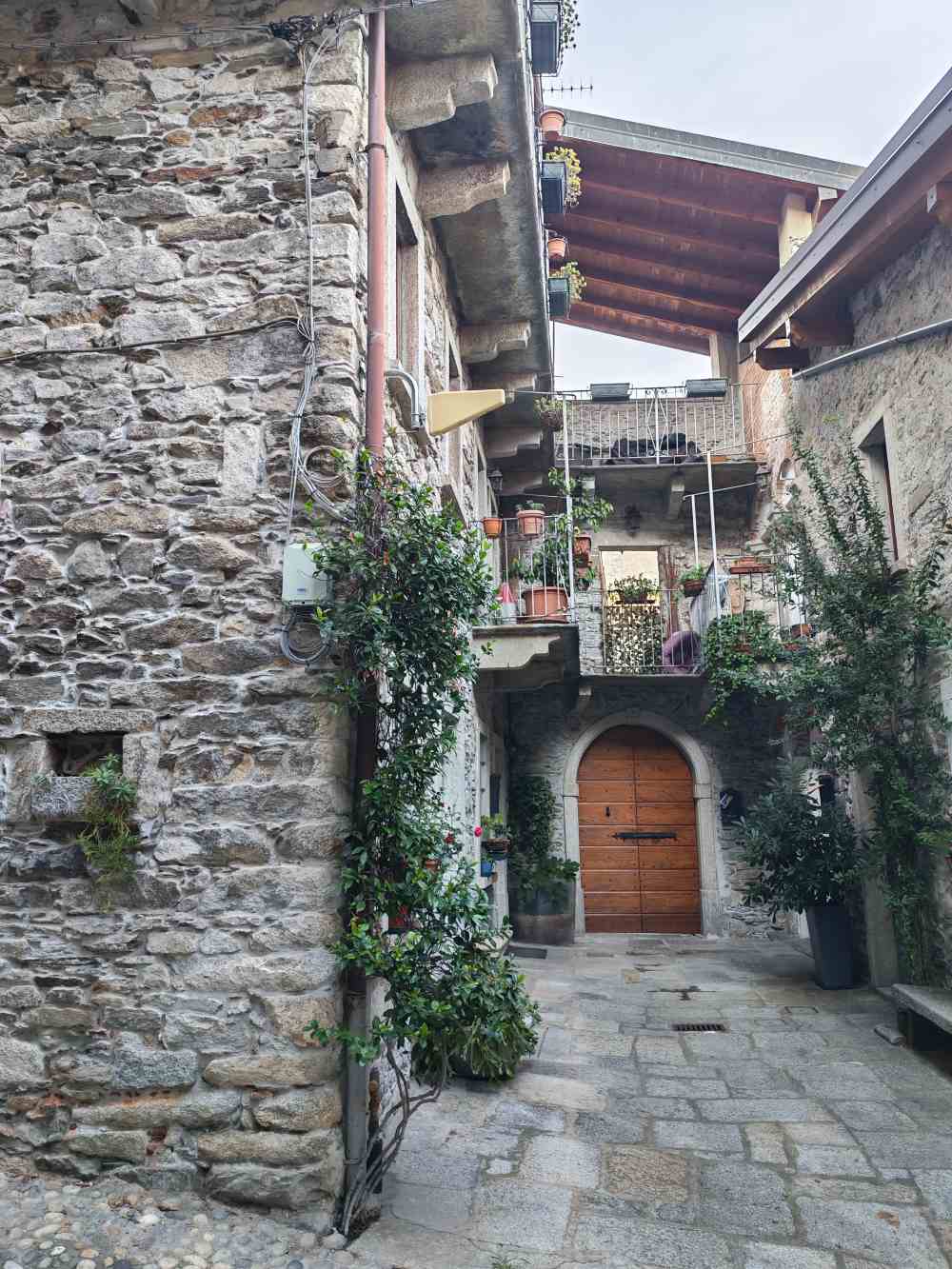
Continuing our exploration on foot, we climbed up the steep staircase carved into the rock known as the Scarpiawhich leads to the suggestive village of Sasso, the oldest nucleus characterized by stone houses and the oratory of Santa Elisabetta from 1623. Every corner of this territory tells a story made of material and effort, inextricably linked to the extraction of the famous white granite of Montorfano and the marble of Candoglia, historical materials used to build Piedmontese architectural masterpieces and even the Cathedral of Milan.
@RebeccaManzi/GreenMe
The sacred architecture: the majestic Assunta and the ancient Santa Marta
Inside the village we were also fascinated by the richness of the religious heritage, starting from the magnificent Church of the Beata Vergine Assunta, whose original parish church has its roots in the Middle Ages with first attestations dating back to 1133, although the current appearance is the result of profound renovations between the 17th and 19th centuries. This sacred building appears to the visitor preceded by an imposing stone staircase and a large pronaos with columns, flanked by a bell tower that joins the Romanesque base to a belfry and a spire raised in 1661 to a height of 38 metres.
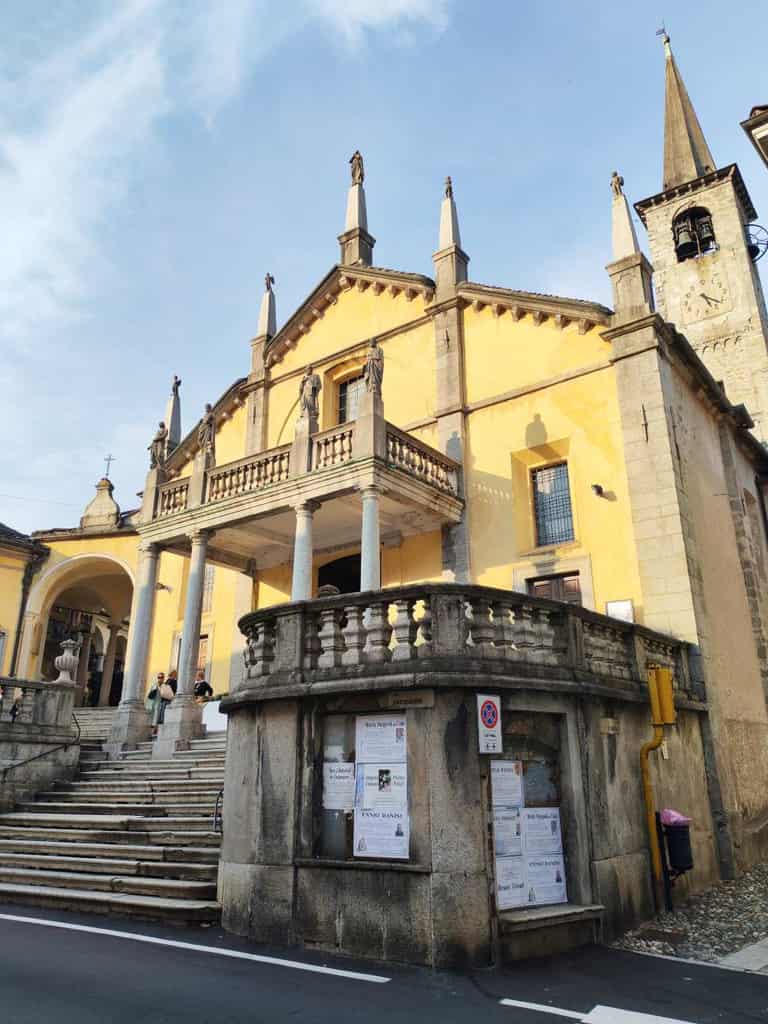
@RebeccaManzi/GreenMe
A few steps away, we immersed ourselves in the austere and evocative atmosphere of the Church of Santa Marta, a precious building in pure Romanesque style built in blocks of local granite and already mentioned in documents from 1132, originally dedicated to Saints Quirico and Giulitta before passing in 1603 to the Confraternita dei Disciplinati and enriched by the splendid frescoed lunette above the entrance portal.
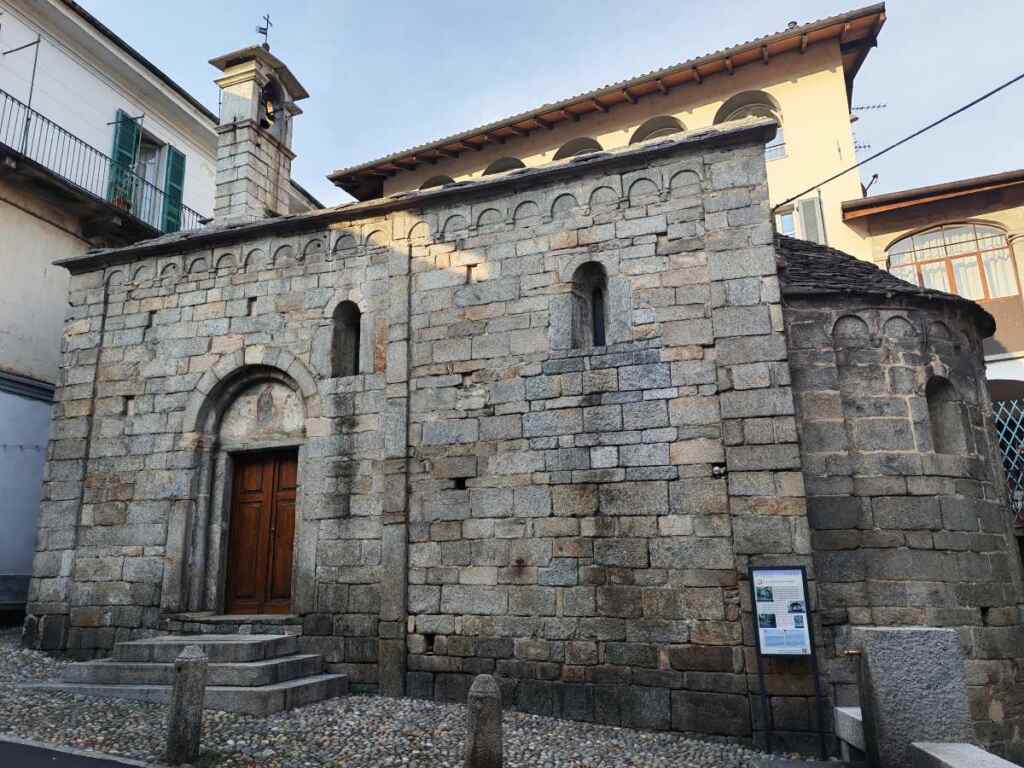
@RebeccaManzi/GreenMe
Panoramic paths and a nature that regenerates the senses
And if the beauty and peace of this village are not enough for you, you can go as far as the Sentiero Azzurro which climbs towards Montorfano, a mountain approximately 800 meters high which dominates the landscape offering an extraordinary panoramic balcony over the Borromeo Gulf and the peaks of the nearby Val Grande. Here, immersed in the historical remains of the Cadorna Line with its trenches and bunkers dating back to the First World War, you can breathe a regenerating silence, interrupted only by the rustling of the wind in the woods and the flight of rare naturalistic species such as the dragonfly Oxygastra curtisii.
Leaving this remote corner of Piedmont, allowing ourselves a moment of rest overlooking the lake accompanied by the sweetness of the typical local sweet focaccia, the fleetingleaves us with the awareness of having visited an authentic and timeless refuge, capable of preserving the original beauty of nature and of giving us a profound emotion destined to remain for a long time.
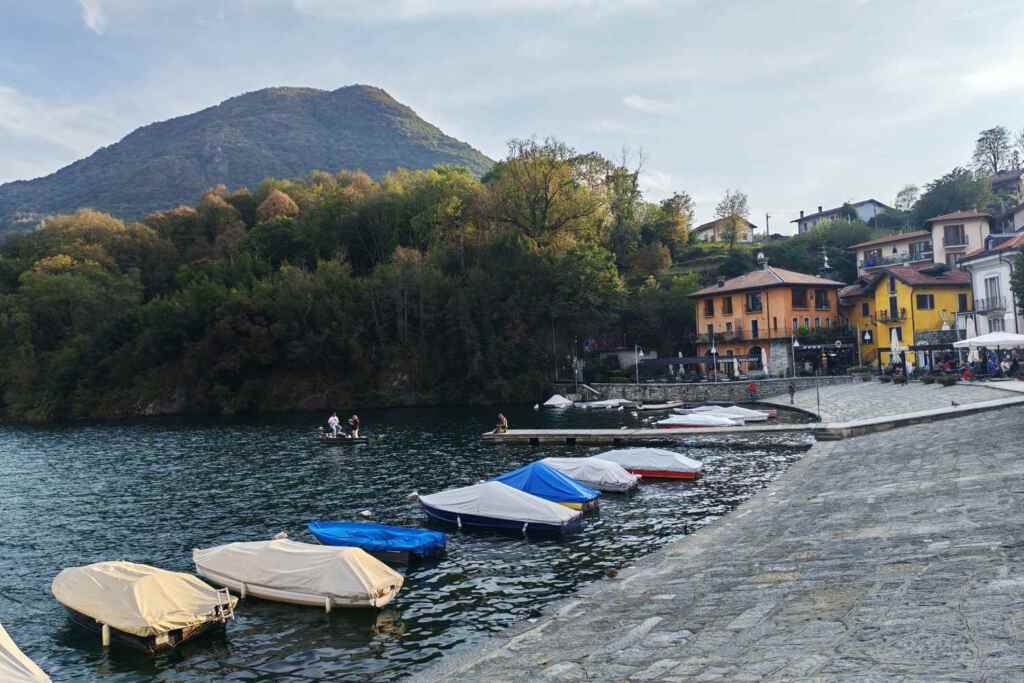
@RebeccaManzi/GreenMe
