
When you see it emerge from afar, perched on its majestic tuff cliff, you immediately understand why Orvieto takes your breath away. We immersed ourselves in this pearl of Umbria, walking through medieval alleys and dizzying descents, to tell you about a journey that combines the wonder of daylight with the mysterious charm of the underground.
@RebeccaManzi/GreenMe
The visual spectacle of the external facade of the Duomo
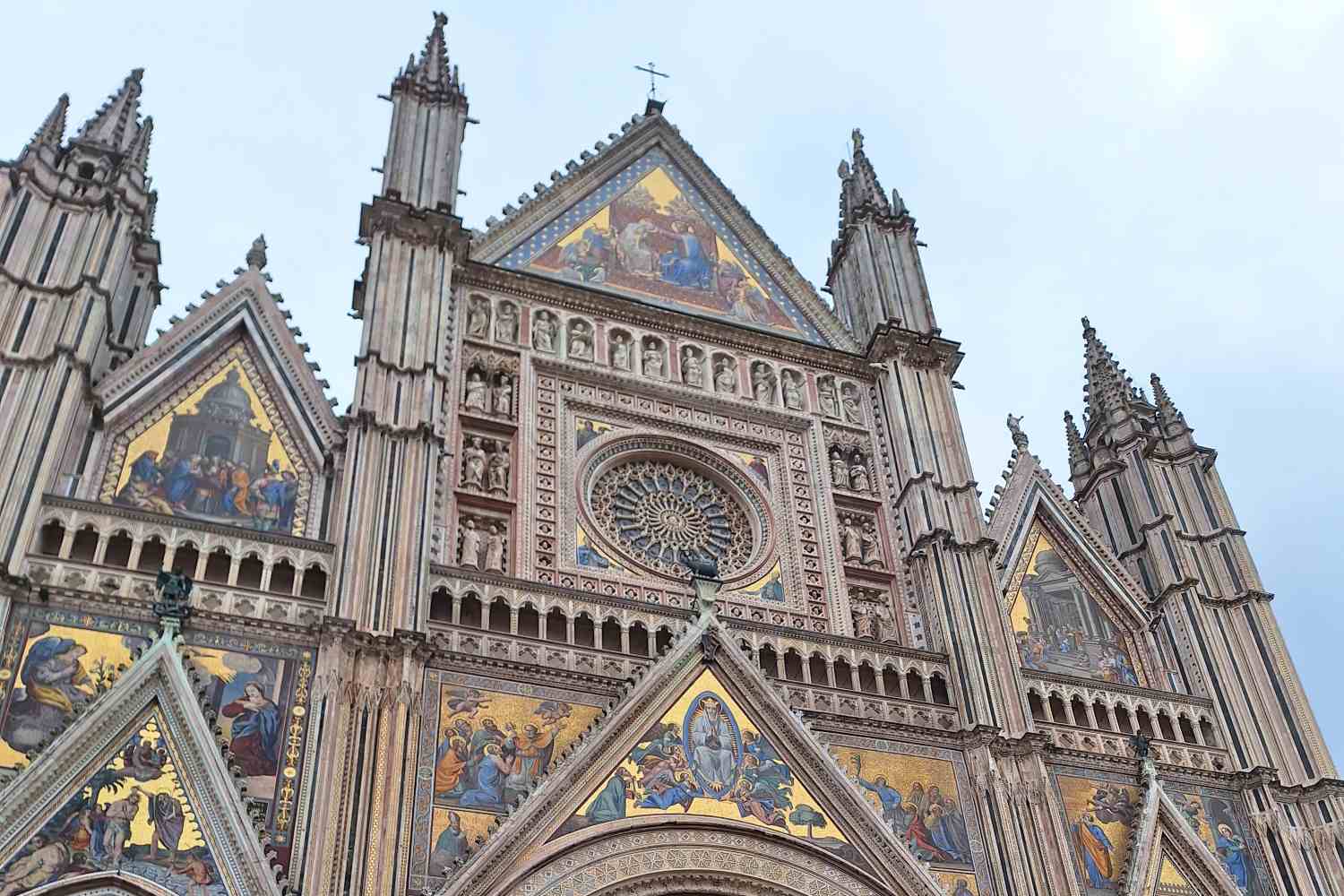
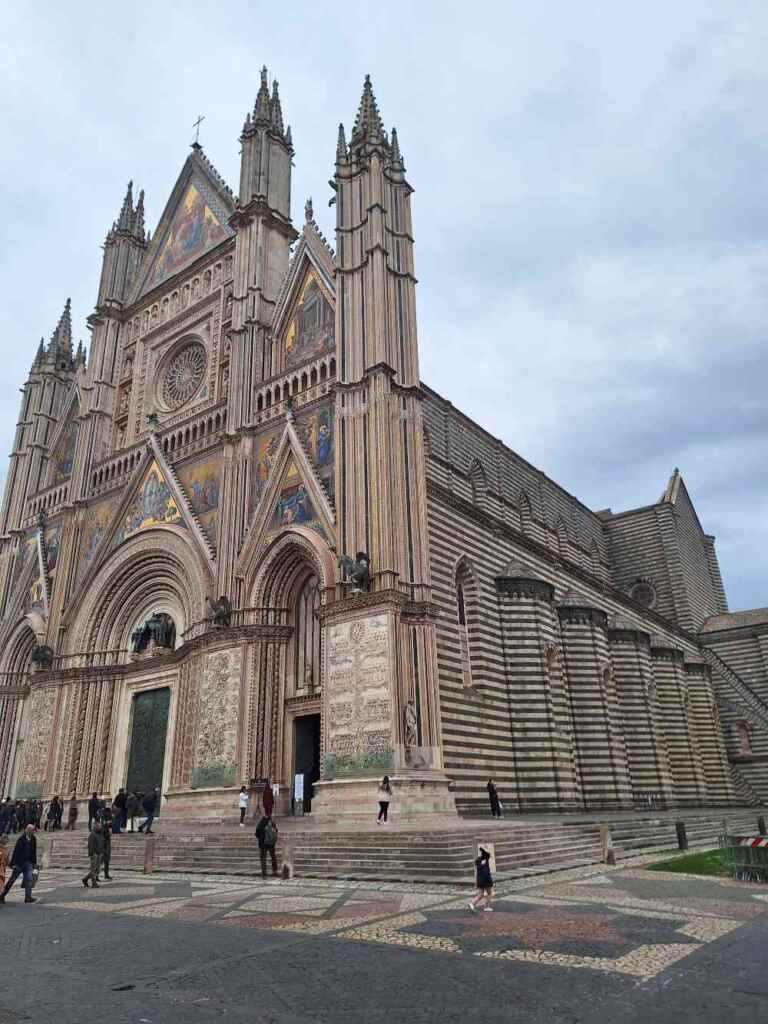
Our itinerary could only start from Piazza del Duomo. The Cathedral of Santa Maria Assunta strikes you like a visual slap in the face. We took all the time we needed to admire the monumental external façade of the Cathedral, a true open-air painting that shines under the sunlight with bas-reliefs that tell the stories of the Old and New Testament. This Gothic masterpiece took shape starting from 1309 under the direction of the Sienese master Lorenzo Maitani, who gave a decisive turning point to the project by modifying the previous Romanesque lines.
@RebeccaManzi/GreenMe
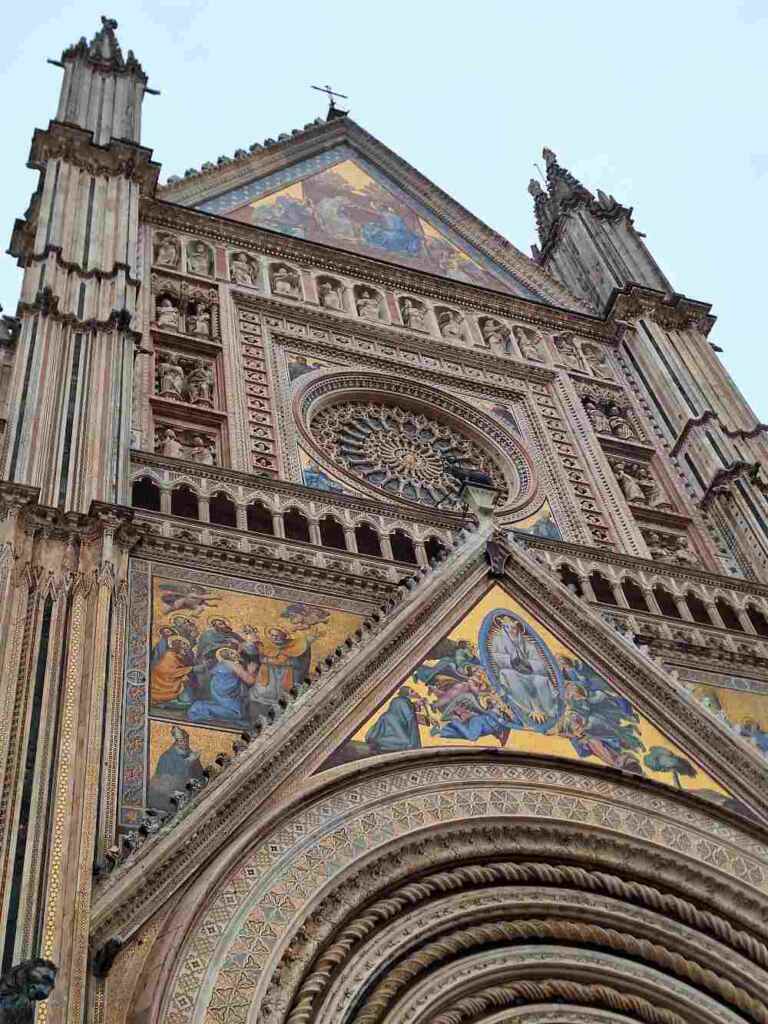
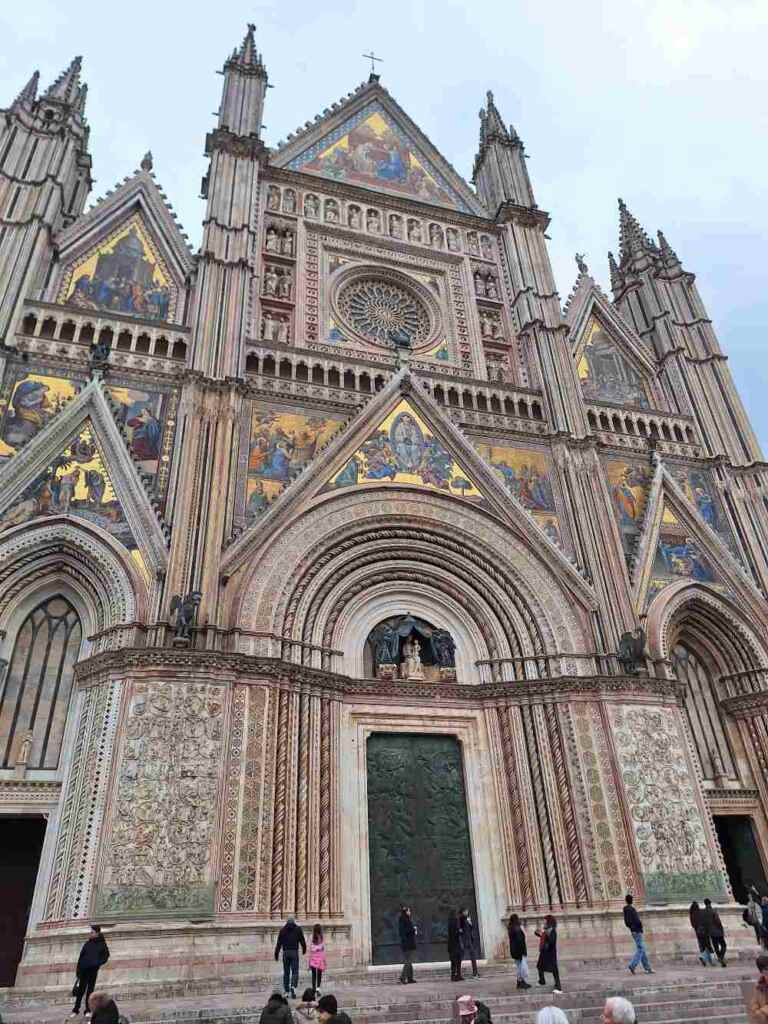
Structured in three sectors punctuated by four imposing buttresses which culminate in tall spiers, the facade is a perfect balance of sculpture, architecture and colour. Starting from the bottom, our eyes were captured by the detailed bas-reliefs carved on the marble pillars on the sides of the portals, created by Lorenzo Maitani himself together with his son Vitale Maitani. The upper part of the facade is instead a riot of light, dominated by the splendid mosaics on a gold background. These precious mosaic decorations tell the life of the Virgin, with scenes ranging from the Annunciation to Anna to the triumph in paradise, including the Baptism of Christ as the only exception.
@RebeccaManzi/GreenMe
At the exact center of this golden splendor is the magnificent rose window, created between 1354 and 1380 by Andrea di Cione known as l’Orcagna. The rose window shows the face of Christ in the center surrounded by intertwined arches, enriched at the corners by mosaics by Piero di Puccio depicting the doctors of the Church and framed by the sculptures of the prophets by Petruccio di Benedetto da Orvieto and the apostles by Antonio Federighi. To enter the cathedral you finally cross the majestic bronze doors by Emilio Greco (1962), decorated with reliefs from the Works of Mercy.
@RebeccaManzi/GreenMe
The masterpiece of the Chapel of San Brizio
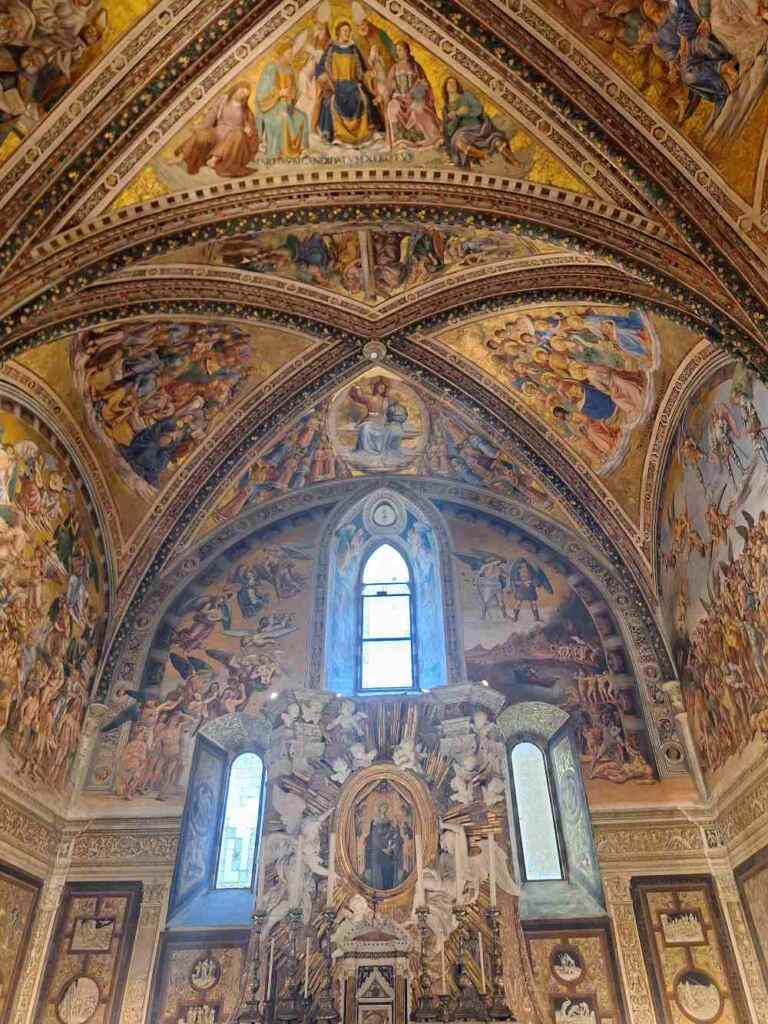
Inside, the atmosphere becomes intimate and solemn. We admired the gold and enamel reliquary that houses the blood-stained linen of the Miracle of Bolsena, kept in the Corporal Chapel. But the real shock was the Chapel of San Brizio. Here Luca Signorelli, who took over from Beato Angelico and Benozzo Gozzoli, gave life to a powerful and carnal Last Judgment. The colorful demons and the bodies that rise from the earth show a dramatic expressive force, accentuated by the serene face of Signorelli himself, who has a self-portrait in the left corner while observing the end of the world.
@RebeccaManzi/GreenMe
The engineering vertigo of Clement VII and Sangallo
We then moved towards Piazza Cahen for an endurance test: the 258 steps of St. Patrick’s Well. Designed in 1527 by Antonio da Sangallo the Younger on the orders of Pope Clement VII (who fled the Sack of Rome), this 62 meter deep cylinder was supposed to guarantee water to the city in the event of a siege. The genius lies in the two totally independent helical staircases: the mules went down one side and up the other without ever crossing each other. Going down to the bottom, looking at the 72 windows that open onto the void, makes you feel very small.
The suspended panorama of the Albornoz Fortress
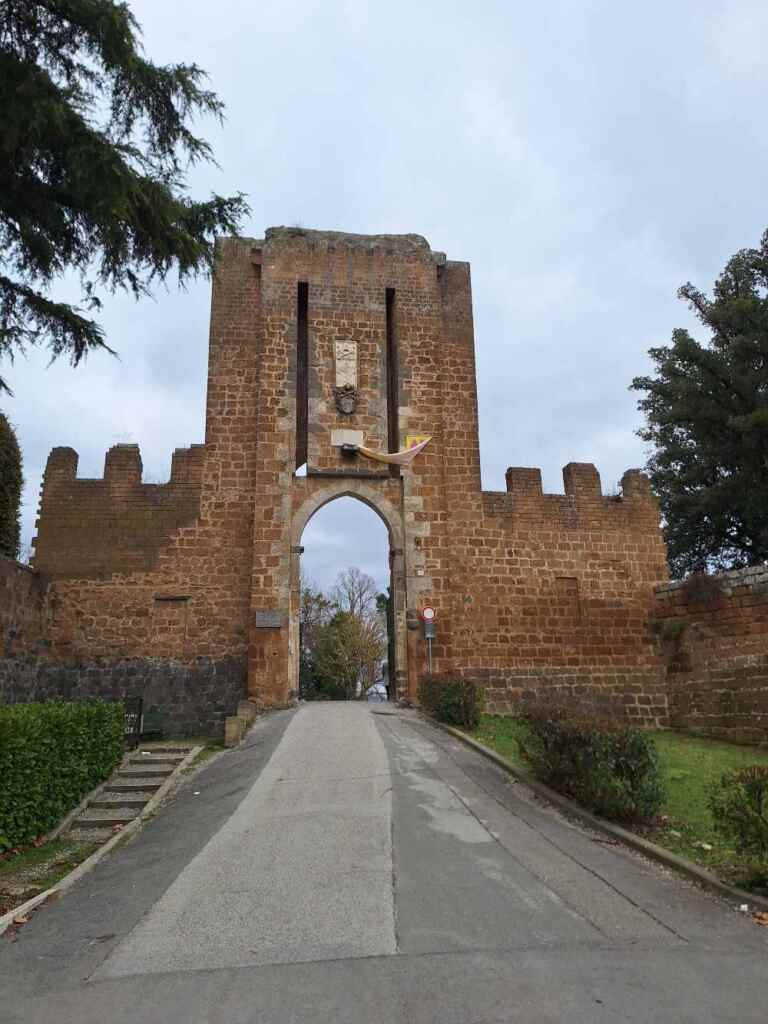
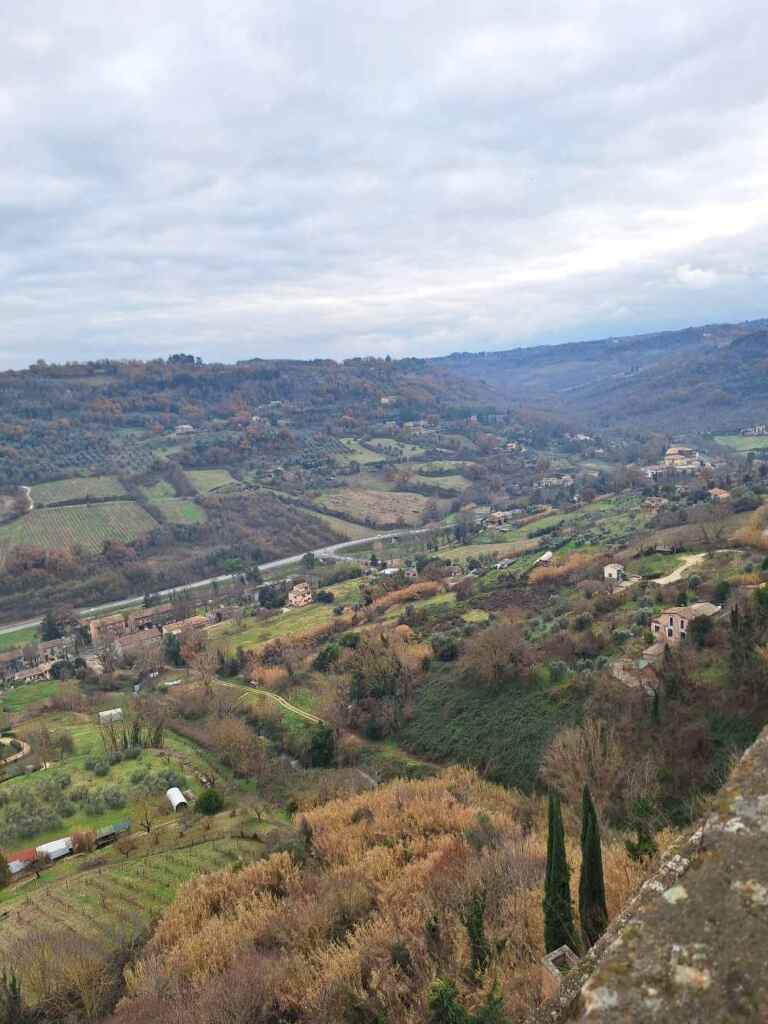
Not far away, the Albornoz Fortress gave us a regenerating break: today the ancient defensive walls enclose the public gardens, from which you can enjoy a crazy view of the Paglia river valley. A place where military history has been transformed into a space of absolute quiet. Built starting in 1359 by order of Cardinal Egidio Albornoz and definitively rebuilt in 1450 under the control of the papacy, this imposing structure exploited the natural spur of the tuff cliff to block access from the east.
@RebeccaManzi/GreenMe
Although centuries of decline and disputes between the ruling families have erased much of the original castle, today the area has been recovered as a public city garden. Walking along the perimeter of the ancient walls and passing the suggestive defensive towers, we found ourselves in front of an extraordinary natural balcony, which offers a panoramic view overlooking the Paglia river valley and the green hills that surround the city.
@RebeccaManzi/GreenMe
The treasures of the Papal Palaces and the view from the Torre del Moro
Back on the surface, we explored the Museo dell’Opera del Duomo (MODO), set up inside the Papal Palaces. In the Rooms of Wonders, the Madonna enthroned by Coppo di Marcovaldo and the splendid paintings by Simone Martini stand out, as well as a splendid Maddalena by Signorelli himself. Immediately afterwards, to regain orientation, we climbed the Torre del Moro, located in the exact center of gravity of the city. After almost 300 steps (but there is a lift for the first stretch) the reward is a 360 degree panorama over the brick-coloured roofs and the Umbrian hills, dominated by the tolling of the two large bells of the nineteenth-century clock.
@RebeccaManzi/GreenMe
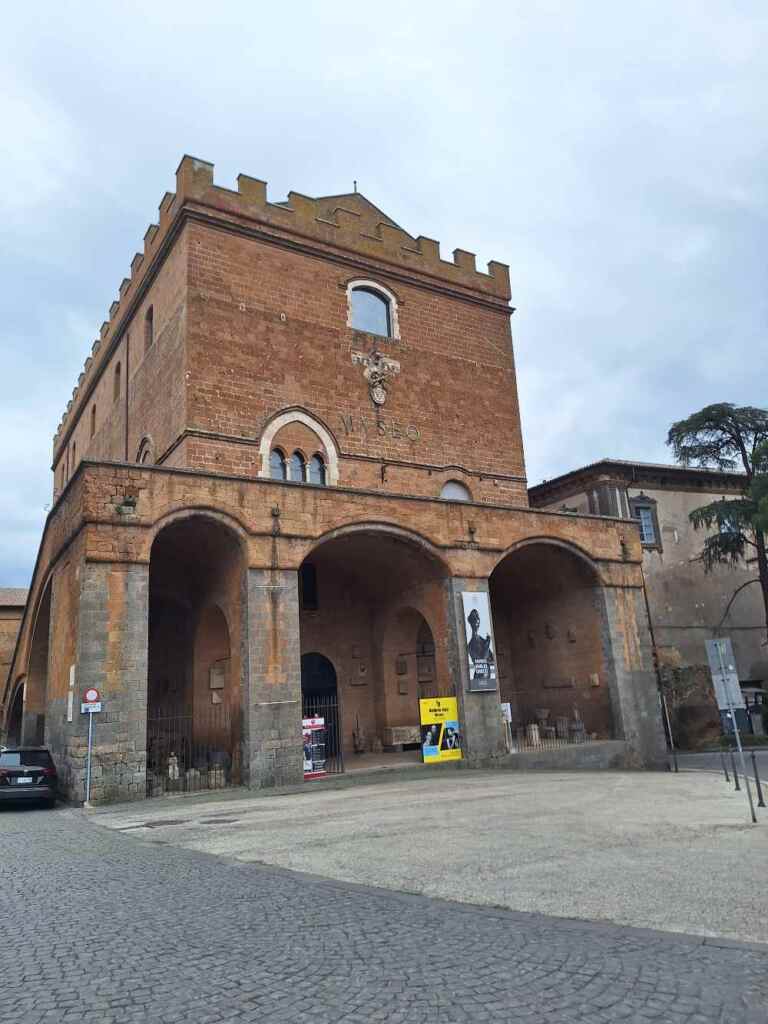
Piazza del Popolo, the soul of Orvieto
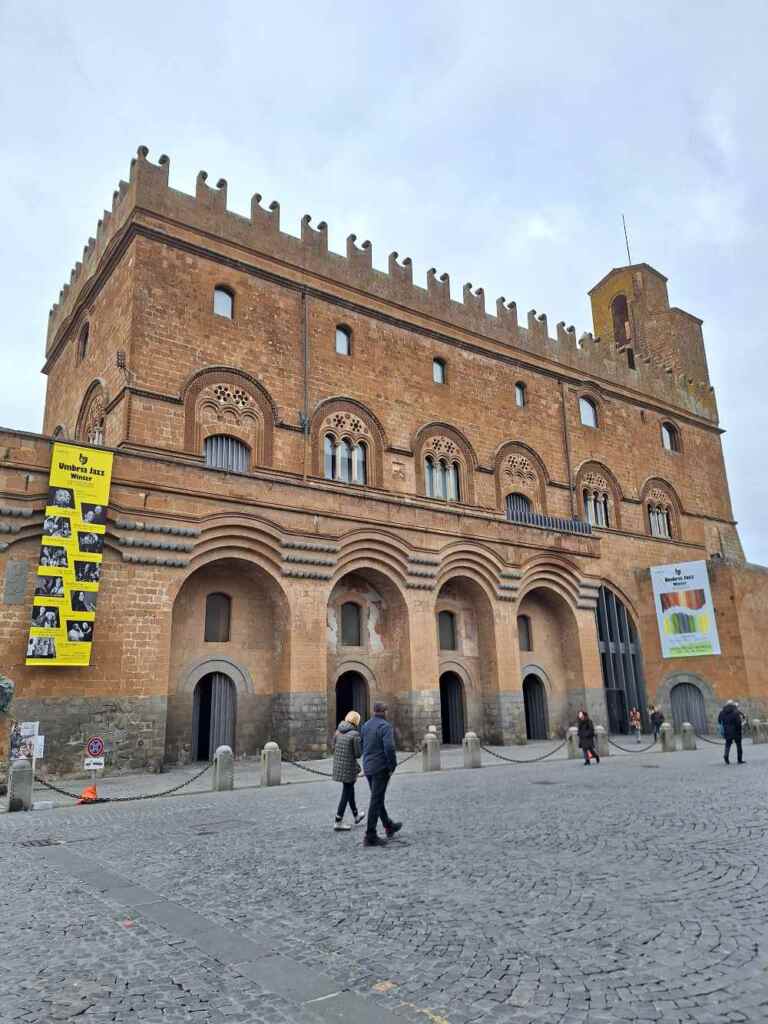
Finally we concluded our visit in Piazza del Popolo. Dominated by the majestic Palazzo del Capitano del Popolo with its monumental staircase, the square empties of cars in the evening, revealing its true monumental beauty. Inside, Palazzo Simoncelli also houses a museum dedicated to the centuries-old local ceramist tradition, the last piece of a city that never stops stratifying its history.
@RebeccaManzi/GreenMe
