
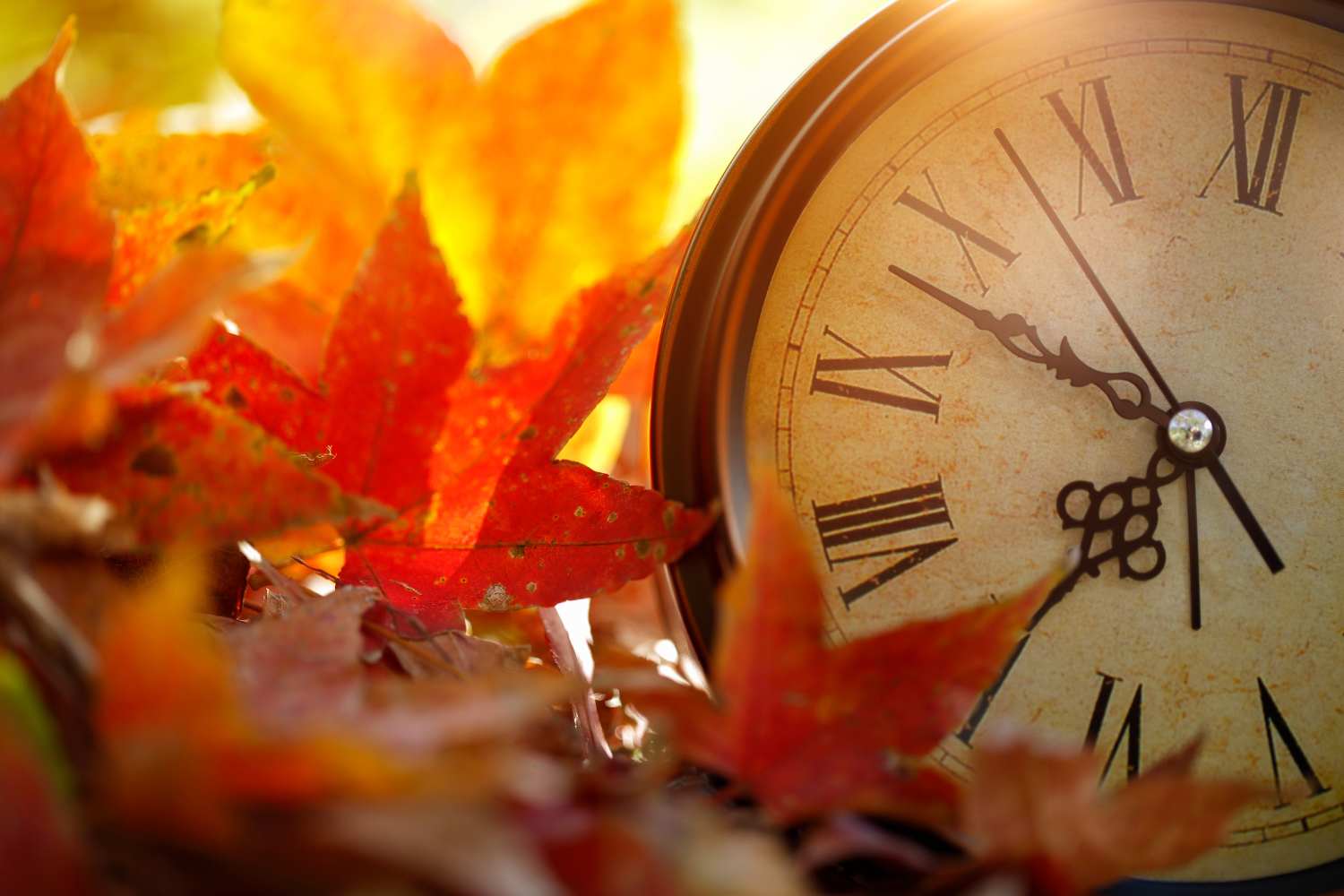
On the night between Saturday 25 and Sunday 26 October 2025 at 3:00 we will have to move the watches of the one hour back watches, moving on to 2:00. The sunny hour is about to return. This means that we will sleep an hour more, but from Sunday the days will begin to shorten significantly.
What is meant for solar now
We repeat it every year, but there is always a lot of confusion, between hands back, hands forward, and the classic questions: “But you sleep an hour more or an hour less”.
With the term “sunny time”, we refer to the standard or conventional time, which is restored during the winter. During the sunny time, the clock is regulated one hour compared to legal hour. This means that at 3 in the morning, for example, the clock will be reported to read 2 in the morning.
This change has a significant impact on our daily routine. On the one hand, it allows us to “earn” an hour of sleep, which can be particularly appreciated by those who need to recover energy. On the other hand, the transition to calendar hour involves a reduction in the hours of daytime light, leading to shorter days and longer nights.
When will the legal time be abolished?
This movement of the time brings tangible changes with it. The days are shortened, but on the other hand we earn preciously one hour of sleep. This annual ritual is an integral part of the European directive 2000/84/EC, which establishes the transition between the legal and sun hours respectively in March and October each year. The goal of this directive is to obtain energy savings and maximize the use of natural light hours, bringing benefits to various sectors such as transport, road safety, work, health and tourism.
In 2018, the European Union conducted a public consultation involving European citizens. Over 80% of the participants, equal to about 4.6 million people, expressed themselves in favor of the abolition of the changes. However, there was no unanimous agreement between the Member States to put an end to this practice, thus postponing any abolition to 2021.
In Italy, an official request was made to maintain the current system, with six months of legal hours and six months of solar hour per year. The main motivation behind this request lies in the benefits related to energy saving and the reduction of domestic expenses. However, not only the economic aspect has been taken into consideration.
According to our country, concrete scientific evidence is still missing that demonstrate how the two annual changes of time zone can cause significant psycho-physical damage. This position is based on the idea that the current system does not represent a serious danger to the health and well -being of citizens.
Curiosity and anecdotes about calendar and legal hour
The idea of moving the hands is not at all recent: it dates back to the 1700s, when Benjamin Franklin, in a satirical letter, suggested to wake up first to “save candles”. However, the actual legal time was introduced during the First World War, to reduce energy consumption and better exploit natural light.
After the war, many countries abandoned it, and then reintroduced it during the oil crisis of the 70s, when energy saving returned a priority. In Italy, the legal time as we know it today was definitively established in 1966.
Not all countries, however, use it: for example Japan, Iceland and much of Africa never change the time. In Australia and in the United States not all states adopt legal hours: Arizona, for example, has been refused it for years.
Every year, the time change also generates hilarious moments: who arrives an hour in advance of the appointments, who forgets to regulate the manual alarm clock, and who finds themselves discuss for hours on “you sleep more or less?”. A real autumn classic.
