
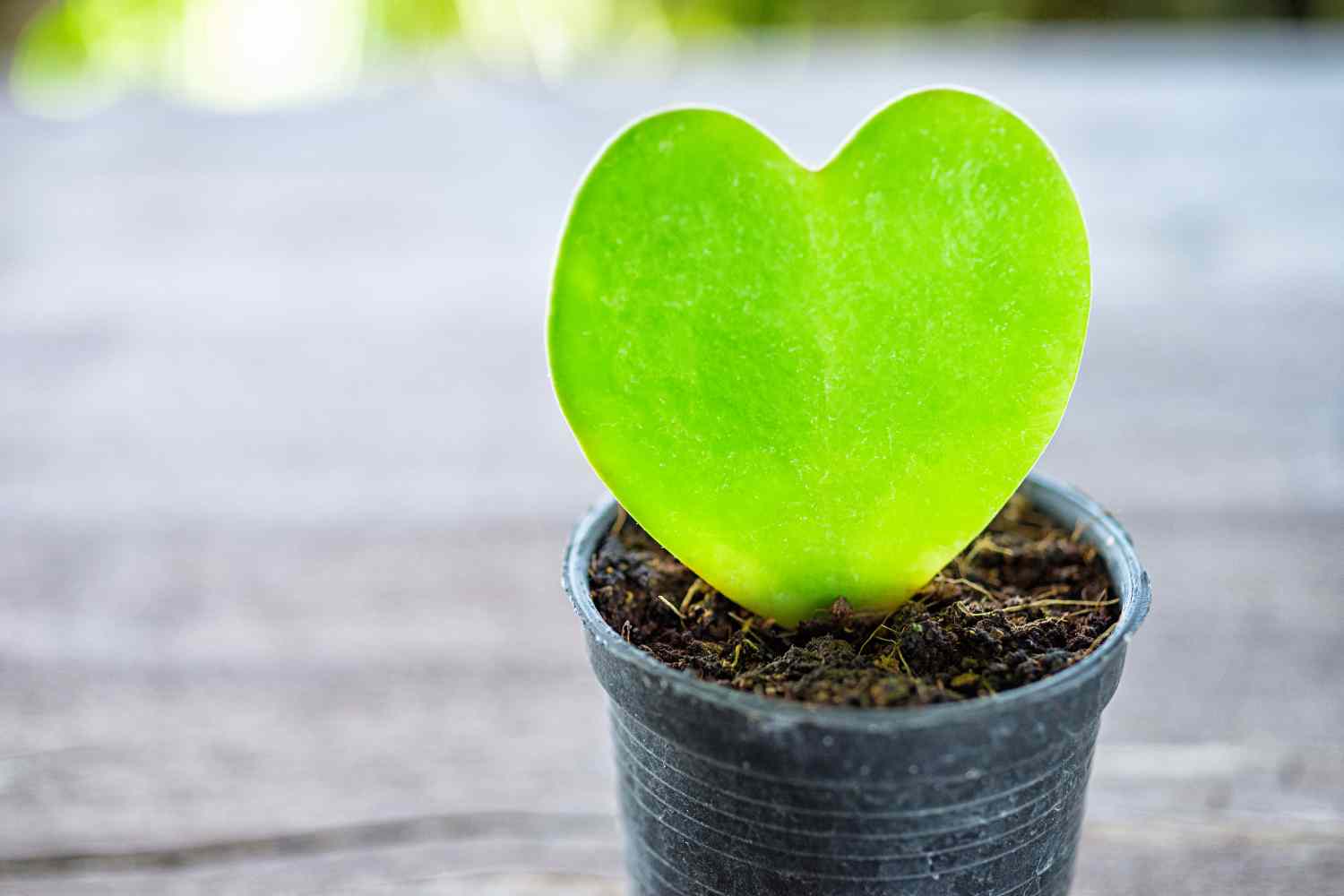
Hoya Kerrii is famous for the singular shape shape of the leaves. Often, to highlight this unique feature, it is marketed with a single leaf that is rooted in small containers, but in reality it is a climbing plant. With attention and patience, it is possible to grow a complete plant starting from this small portion, characterized by a compact bearing that culminates with summer flowering.
What are the origins of Hoya Kerrii
Hoya Kerrii, commonly known as “Hoya A heart” or “Hoya Lucky Heart”, is originally from the tropical regions of South-East Asia. Its origins can mainly be traced back to countries such as southern China, Thailand and Malaysia. In these regions, the plant grows in natural habitats such as tropical forests and forest areas, where it thrives in the humid and warm conditions typical of these areas.
Hoya Kerrii has become popular all over the world as an ornamental plant thanks to its distinctive heart leafy shape, which makes it a decorative addition appreciated in many houses and gardens.
The classification of the Hoya is attributed to the botanist Robert Brown, who called them in honor of his friend Thomas Hoy, the head of the Duke of Northumberland. In Europe, including Italy, these plants persist particularly in the southern regions and in areas characterized by mild temperatures throughout the year. Their common name in Europe is “Wax Plant,” which in English means “wax plant,” while in Italy they are known as “wax flower.” From a symbolic point of view, in the language of flowers and plants, Hoya represent sculptural beauty.
How does Hoya Kerrii take care?
Hoya Kerrii is a fascinating and easy to cure plant, but requires some specific attention to prosper the best. In addition to the fundamental aspects such as light, water and fertilization, cleaning of the leaves is an essential element for the health of the plant. It is very important to regularly remove the powder from the leaves, since this contributes to guaranteeing good photosynthesis and correct leaf breathing. You can do it effectively with a delicate shower for the leaves or using a soft microfiber cloth.
Where to place Hoya Kerrii?
Hoya Kerrii is a plant that requires good lighting. It is important to place it in the brightest area of the house, even if it can tolerate full sun. However, it is necessary to carefully monitor the state of the leaves. If they start to become yellowish, it is advisable to move it to a less exposed position in direct sunlight.
As for the ideal temperatures for the growth of Hoya Kerrii, they are located between 18 ° C and 27 ° C. Being originally from the tropical forests of Asia, it requires an environment with good humidity.
How often to water Hoya Kerrii?
The watering of the Hoya Kerrii must be moderate. Its succulent leaves can retain water, allowing the plant to resist short periods of drought. Before irrigating, it is important to verify that the substrate in the pot is completely dry.
How to fertilize and repot Hoya Kerrii
As for the substrate, the Hoya Kerrii prosperously prospects in light and draining soil. You can use a mixture suitable for succulent plants, adding a small amount of peat to improve drainage.
Since Hoya Kerrii has slow growth, it is important to avoid excessive fertilization. It is better to fertilize it only during the spring and summer months, when the plant is more active. It uses a balanced fertilizer that also provides essential micronutrients for its development.
Hoya Kerrii, like many other Hoye, does not like repotted. You should consider this operation only if the substrate is no longer suitable for the growth of the plant or if the roots in the pot have exhausted the available space.
What diseases can attack Hoya Kerrii
The main causes of problems for Hoya Kerrii include radical rot, cotton mealybug attack and the use of too compact substrates. Radical rot can derive from excessive watering or substrates that do not drain correctly. In the case of cotton meter -cocciniglia infestation, it is important to treat the plant with specific products as soon as the white insects are identified. To avoid problems related to the substrate, it is essential to use a loose soil enriched with coarse material.
How to prune Hoya Kerrii
Pruning is usually not necessary, since Hoya Kerrii tends to grow contently, especially when grown in internal environments. However, if you want to pruning, it is interesting to note that this plant is easily propagated through cuttings from pruning cuts. In this way, you could share the plant with your friends, allowing them to cultivate it starting from the cuttings taken from the branches.
How to propagate Hoya Kerrii
Hoya’s propagation is a surprisingly simple process that requires a few steps. To start, we will have to use clean scissors to gently cut a small segment of the plant that includes a knot and a leaf. Once the cut, we can proceed by putting the cutting in a vase with a little water so that the knot is completely immersed. This is one of the most common and reliable methods to make Hoya’s cutting root.
An effective alternative to the water pot is the use of wet sphagno to encourage the formation of new roots. If we want it, we can also opt for the use of a radical hormone to increase the chances of success of the propagation. It is important to note that spring is often the ideal time to start this process.
Finally, a unique aspect of Hoya Kerrii is its ability to be propagated even starting from a single leaf. However, this technique is less reliable since the leaf does not always immediately develop a new plant from its petiole. In any case, the chances of success increase with the choice of a longer and healthier leaf.
How are the flowers of Hoya Kerrii
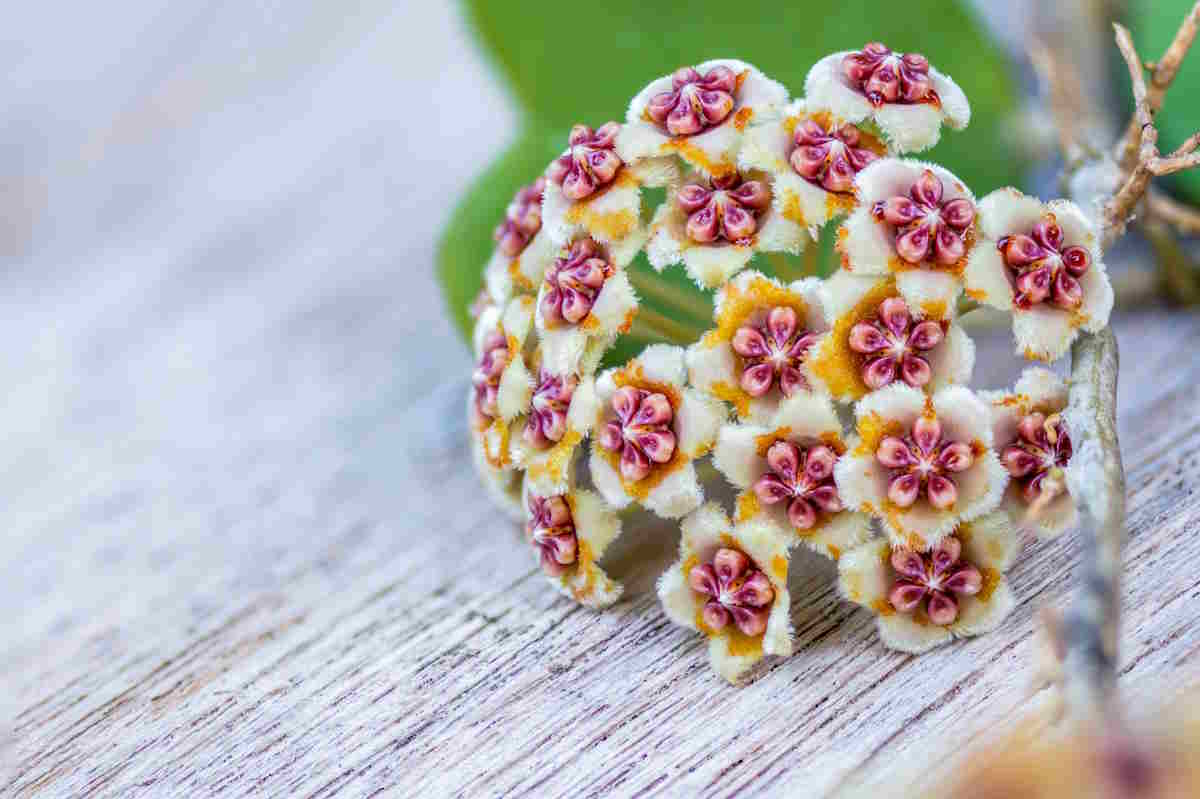
This plant produces star -shaped flowers that are small and delicate. The flowers are generally gathered in groups, known as Umbrelle or Parapioggia umbrellas, and hang from the steps of the plant.
The flowers of Hoya Kerrii are known for their cerful appearance and their beauty. They are usually white or white-red color, but may vary slightly according to the conditions of growth and the specific variety of the plant. The flowers of the flowers are often thick and fleshy, giving them a distinctive aspect. In addition, many appreciate their sweet and delicate perfume.
Hoya Kerrii blooms mainly during the summer season, but the frequency and duration of flowering may vary according to the conditions of growth and age of the plant.
How to stimulate flowering
To stimulate flowering, which often late to arrive and can also require several years of patience, it is essential to recreate conditions as similar as possible to those of its tropical habitat. Hoya Kerrii needs a lot of natural light, also direct but filtered, to accumulate sufficient energy to produce its characteristic star flowers. He does not like to be frequently repotted: feeling “stable” in his own container promotes the maturation of the flower branches.
A light thermal excursion between day and night can give a further thrust, simulating the warm-humid climate of the Asian forests from which it comes. Finally, during spring and summer, a light but regular fertilization regime helps to provide the necessary nutrients to stimulate the production of buds. With the right combination of light, patience and some targeted attention, even the most lazy Hoya ends up giving a spectacular flowering.
Common mistakes to avoid
Many farmers, especially beginners, make mistakes that can slow down or even block the growth and flowering of Hoya Kerrii. One of the most common mistakes is to believe that the single leaf sold in nurseries will automatically turn into a complete plant: if it has not been cut with a knot, that leaf can survive for years, but will always remain isolated and will never produce new branches or flowers. Another frequent mistake is excess of water.
Hoya’s fleshy leaves retain humidity for a long time, therefore too close watering watering easily cause radical rot, which often lead the plant to decay rapidly. The use of too large vases is also an underestimated problem: the soil remains wet longer, slowing down growth and increasing the risk of stagnation. Also to avoid the cut of peduncles after flowering, because the plant tends to flourish from the same points in the following years.
Why give a Hoya Kerrii

Hoya Kerrii is a plant that is given especially on Valentine’s Day not only for its shape, but also for the meaning and symbolism it brings with it. This plant represents a perfect metaphor for a couple relationship since it requires care and dedication to thrive, just like love. In addition to its romantically evident form, Hoya Heart brings a special meaning. It is an extraordinarily resistant plant, capable of adapting to different environmental conditions, thus symbolizing a strong and genuine love, capable of facing and overcoming challenges and obstacles along the way.
Other fatty or succulent plants to cultivate:
