
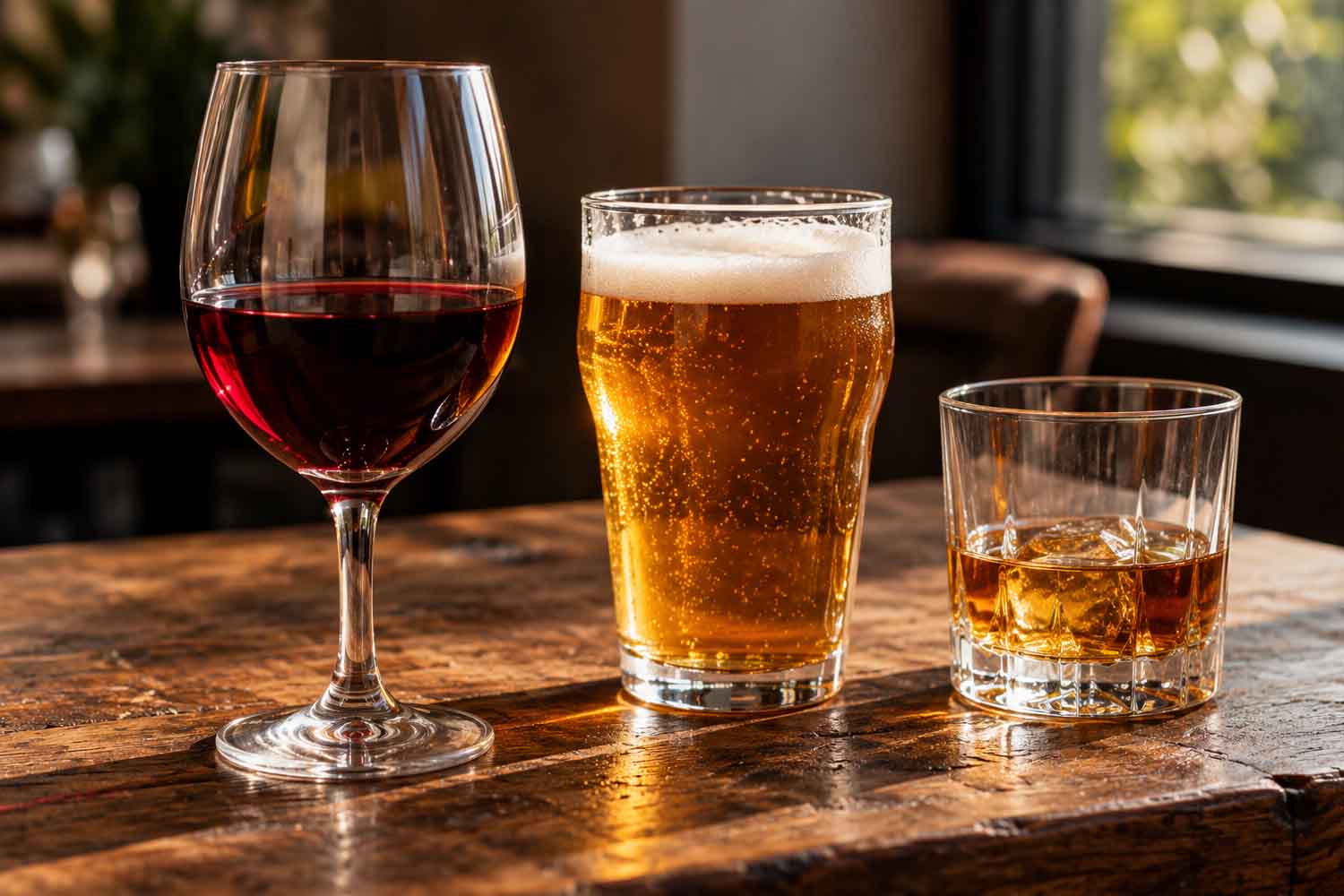
Among beer, wine and spirits, wine seems to fare best. At least according to a study conducted on over 340 thousand British adults, in which even relatively low consumption of beer and spirits was associated with higher mortality. For wine, especially red wine, the researchers observed a different trend, with favorable associations at small quantities.
The research, published on Nutrition Journalanalyzed data from 340,924 participants in the UK Biobank, a large British health database. The researchers followed the participants for an average of 13.4 years, recording 22,381 deaths, and compared the consumption of different alcoholic beverages with general, cardiovascular and oncological mortality.
The clearest result concerns the quantities: those who consumed a lot of alcohol had a 36% higher mortality from cancer and an overall mortality 24% higher than those who did not drink or did so only occasionally. But some differences already emerged with decidedly lower consumption.
Beer and spirits: the risks appear even with low consumption
Beer and cider were associated with greater mortality overall and from several specific causes, especially in more frequent consumers. However, even in the low consumption categories there was an association with higher cancer mortality.
For spirits the situation was similar. The researchers detected unfavorable associations already in low consumption, which became more pronounced as the quantities increased. One piece of data helps to understand the difference: according to the results also presented by the American College of Cardiology, those who consumed low quantities of beer, cider or spirits showed a 9% higher cardiovascular mortality compared to those who rarely or never drank.
In the study, the low drinking category included quantities greater than 20 grams of pure alcohol per week, up to a maximum of 20 grams per day for men and 10 for women. The moderate range instead reached up to 40 grams per day for men and 20 for women. A beer, a glass of wine, and a shot of liquor can contain similar amounts of pure alcohol, depending on the serving size. The drink changes, but the substance that the body must metabolize is always ethanol.
Red wine shows different associations
The most interesting result concerns wine. In people who consumed low amounts, researchers observed lower overall mortality compared to the reference group. Favorable associations appeared even with moderate consumption, especially for cardiovascular mortality.
In particular, those who consumed wine in moderate quantities showed a 21% lower cardiovascular mortality compared to those who rarely or never drank. Red wine had some of the most favorable associations, for both overall and cardiovascular mortality.
One possible explanation concerns polyphenols, substances present in grapes and red wine, studied for their antioxidant properties. At the same time, the researchers observed that those who drank wine also tended to have better nutrition and generally healthier habits than those who mainly consumed beer or spirits.
However, when the quantities increased, the picture changed. High wine consumption was associated with a 10% higher cancer mortality rate. For red and white wine, unfavorable associations emerged with different outcomes when consumption became high. Overall, wine followed a J-shaped curve: mortality was lowest in the low consumption categories and highest in the highest categories.
Does drinking with meals make a difference?
The research also examined a habit particularly familiar to Italians: accompanying lunch or dinner with a glass of wine. Those who consumed alcohol with meals had associations with lower mortality compared to those who drank mainly between meals. On the contrary, consumption away from lunch and dinner tended to be accompanied by worse results, especially when the quantities increased.
The data fits into a broader framework of eating habits and lifestyles. Drinking during a meal, for example, can go together with a more balanced diet and different consumption patterns. The study took into account numerous factors, including smoking, physical activity, diet and socioeconomic conditions. Consumption was reconstructed through questionnaires filled out by the participants, mainly at the beginning of the study.
What about tumors? The signal concerns several locations
On the oncology front, the researchers examined 20 categories of tumors, identifying associations with increased mortality in 15 of them, after statistical corrections required for multiple comparisons. The sites affected included the head and neck, digestive system, liver, respiratory system, breast and genital organs. Even moderate overall alcohol consumption was associated with an 11% higher cancer mortality compared to the group that rarely or never drank.
As for the relationship between alcohol and cancer, the World Health Organization recalls that alcohol is a carcinogenic substance and that there is no consumption threshold completely free of oncological risks. Ethanol and acetaldehyde, a substance produced during its metabolism, can contribute to the development of several tumors. The study also has some limitations in the composition of the sample: participants had an average age of approximately 56 years and 96.3% were white. The results therefore describe the associations observed in this population.
However, the research adds a useful element: quantity, type of drink and consumption habits do not behave in the same way in the long term. The most solid conclusion concerns high consumption, associated with greater mortality regardless of the drink chosen. Red wine may also come out better in some analyses. The alcohol, however, remains the same.
