
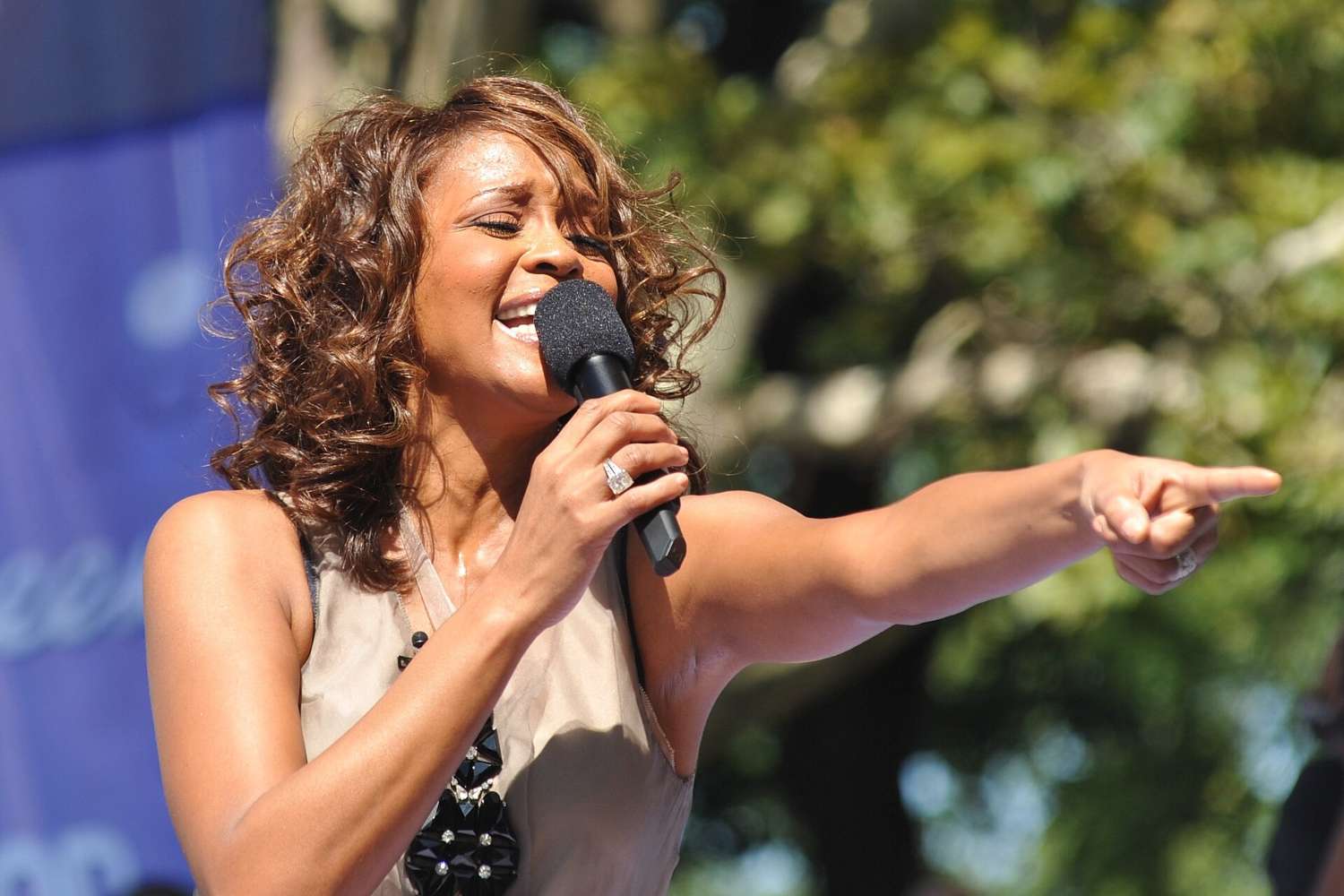
Thirteen years after his death, Whitney Houston’s voice is ready to resonate again live, thanks to the use of the most recent artificial intelligence technologies. The heirs of the singer have in fact announced a tour in the United States, created in collaboration with Primary Wave Music, Park Avenue Artists and the Moises technological society, specialized in the isolation of audio tracks.
A tour in seven cities
The project, entitled The Voice of Whitneywill debut at Cincinnati Music Hall tomorrow and the day after tomorrow, September 20 and 21, and then touching six other American cities: Wilmington, Thousand Oaks, Carmel, Waukegan, Palm Desert and Mesa. During the evenings, the symphonic orchestras will play live while Houston’s voice, extracted and cleaned from the original recordings, will accompany the spectators on a musical journey. To complete the experience, rare archive movies of the singer.
The technology behind the illusion
The heart of the project is represented by the technology developed by Moises, capable of separating the voice from the tools within recordings already mixed. According to Geraldo Ramos, CEO of the company, a concert like this simply was not possible five years ago given the need to isolate Whitney’s voice from completely mixed recordings without compromising the emotional power of his performance.
The result is a quality audio almost studio, which allows you to recreate the vocal intensity of the Houston, defined by many the largest pop-Soul singer of all time. Whitney Houston, who disappeared on 11 February 2012 at just 48 years old, remains one of the most iconic voices of world music. Successes like I Will Always Love You, I Wanna Dance with Somebody And Greatest Love of All They marked an era and sold millions of copies.
The previous one already subject to discussions
The idea of bringing it back “in life” through the IA was born precisely from the desire of the heirs and record partners to keep his artistic legacy alive, offering younger fans an opportunity to listen to it as if he were still on stage. It is not the first time that we try to bring the Houston back on stage. In 2020 it was organized An Evening with Whitney: The Whitney Houston Hologram Toura live that used a hologram of the singer to simulate his presence on the stage. The experiment had divided criticism and public, between enthusiasm and perplexity.
We will not be exaggerated?
With The Voice of Whitneywe focus less on the visual effect and more on the sound experience: not a virtual image, but the real voice, recovered and returned with almost absolute loyalty. Yet, if on the one hand the project fascinates for its innovation, on the other it opens a non -negligible ethical debate. Are we really celebrating the memory of Whitney Houston or are we pushing too much beyond the limits of the AI?
Of course, listening once again his voice excites, but it is still an artificial reconstruction. It is not Whitney who sing today: it is technology that do it in his place. And this raises questions about where you are going. The reflection is inevitable: can you really “resurrect” an artist? Or do we risk transforming mourning and memory into a business occasion?
The beauty of hearing Whitney Houston’s voice remains intact, but there is a thin, almost disturbing distortion, in the fact that an algorithm can replace real life. Perhaps we should learn to accept the absence, keeping the memory without trying to erase reality. Because if the IA can recreate the voice, it will never be able to recreate the soul of a performance that really lived or really bring those who left us really back to life.
You may also be interested in:
