
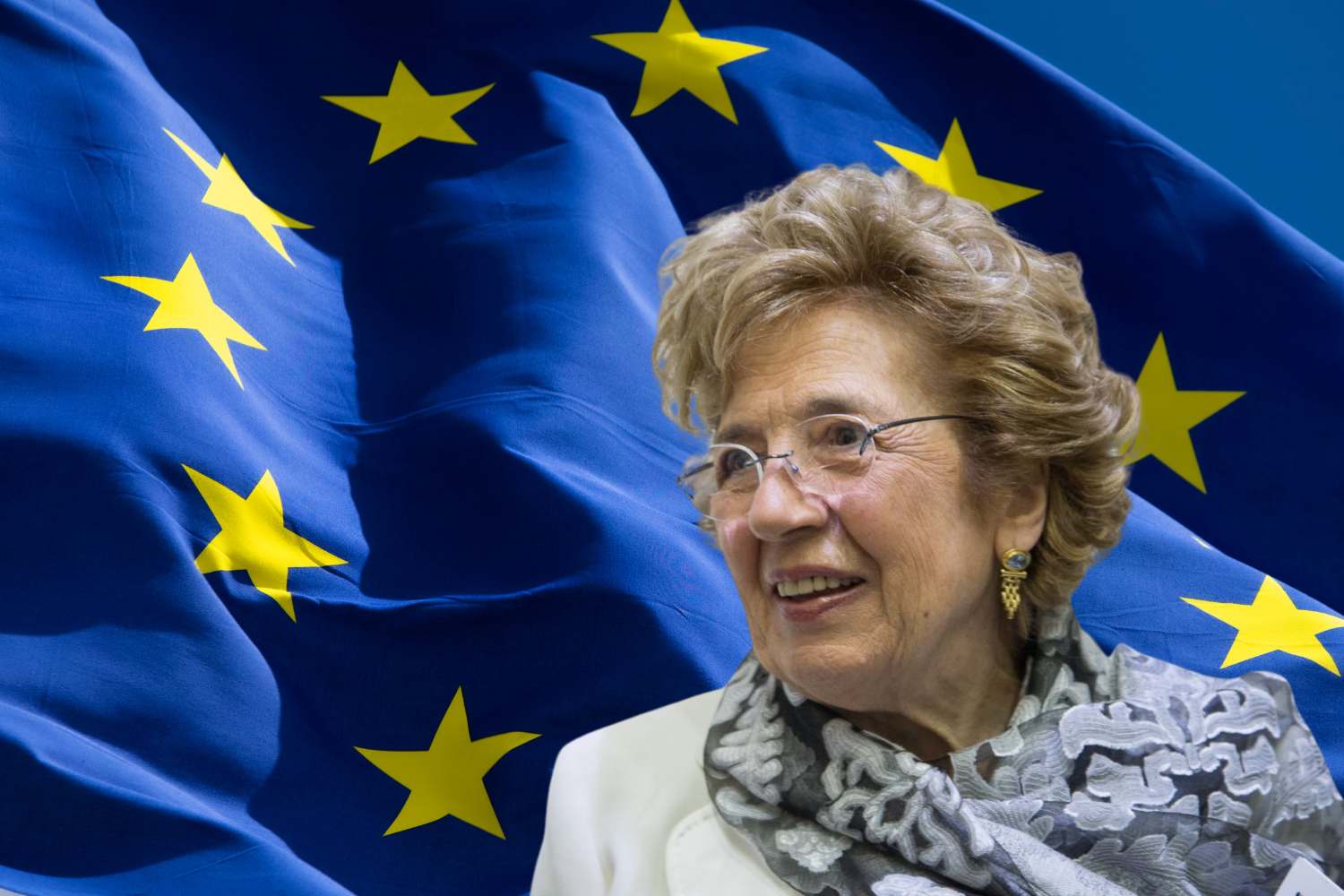
There are millions of young Europeans who can say they have lived an extraordinary experience, a moment of life that has made them freer, more curious and aware. It’s called Erasmus and it is the university mobility program that has united Europe more than many political treaties.
A true cultural revolution, behind which there is an Italian woman, Sofia Corradi, professor of Permanent Education at Roma Tre University, known throughout the world as the Erasmus mother. Sofia left us a few days ago at the age of 91, but an immense legacy does not go away with her.
The idea born from humiliation
It all began in 1969, when Corradi, after a degree in Law and a Fulbright scholarship at Columbia University in New York, returned to Italy to have the exams taken in the United States validated. The university’s response was a contemptuous refusal.
They looked at me with contempt – he said in an interview with TPI – as if I had wasted time abroad instead of learning.
It was at that moment, between disappointment and anger, that the idea was born: to make the study abroad experience a right for everyone, not a privilege for the few. Corradi understood that living and studying in another country could profoundly change people, opening their minds, breaking down prejudices and building bonds between different cultures.
18 years of battles (and obstinacy)
Convinced of the strength of her vision, Sofia Corradi took 18 years to make it become reality. He wrote, travelled, spoke with European rectors and officials, facing meetings, resistance and bureaucracy. Until, in June 1987, the project was finally ratified by the Council of Ministers of the then European Community.
Thus the Erasmus Program was officially born (European Region Action Scheme for the Mobility of University Students). In the first year, just 3,000 students left, but the seed had been planted.
“They asked me why I wanted to send boys to study in Germany to chase blonde girls. I replied that in Italy they could chase brunettes, but that wasn’t the point: what mattered was that the exams taken abroad were also recognized in Italy.
Today’s Erasmus: more inclusive and longer
Since 2014, Erasmus has been reformed and strengthened as part of the European objectives for 2020. Today there is no longer any distinction between the different types of mobility (Erasmus, Erasmus Mundus, Placement, Leonardo): everything has merged into a single large programme, open not only to students, but also to teachers and university staff.
Times have also changed: you can stay for up to 24 months in total between a bachelor’s and master’s degree, and repeat the experience more than once. On an economic level, the European Union has introduced a new system of scholarships, differentiated based on the cost of living in the various countries. Italy is placed in the highest range, to compensate for higher expenses.
A cultural (and emotional) legacy
To date, it is estimated that more than four million students have participated in the program. And it is not just training, but a teacher of life and the weaving of solid social relationships (over a million children have been born from many experiences, children of loves that blossomed during exchanges). It is an idea of Europe that is built not in the palaces of politics, but in university classrooms, in shared homes, in bonds that transcend borders.
Sofia Corradi, with her obstinacy and her faith in the value of education, made all this possible. Not a heroine, as she liked to say, but a “pragmatic visionary” who believed that knowledge could be the most authentic form of peace.
