

Does it seem absurd to think that a simple pan or ladle can season your dishes with a dose of invisible plastic? Yet it is like this: every day we ingest microplastics without realizing it, often directly from our kitchen tools.
A February 2025 study showed that microplastics accumulate in human tissues over time, a fact that has prompted the scientific community to investigate the consequences of this constant exposure on health. The results? Anything but reassuring.
A serious problem for health and the environment
Microplastics, tiny plastic particles smaller than 5 millimetres, and nanoplastics, invisible to the naked eye, are now present everywhere: in the air we breathe, in the water we drink and even in our blood.
According to the most recent data, every year a human being inhales over 22 million micro and nanoplastics. They are absorbed through breathing, ingestion or simple contact with plastic materials.
The most recent research is clear: these particles can inflame tissues, damage cells and organs such as lungs and liver, and in serious cases increase the risk of heart attack, stroke and degenerative diseases. DNA damage, reduced fertility and metabolic alterations have been found in animals and fish.
In short, what today seems like an environmental issue is already a global health crisis. And a lot of this starts right where you least expect it: your kitchen.
Where are microplastics hiding in the kitchen?
If you think that avoiding plastic water bottles is enough to protect you, know that it’s not that simple. Microplastics lurk in the most unthinkable places. Here are seven common traps that release plastic onto your plates without you knowing.
Plastic utensils
Recent studies have also shown that plastic utensils release microplastics into food, especially when used with hot foods. When we ingest food, we also ingest microplastics that are deposited in the body and bloodstream
Non-stick pans
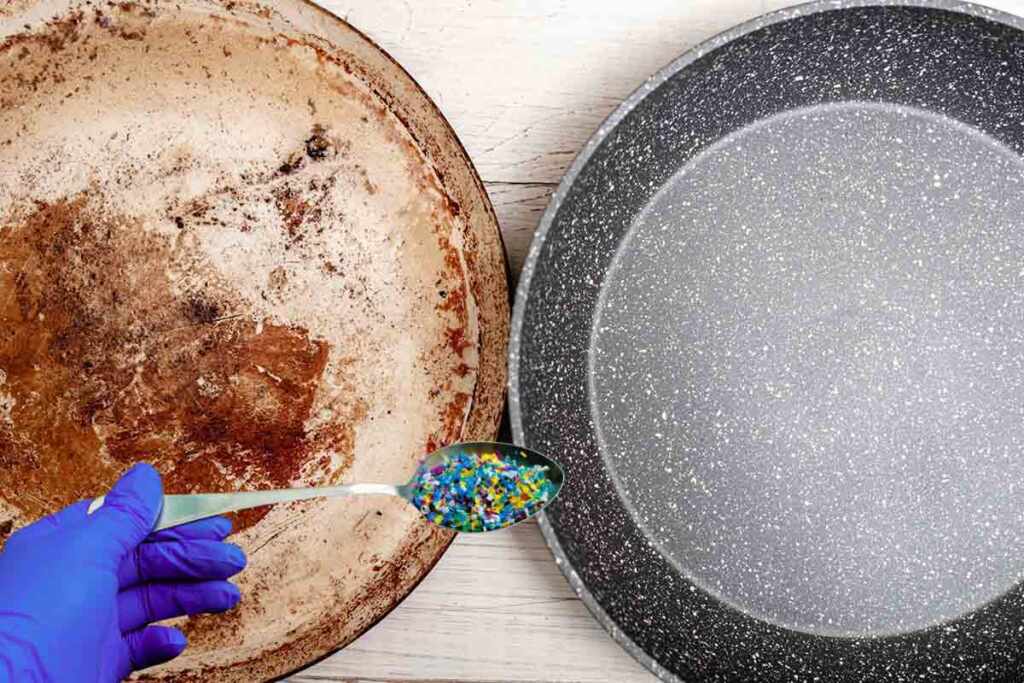
Teflon-coated pans and black plastic utensils are major culprits. According to a team of Australian researchers, a non-stick pan can release not only PFAS, but millions of microplastic particles from just a small crack or scratch.
Food and delivery containers
Plastic takeaway containers, very popular with the growth of food delivery, release microplastics if heated or washed frequently. Research found that all reusable plastic containers tested contained microplastics even before use.
Tea bags
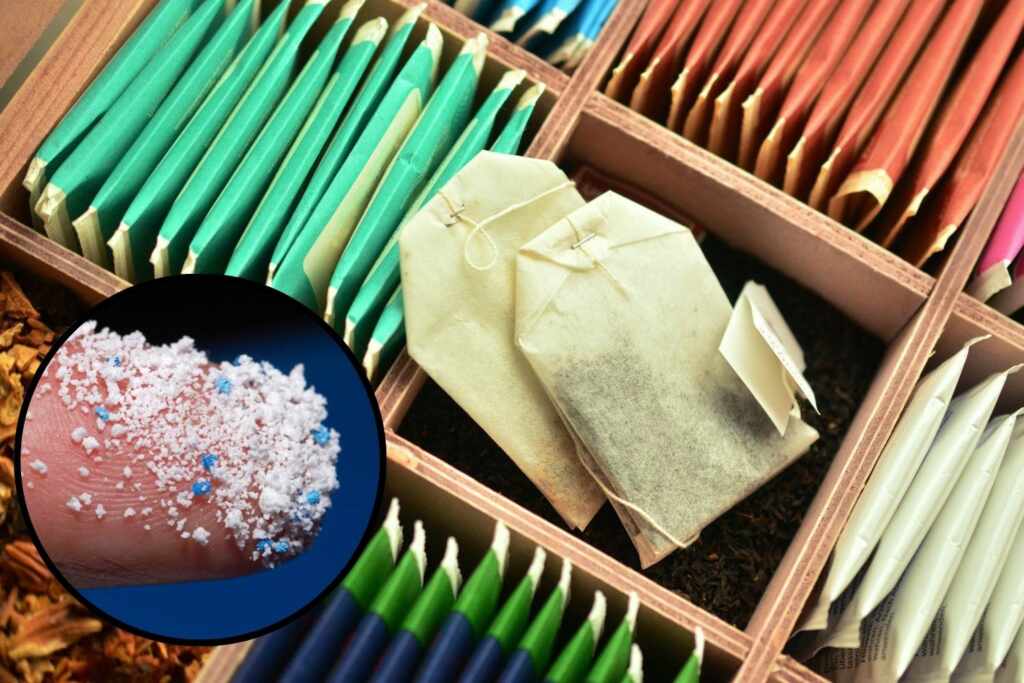
Hot tea seems harmless, but many filters contain polypropylene, a type of plastic that dissolves in boiling water. According to the Autonomous University of Barcelona, a single sachet can release billions of micro- and nanoplastics with each infusion.
Some packaged spices
Paprika, pepper or curry? Be careful with packaging: spices sold in plastic containers release microplastics over time, slowly contaminating the contents.
Plastic straws
In addition to polluting seas and oceans, straws release micro and nanoplastics that can be inhaled, ending up directly in the lungs. It is estimated that over 8 million tonnes of plastic ends up in global waterways each year.
Canned foods
Even though many manufacturers have abandoned BPA, the internal paints of cans still contain microplastics, such as acrylic or epoxy resins, which are not always safe for health. Better to opt for foods packaged in glass containers.
Food films and bags
Cling film and freezer bags release microscopic particles when they come into contact with fatty or hot foods, contaminating them without you knowing.
Mineral waters and drinks in plastic bottles
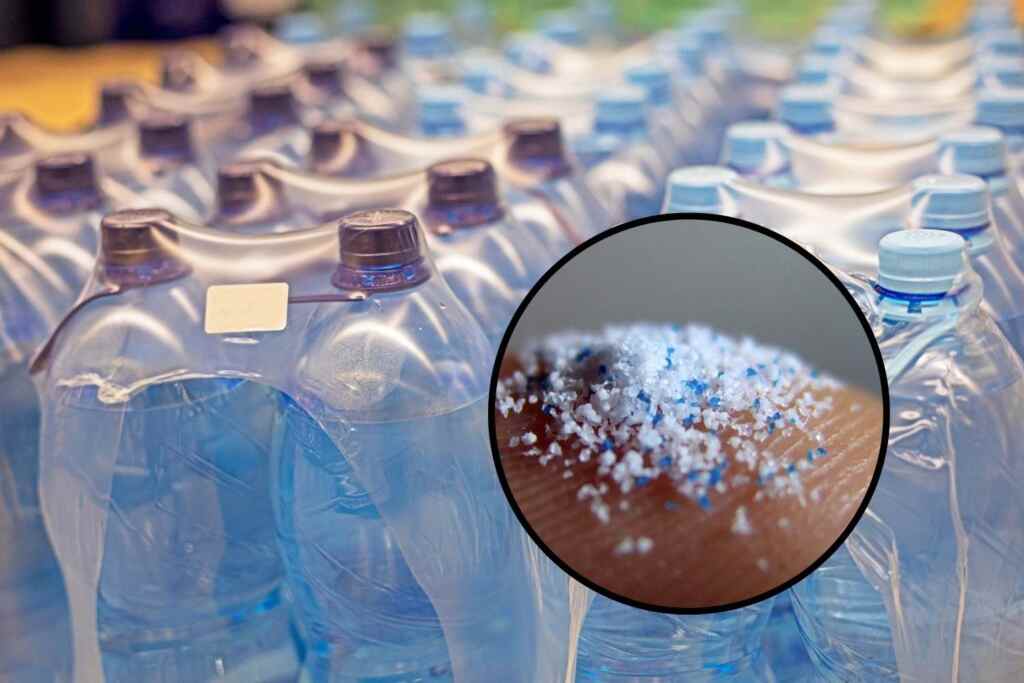
Those who prefer bottled mineral water, often considered safer than tap water, find themselves ingesting up to 90,000 more plastic particles per year than those who drink “mayor’s” water. This is according to a review conducted by researchers at Concordia University in Montreal, published in the Journal of Hazardous Materials,
How to eliminate microplastics in the kitchen?
The good news is that reducing exposure to microplastics is possible, with a few simple changes to your daily habits. Here are the most effective alternatives:
Finally, get used to washing utensils and dishes in warm water: excessive heat accelerates the degradation of plastic.
Microplastics in the kitchen are not an ecological hallucination: they are a concrete reality, which enters our bodies every day. The plastic that makes our lives easier is the same one that is compromising it.
But it doesn’t take much to reverse the trend: choose safe materials, pay attention to packaging and adopt a little more awareness. Ultimately, health begins with what you put on your plate… and how you cook it.
You might also be interested in:
