
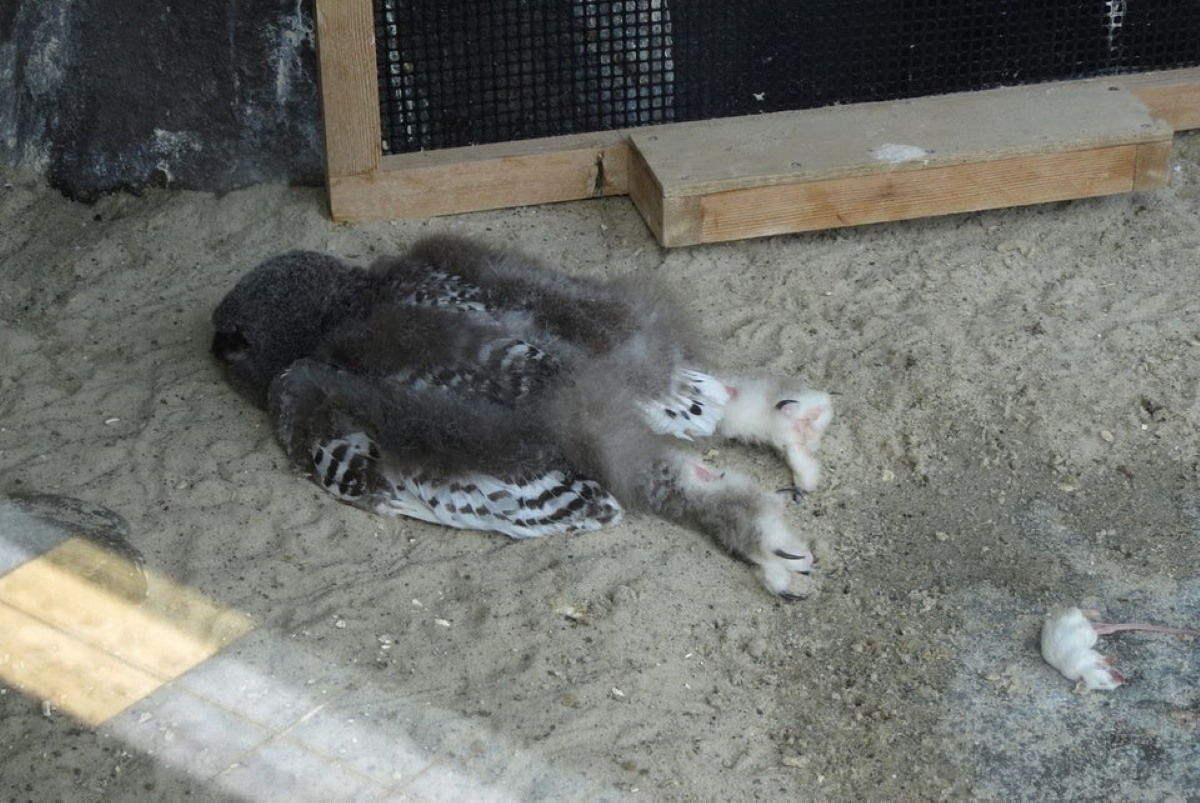
All children at birth, and for some months, have a very large head in proportion to the rest of the body. This is even more true for little owls, who are even forced to sleep “on their stomach” for this very reason.
An image that went viral in recent years has brought attention to this curious habit, and the explanation is as simple as it is tender.
The photo that seemed fake (and is actually real)
The photo, initially circulated as a meme, shows a young owl literally lying on the ground. At first the reliability of the source was questioned: many on social media had joked about the fact that the bird had “raised its elbow a bit” – or rather its wing – and was sobering up with a nap.
The photo, however, is authentic, and has become the starting point to raise awareness of this unusual habit of still young nocturnal birds of prey, which sleep lying down in a prone position.
Why it happens: adults sleep standing up, little ones don’t
Adult owls, once fully developed, sleep standing up. The younger ones, however, still cannot support the weight of their heads and are therefore forced to lie down to rest.
Confirmation from the National Audubon Society
The phenomenon was told and confirmed in an episode of BirdNote, published by the National Audubon Society – the most important US non-profit organization dedicated to the protection of birds and their habitats.
The protagonist of the story is Joseph Clark, who says he discovered two little American owls (Strix variesin English Barred Owl) lying on the ground near his home in East Haddam, Connecticut. The two young birds of prey had fallen from an ancient sugar maple tree and were being tormented by some crows.
Clark chased the crows away and, with the guidance of Kasha Breau of the Connecticut Audubon Center, returned the chicks to the tree. The mother remained nearby throughout the rescue, keeping an eye on the scene.
The secret is all in the claws
Once safe, Breau advised Clark to observe the owls during their daytime naps. What he saw enchanted him: holding their claws tightly around the branch, the little ones lay down on their bellies, turned their heads to the side and fell asleep.
The reason why a young tawny owl does not fall from the tree while sleeping is the big toe, the back toe of the claw: it gets stuck on the branch and does not open until the bird voluntarily bends its paw.
“Their naps are short, and when they sleep, they don’t like to be woken up — not even to be fed,” Clark says.
How can you blame them?
