
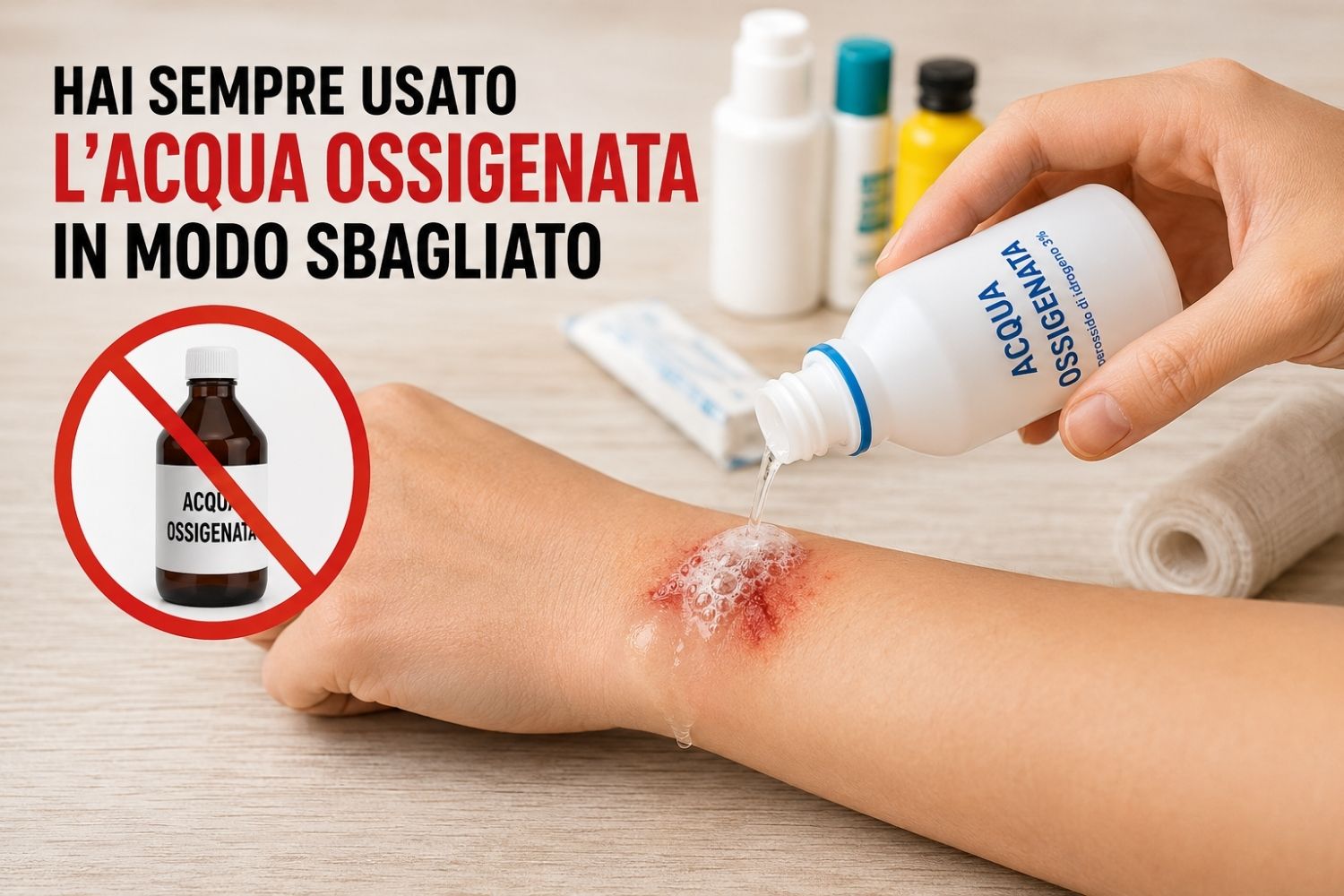
Bringing attention to a widespread error in almost every Italian home is a reel by Giacomo Pisano, the Genoese pharmacist who calls himself on social media The Socially Pharmacist and who has over 370 thousand followers on Instagram. In the video, which you will find at the bottom of the article, the pharmacist dismantles a habit passed down for generations, that of pouring hydrogen peroxide directly onto a cut or peel. Small premise: hydrogen peroxide is a valid disinfectant when the skin is intact, so on healthy skin, without open wounds, hydrogen peroxide carries out an antimicrobial action without too many problems. The matter changes when the skin barrier breaks and we have the so-called open wound: at that point the wound comes into play catalasean enzyme present in the blood and tissues that rapidly breaks down the molecule into water and oxygen, giving rise to the typical reaction that produces the effervescence that we have all been accustomed to since we were children. An important review published in the journal Wounds states that the presence of catalase in tissues can drastically reduce the bactericidal effectiveness of hydrogen peroxide once applied in vivo, making it much less useful than its foam suggests.
The problem isn’t just that it doesn’t disinfect well
The point is another, and concerns what that reaction leaves behind. A study published in PLoS ONE analyzed the effects of hydrogen peroxide on wound healing in an animal model, highlighting how the oxidative damage produced by the substance interferes with tissue repair processes, slowing down the formation of new tissue in the very area that should heal most quickly. More recent work, published in 2022 in Clinical and Experimental Dermatology, compared the most common disinfectants on human skin fibroblasts, including hydrogen peroxide. The researchers observed that just one minute of exposure reduces proliferation, migration and vitality of these cells, which are the ones responsible for reconstructing the damaged tissue.
How to clean a wound without damaging it further
The first step, the one that almost no one considers enough, is the simplest: rinse thoroughly with physiological water, so as to eliminate debris and residues without attacking the surrounding tissues. Only then does it make sense to apply a real disinfectant, and here the options change depending on the case. Benzalkonium chloride and chlorhexidine are among the most common choices for daily use on small wounds, while povidone iodine, which is probably the most effective of the three, brings with it a contraindication that is worth knowing: it contains iodine, and part of this element is absorbed through the injured skin. The LactMed database of the US National Institutes of Health reports that the use of povidone iodine near childbirth and during breastfeeding can increase iodine levels in breast milk and cause transient hypothyroidism in the newborn, especially in geographical areas where iodine intake is already low. For the same reason, administration must also be carefully evaluated in patients undergoing treatment for thyroid diseases, given that skin absorption can alter the results of thyroid function tests.
View this post on Instagram
