
There dishwasher It is a very useful appliance, which can help relieve the weight of household chores in the house, saving us precious time that we can devote to work, at free time or to our loved ones. Furthermore, as we explained to you in this article, it also allows us to limit the consumption of running water – a great way to counter the drought that has been afflicting our country for months.
However, there are errors that many of us make when they use this appliance and that can end up damaging the dishes during washing, or that force us to waste more water with not very effective washing performance. Here you are Ten tips for use of the correct dishwasher It is attentive to the environment.
The new generation appliances are equipped with an ecological program, which limits the expenditure of water and electricity during washing, yet many people are reluctant to use it since they believe that with this method the dishes are not sufficiently clean.
On the contrary, even if it uses cold water (to save electricity) the ecological program is as effective as a normal program – if not more. So let’s set it as a washing method always and, if we have a particularly dirty pot that we fear cannot clean during washing, it wash it quickly by hand.
Use the wrong detergent
Conventional dishes often contain very polluting substances for water and the environment. But not only: those in the form of pads, usually used for dishwasher, doubles doubtful because they are a source of a greater amount of waste than the liquid or powder detergent.
First of all, we recommend choosing detergents for ecological and not very polluting dishwasher, and then to use powder detergents, easier to dose than the tablets and less polluting thanks to the reduced amount of packaging.
Load the dishwasher wrongly
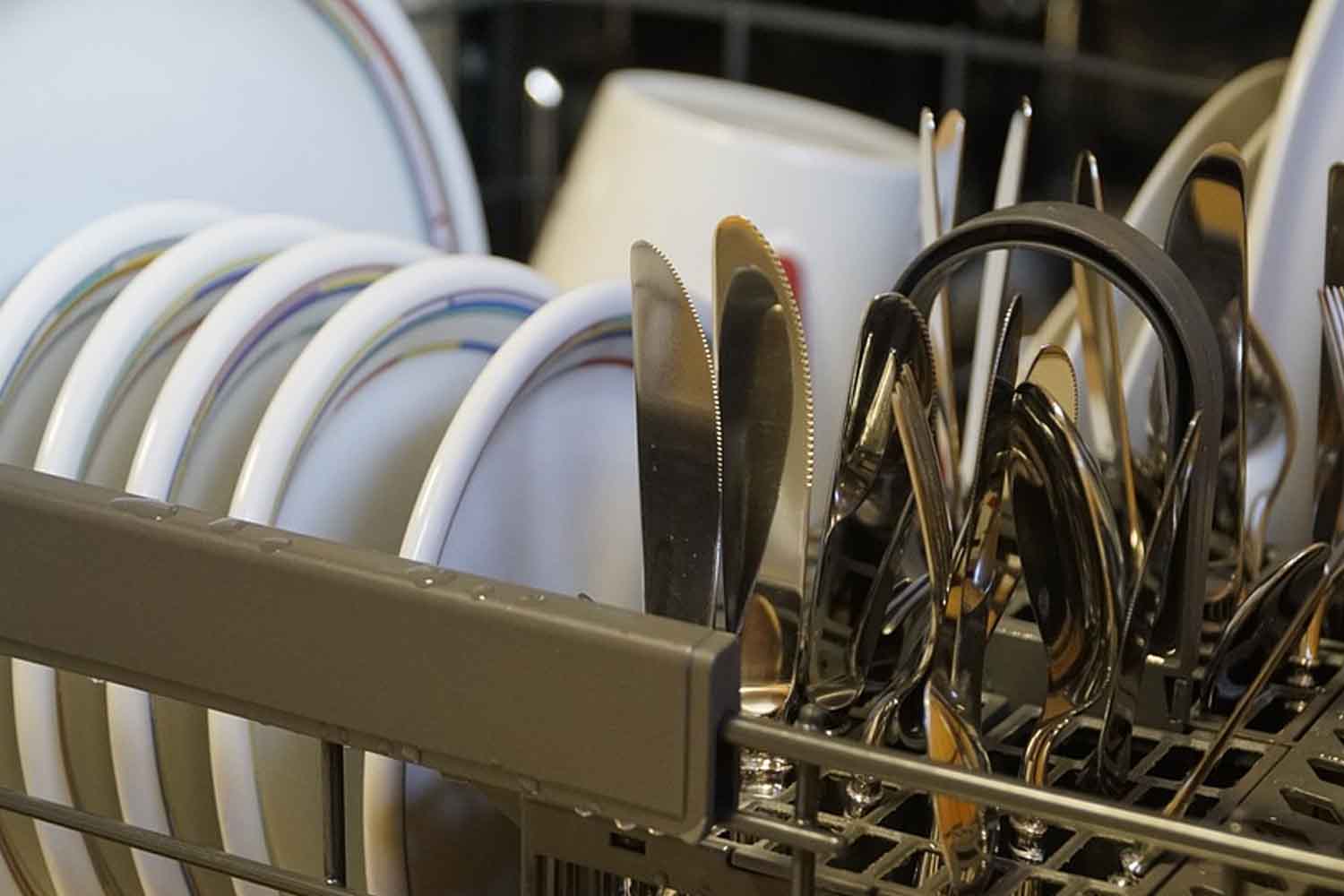
Correctly arrange dishes, dishes and cutlery in the dishwasher cart will allow us to optimize the space inside the appliance and, therefore, wash more objects with a single wash. We begin by placing larger pots and crops, and then fill the spaces that have remained empty with smaller dishes. Attention also to the cutlery: we arrange them in the appropriate basket with the handle down in order to guarantee correct cleaning.
Finally, we are appropriate to the movement of the sprayer arms that revolve inside the appliance: preventing it will not allow water to reach all the dishes and guarantee correct cleaning. If we notice a laid that protrudes too high, then, place it so that it does not obstacle the movement of the arms before starting the washing cycle.
It might seem like a superfluous note, but it is always good to reiterate it: the dishwasher, like any other appliance (washing machine, dryer), must be used only at full load to minimize the waste of water and energy resources.
If we have few dishes to wash or we need that specific pot that is still dirty, we use five minutes to wash the dishes by hand – the environment will thank us, and our wallet too.
The water is very limestone, and the limestone over time ends up damaging the tubes and mechanisms of the dishwasher, which thus consumes more electricity to work. In addition, the limestone leaves whitish spots on the plates and glasses – a very unpleasant inconvenience.
To avoid all this, remember to add a little salt to each wash to “soften” the water inside the dishwasher. There are specific salts for this appliance, but it is not necessary to buy them – it is also enough for the simple kitchen salt.
Place the dishwasher near the refrigerator
Another error that tends to make often what we are talking about the dishwasher concerns the positioning of the appliance in the kitchen. The dishwasher, like the oven or the dryer, is an appliance that emits heat. Therefore, arrange it next to an appliance that generates cold, such as the refrigerator or the freezer, will force both machines to work under effort and consume more energy.
Wash the bamboo dishes
Bamboo dishes and dishes, as well as those made in melamine and intended for the little ones, should never be washed in the dishwasher. The strength of the jets of water and the elevated temperatures inside the appliance in fact favor the decomposition processes of these materials and the release of dangerous microplastics in the water.
Rinse the dishes before washing
The cleaning performance of the dishwashers and detergents are now so high that the pre-Christ usually belongs to the past. Of course, we are not demonizing the practice of leaving the residues of scorched sauce on the bottom of the pot (perhaps with a little baking soda dissolved in the water).
But for everything else – from mashed potatoes to tomato skins, from contours to ice cream – just throw the residues in the organic dustbin with the help of a fork or a tissue. Pre -prelative the dishes before washing them in the dishwasher represents a useless waste of water that we can safely avoid.
Wash the wrong dishes
There are kitchen accessories and utensils that are not suitable for washing in the dishwasher, because they may come out damaged. Here is a list of things to never be put in the course of the appliance:
In any case, we recommend checking the presence of the appropriate symbol indicating that the object is washable in the dishwasher.
Use the dishwasher to rinse containers to throw
We know that, before throwing a jar of yogurt or another disposable plastic container, we must rinse it and remove food residues. This, however, is not an operation that can be performed with the dishwasher – just a teaspoon to empty the jar and coarsely eliminate food residues before throwing it.
We also recommend you:
